ULPIANUS of Emesa.
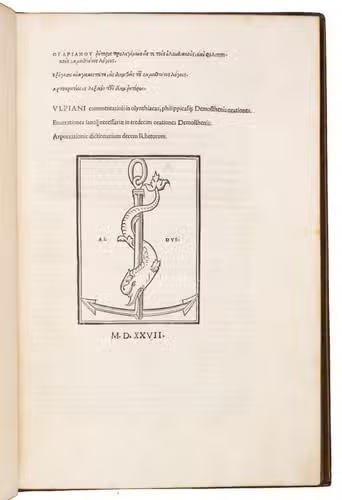
Commentarioli olynthiacas; philippicaque; Demostenis orationes. Ennarrationes saneque necessariae in tredecim orationes Demosthenis.
Including: HARPOCRATION, Valerius. Dictionarium decem Rhetorum.
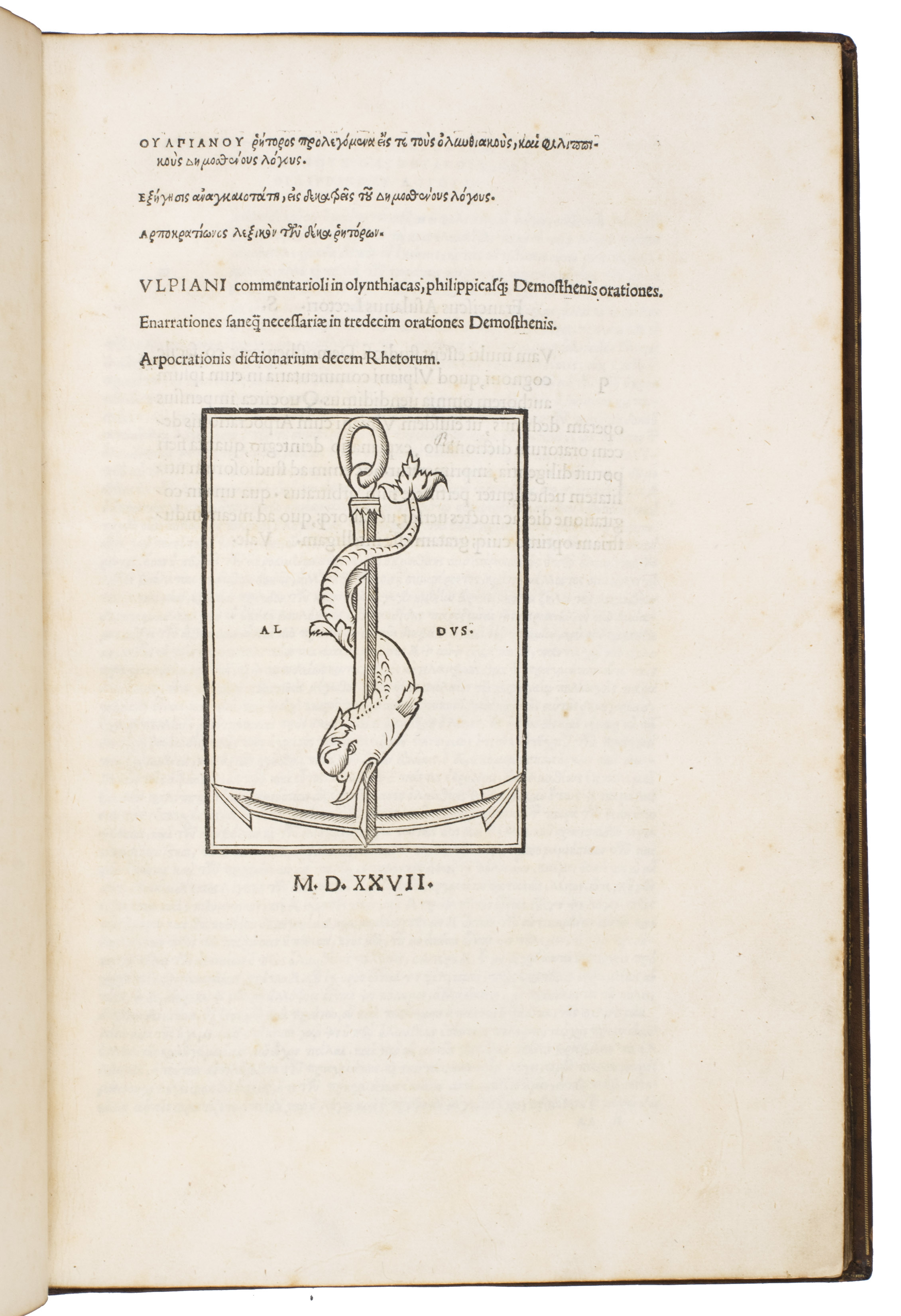
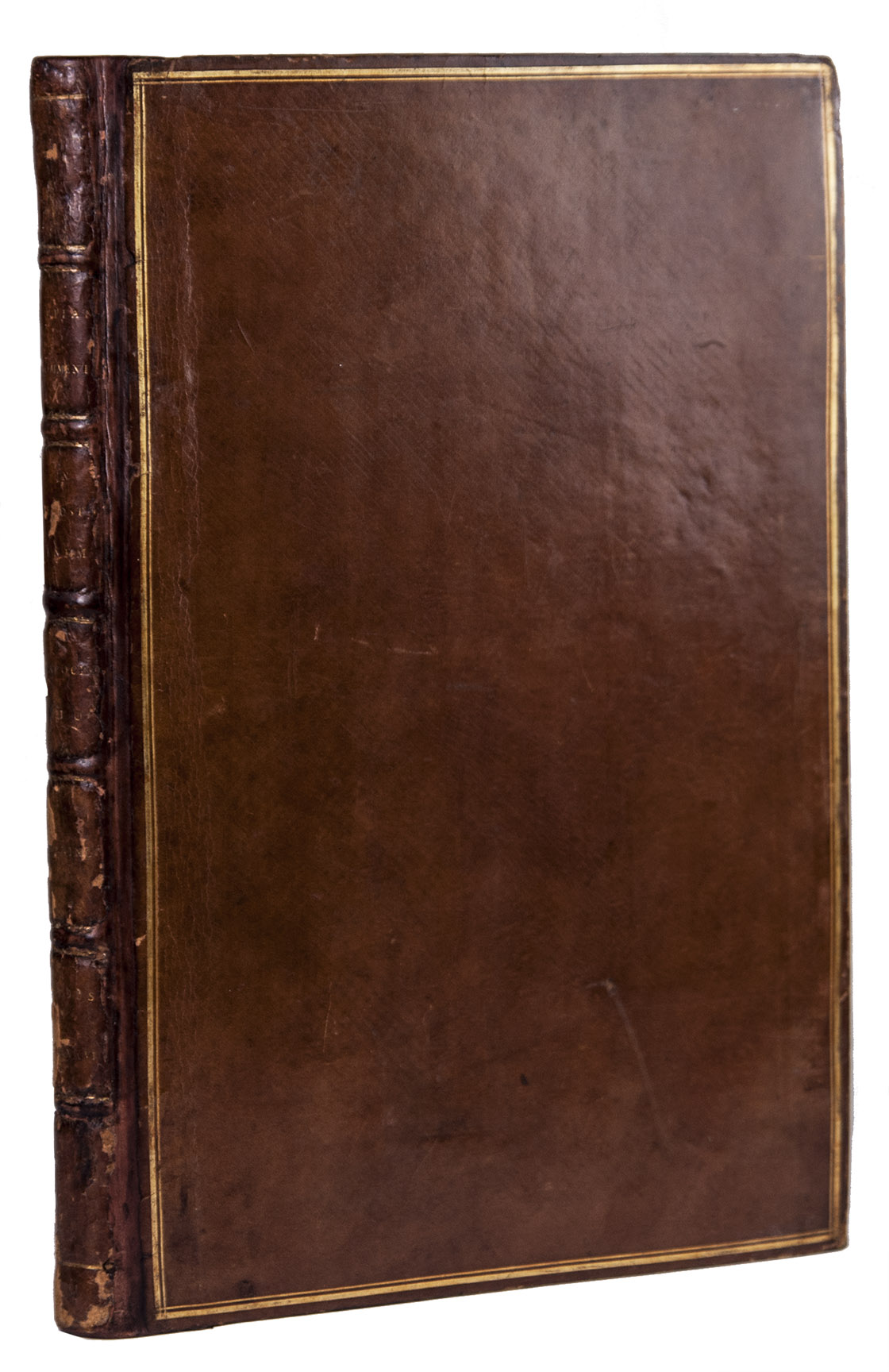
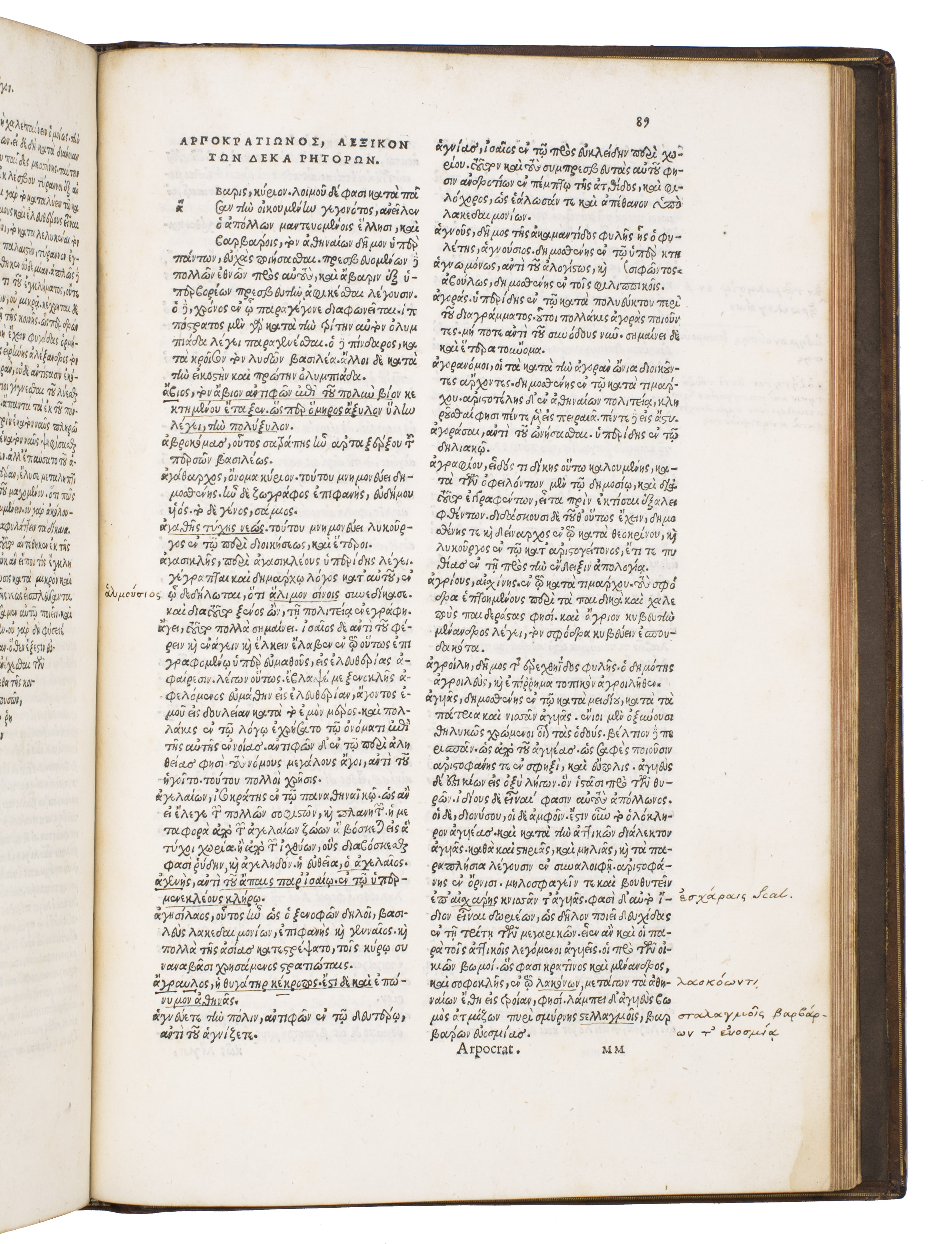
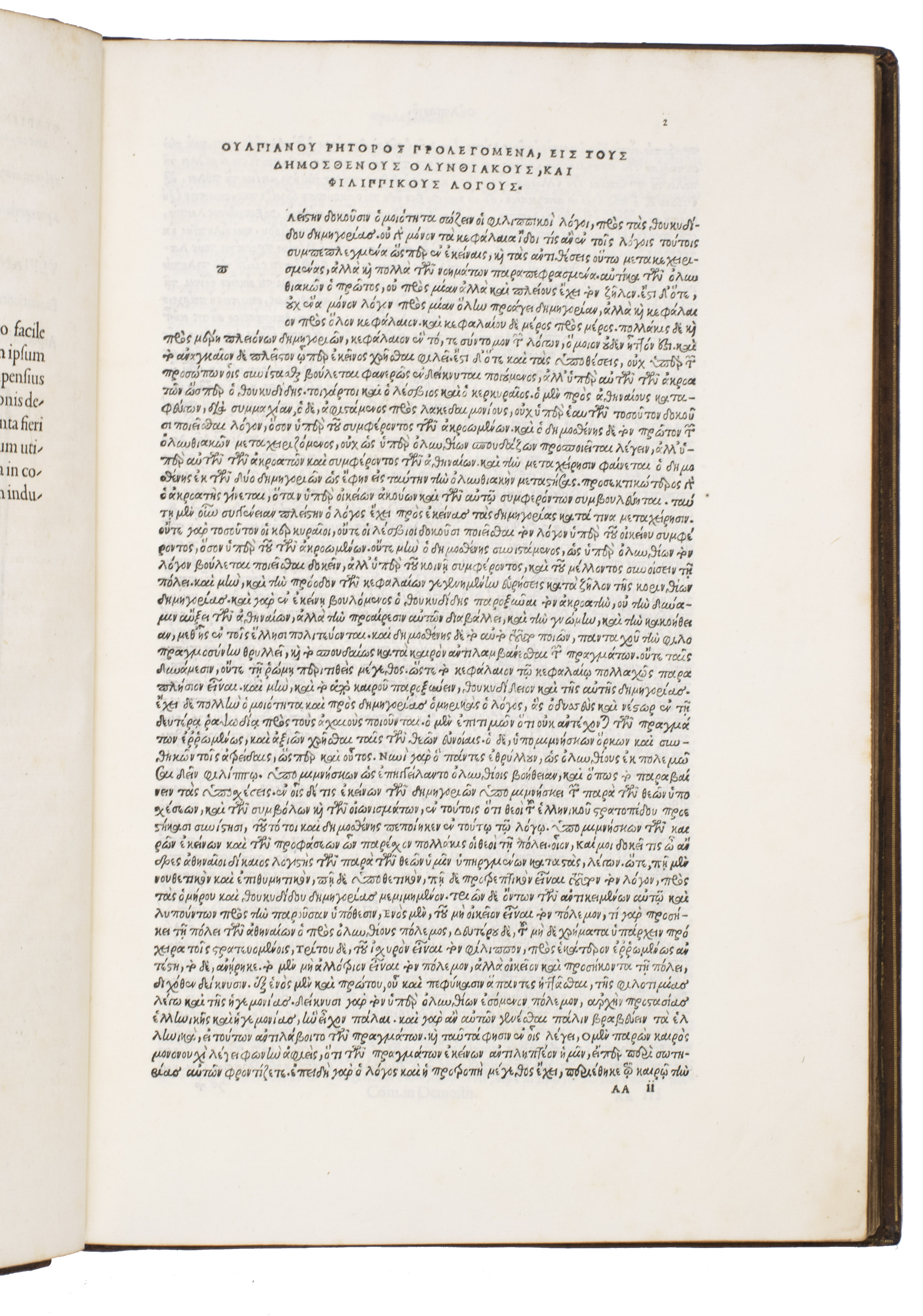
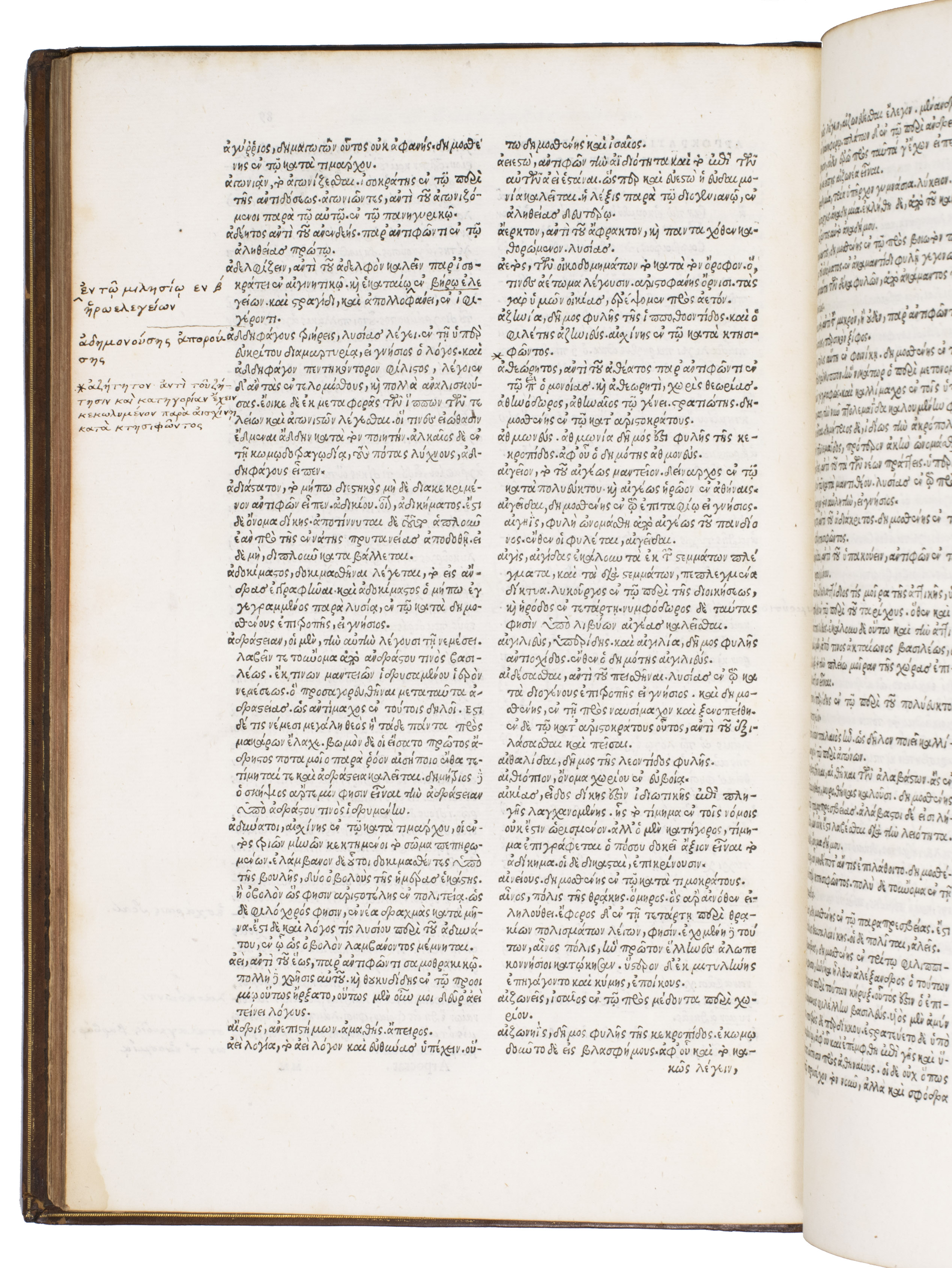
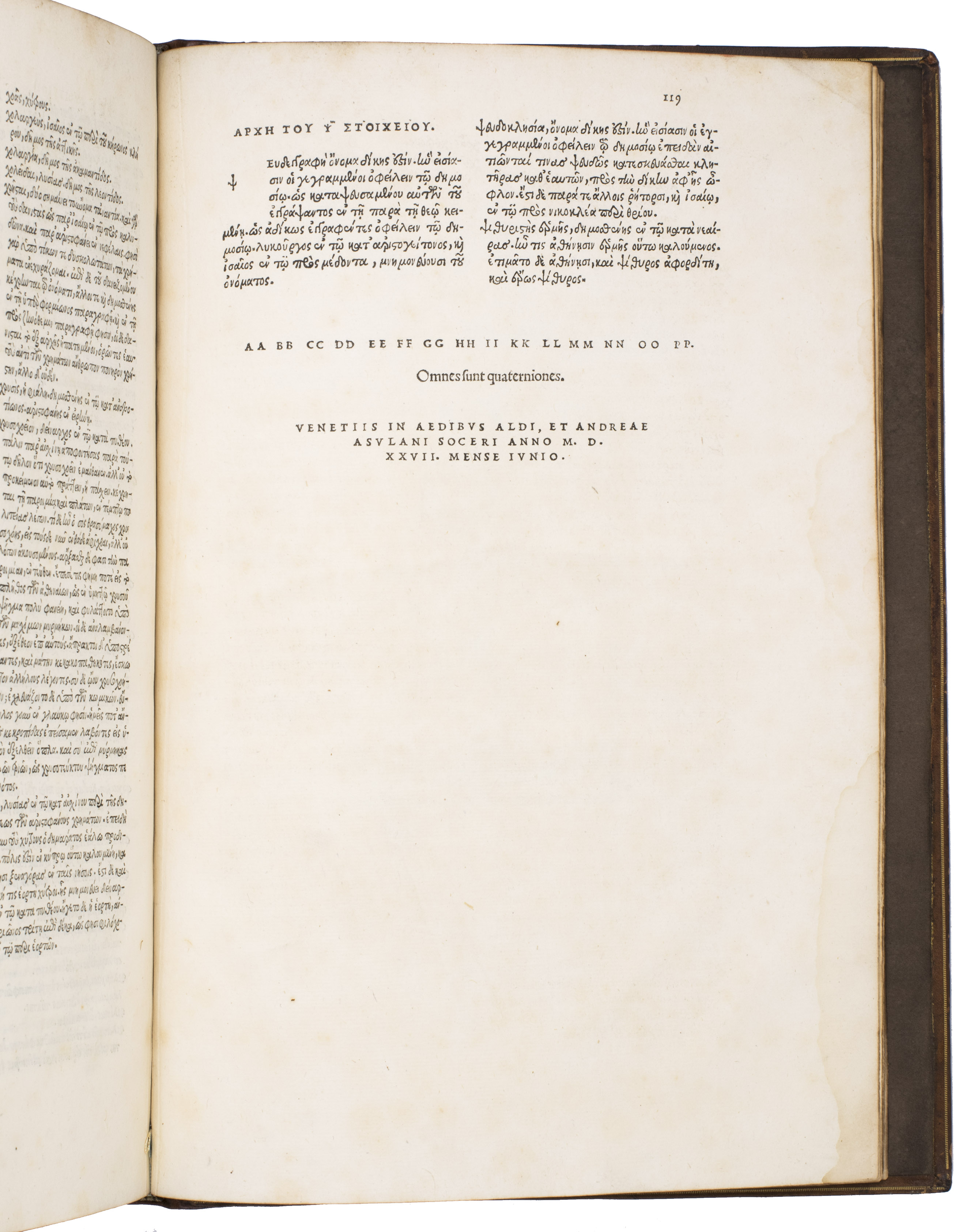
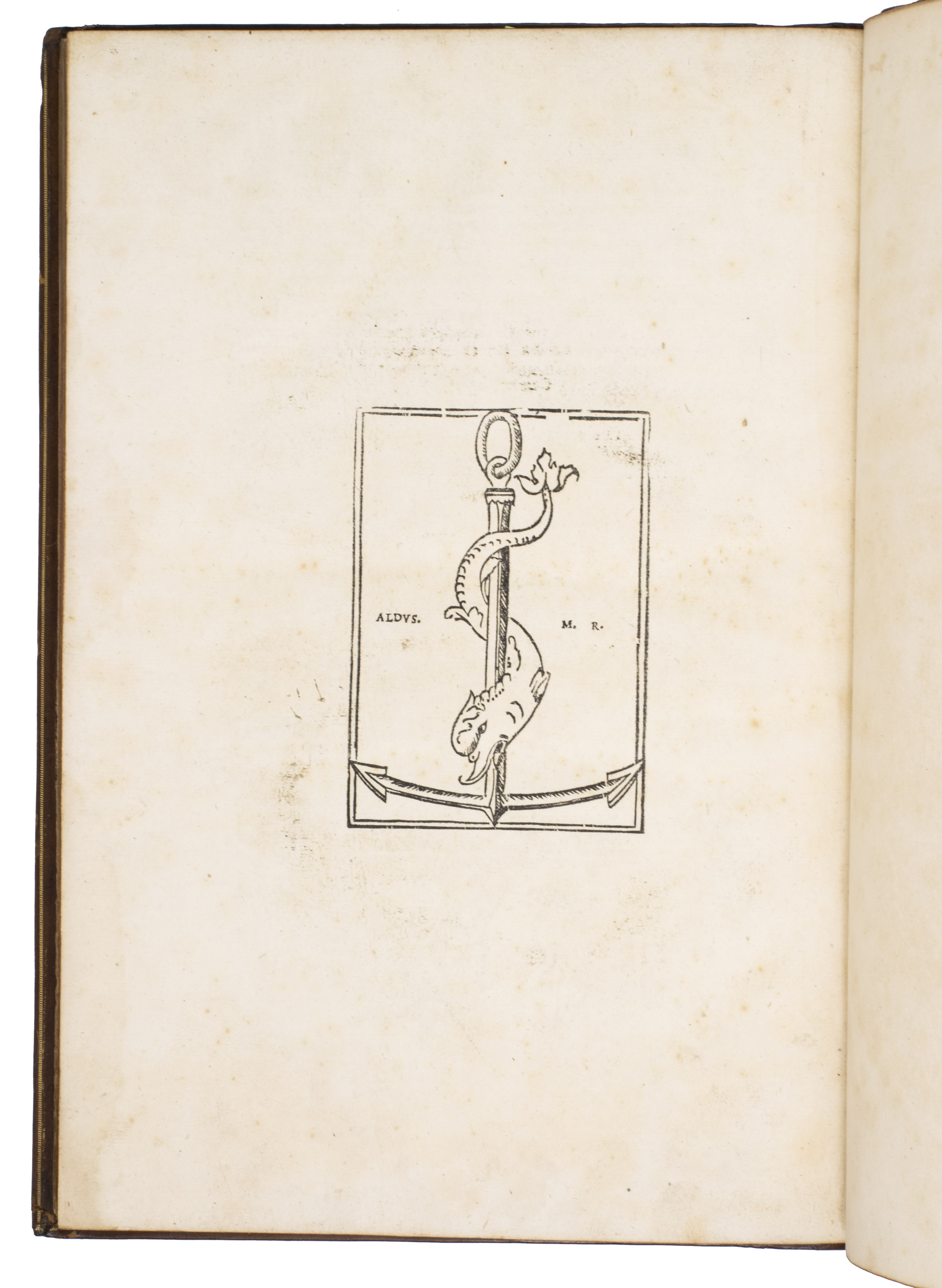
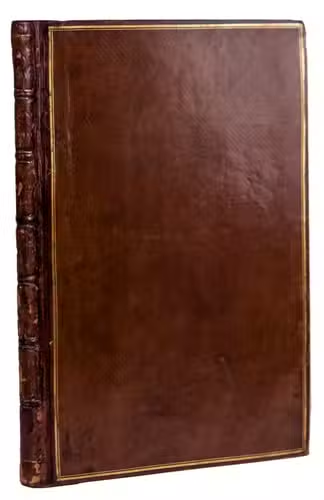
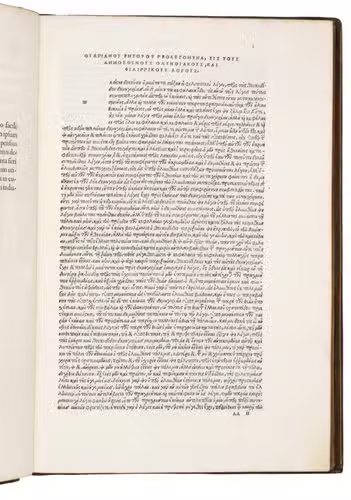
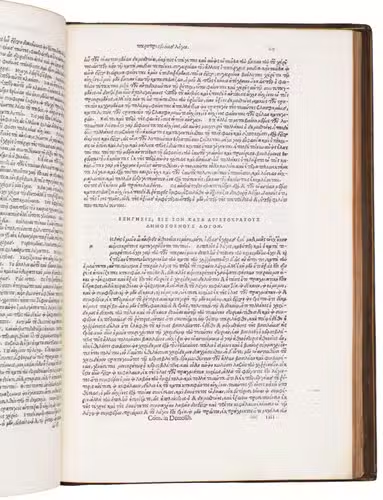
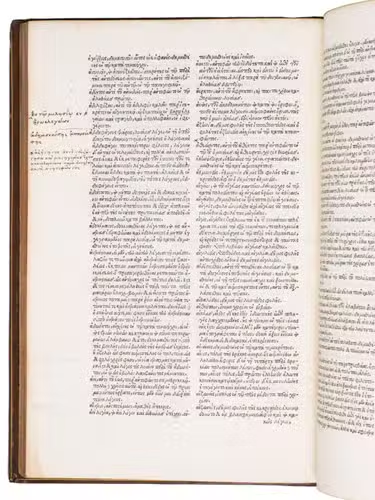
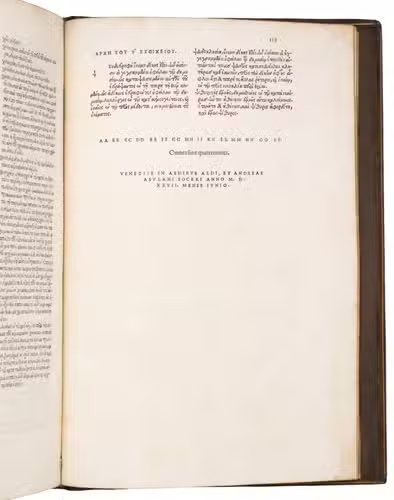
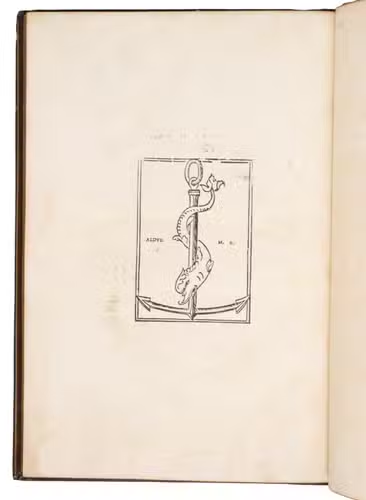
Venice, (heirs of) Aldus Manutius and Andrea Torresano, June 1527. 2 parts in 1 volume. Folio. With Aldus' woodcut printer's device on the title page and an older but very similar version on the verso of the otherwise blank last leaf. Set in Greek type (the Upianus in 1 column; the Harpokation in 2 columns) with incidental roman. Early 18th-century gold-tooled diced brown calf. 119, [1] ll.
€ 12,000
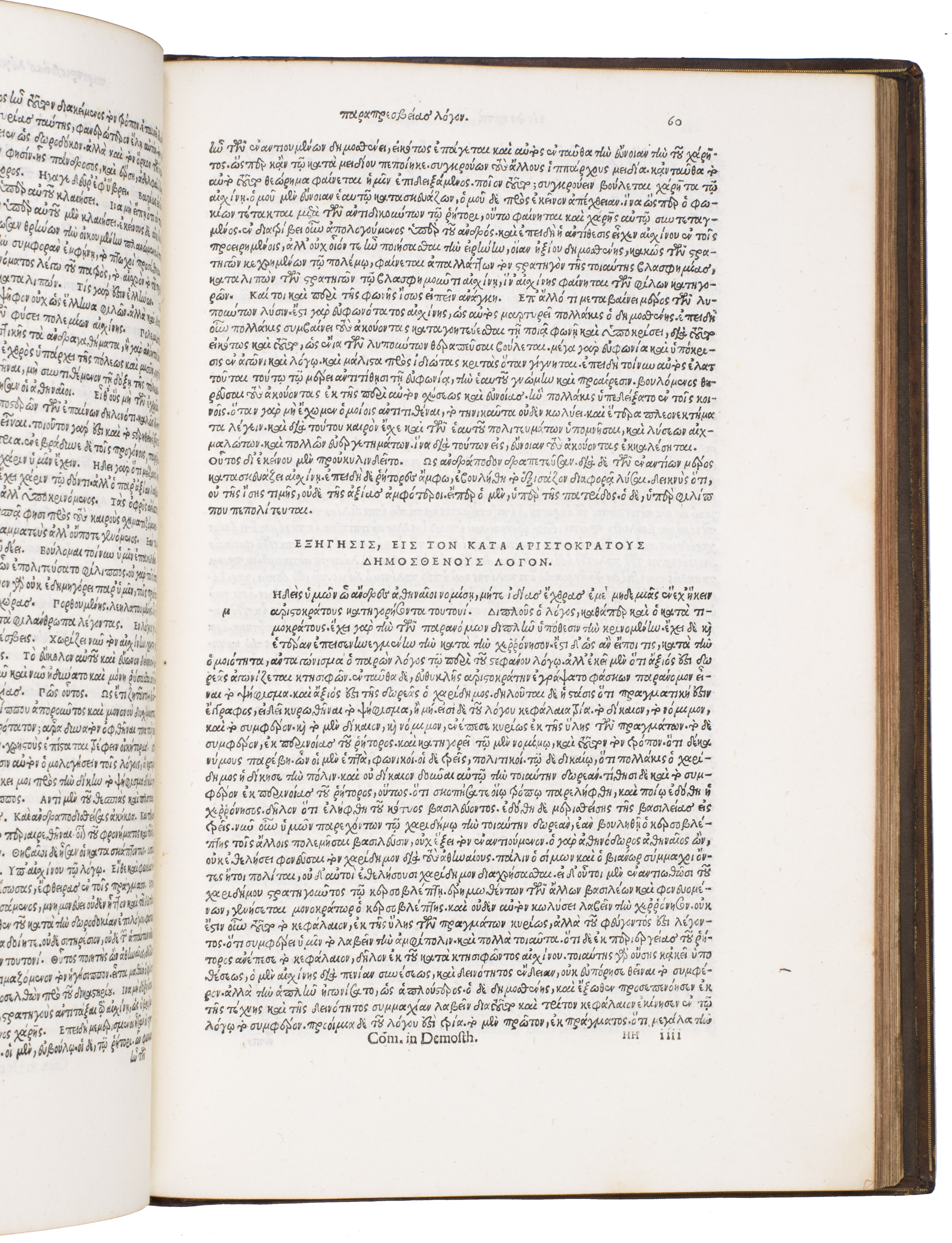
Second edition of the Greek commentaries and scholia on Demosthenes written by Ulpian of Emesa who taught rhetoric at Antioch in the reign of Constantine (324-337 CE) and wrote a number of declamations and rhetorical works. He is best known as the reputed author of the present scholia on the speeches of the greatest of all ancient Greek orators, Demosthenes (384-322 BCE). Aldus Manutius edited and published the first edition in 1503. The present second edition, printed and published by his father-in-law Andrea Torresano dAsola and his sons, who ran the press until Aldus son came of age, follows Aldus text, but modernises the title page, adds leaf numbers, and slightly increases the size of the paper, fitting more to a page without loss of clarity or recourse to a smaller type. That reduced the number of sheets by about 30% and was probably more economical.
In 1504, Aldus had also edited and published the first edition of Demosthenes own works, one of the most important works he ever printed, which he reprinted in 1513, so the present edition may have been intended for use with that edition. Demosthenes' orations provide a very interesting insight into the life and culture of Athens during a period when he was attempting to rally the Athenian people against Philippus and Alexander the Great, the rulers of Macedonia, using all his gifts as an orator. They are: Olynthiacs 1-3, Philippics 1-4, For the freedom of the Rhodians, For the Megapolitans, On the Chersonese, On the Crown, On the Naval boards, and On the Peace. After a brief Latin note to the reader by Torresanos son (Gian) Francesco dAsola on the back of the title page follows Ulpian's text on leaves 2-88.
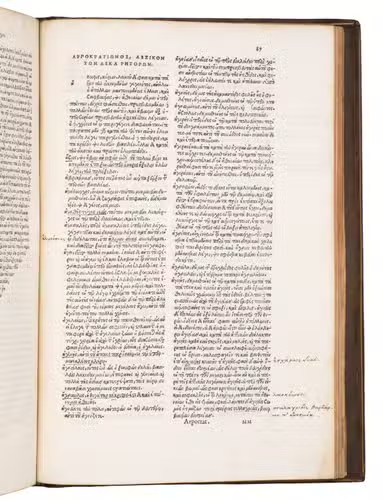
On leaves 89-119 follows the Dictionarium decem Rhetorum (Lexicon of the ten orators) by Valerius Harpocration of Alexandria, also published in its first edition with Alduss 1503 Ulpianus. Harpocrations dates are uncertain, but he was probably active in the second century CE. The Dictionarium contains words, including proper names, and phrases, mainly from the orators, in alphabetical order, generally assigned to their sources, with explanations of points of interest or difficulty. Besides stylistic details Harpocration gives valuable notes on architectural, religious, legal, constitutional, social and other antiquities.
The work has been rebacked, with the original spine laid down, the edges and corners of the boards are somewhat scuffed, the spine has been rubbed, affecting the gold-tooling, the back board has been scratched. Internally quite clean, with only a small water stain in the outer margin of the second half of the work. Overall in good condition. (Large paper copy??) Adams H 69; Ahmanson-Murphy 245; Edit 16, CNCE 37751; Harry Ransom Humanities Research Centre 222; Palau 106; Renouard p. 104, no. 4; STC Italian 704; USTC 861592
Related Subjects: