[PETIT, Mathieu].
[Writing master's copybook].
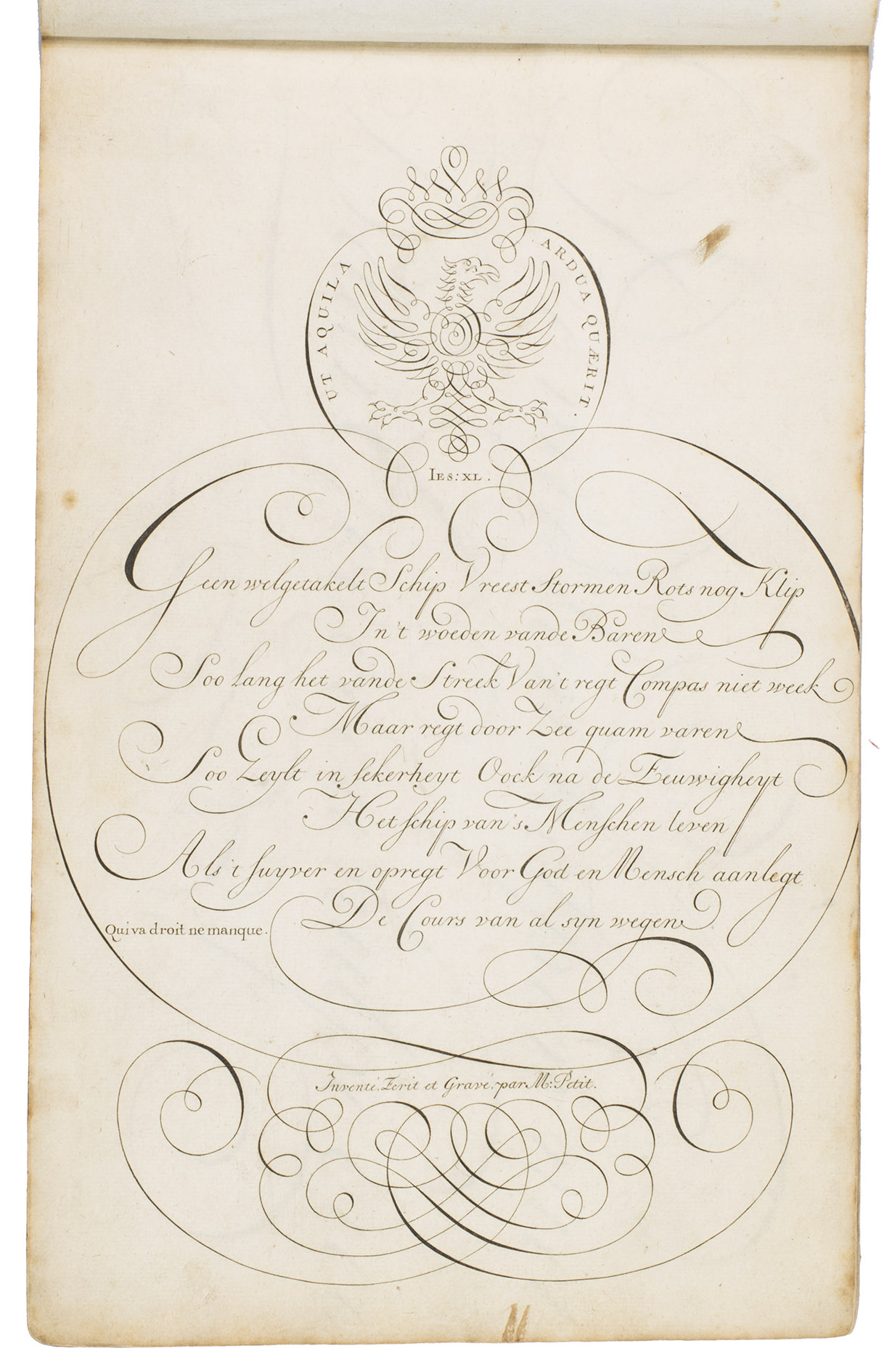
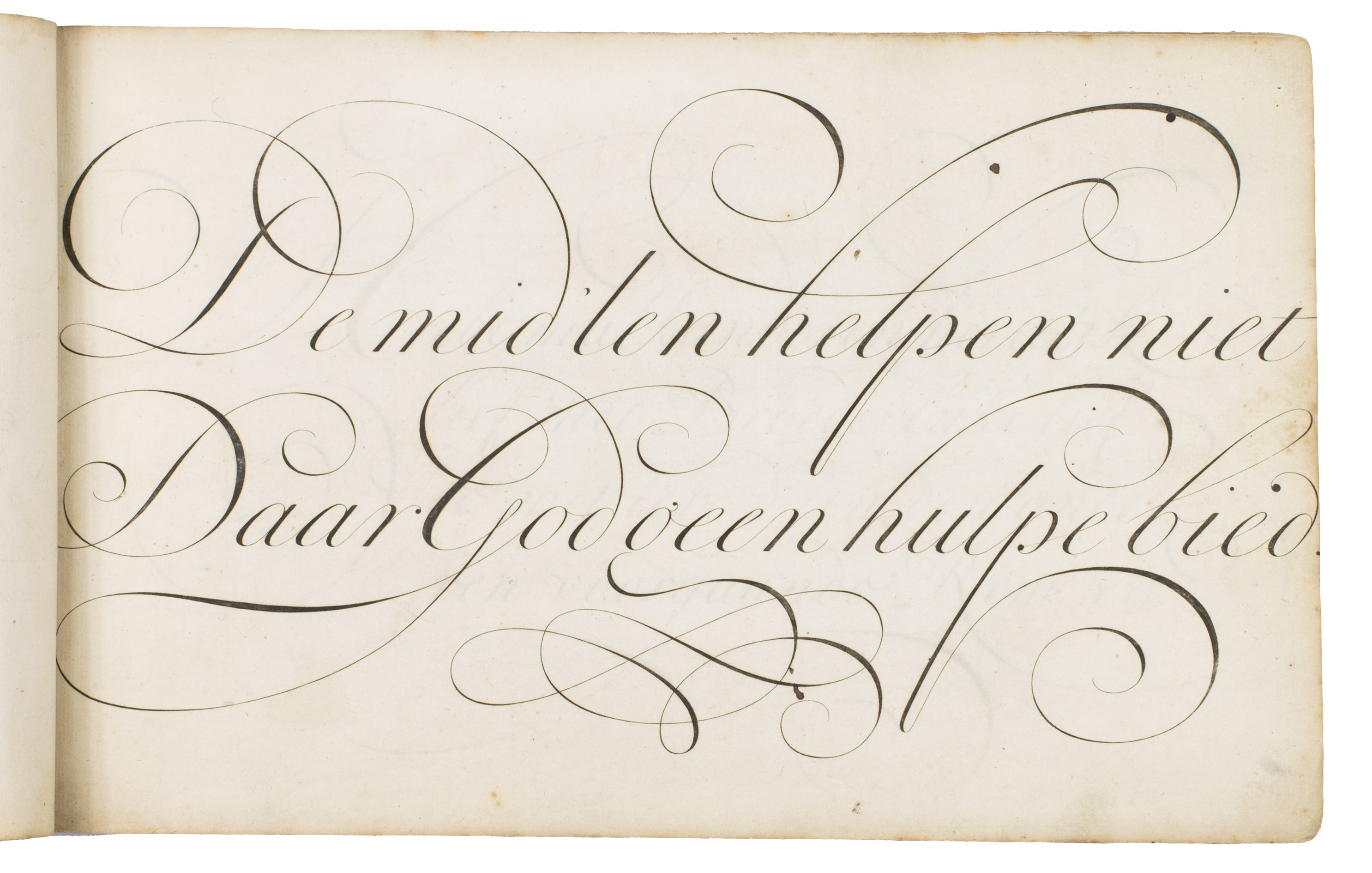
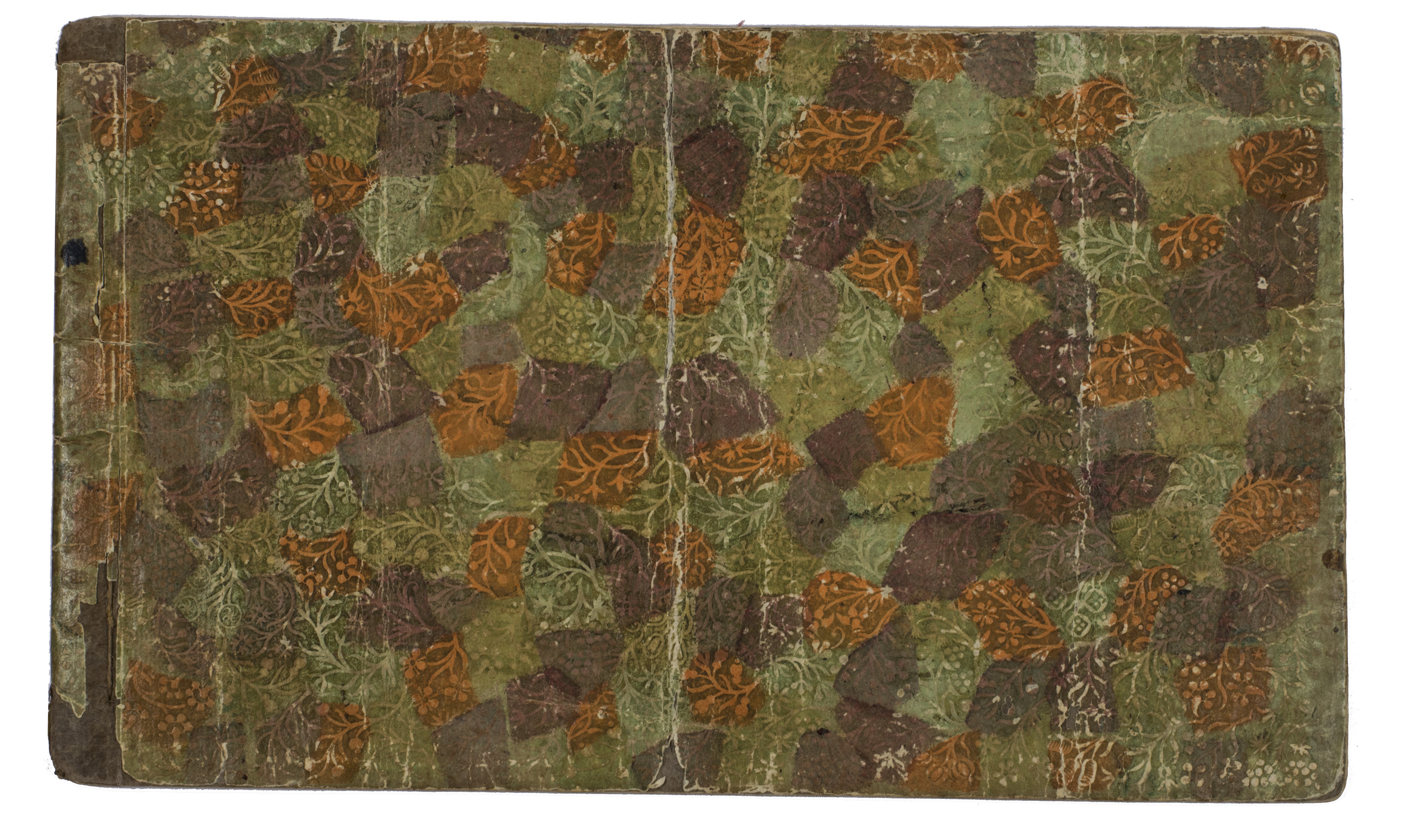
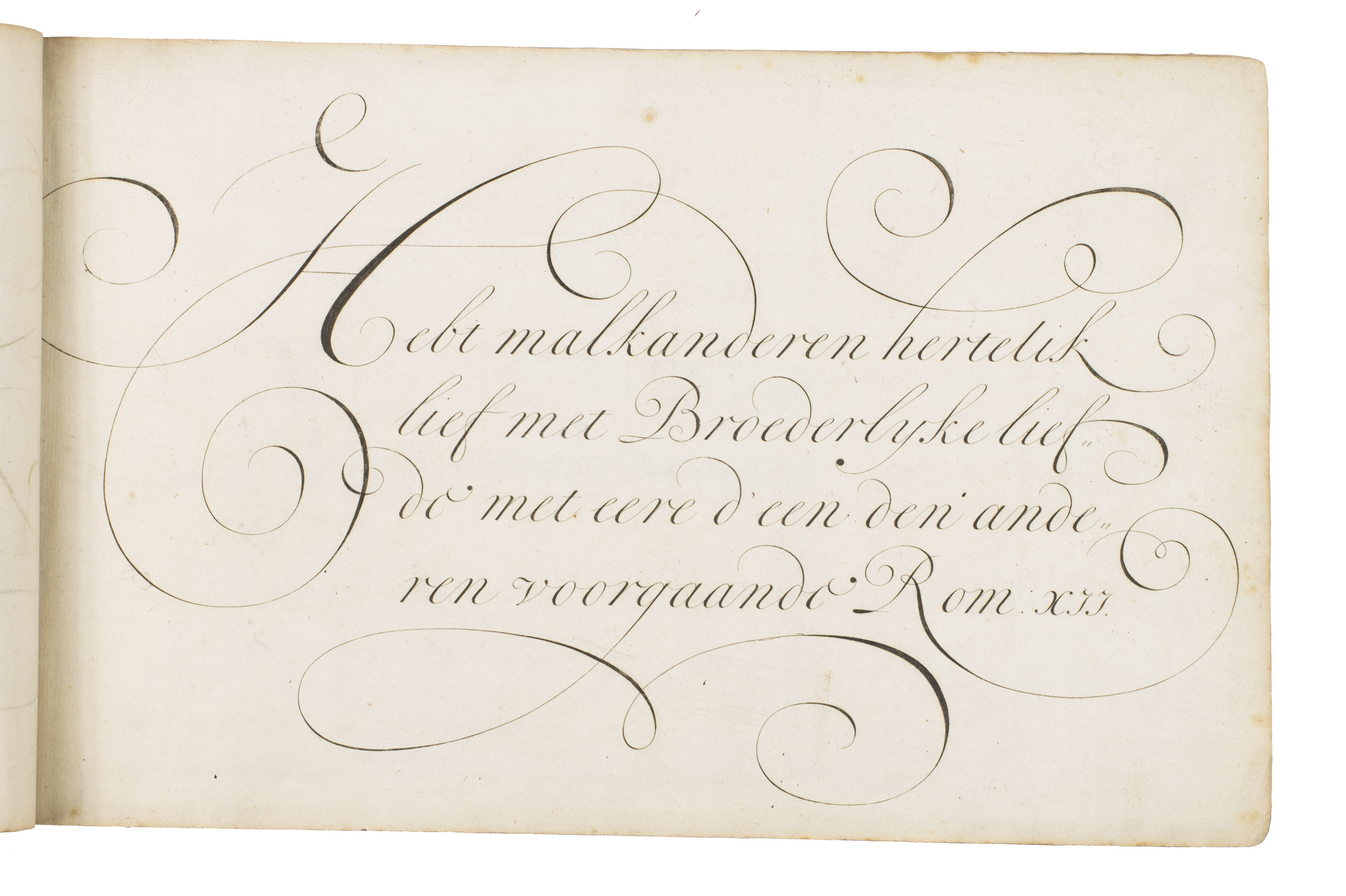
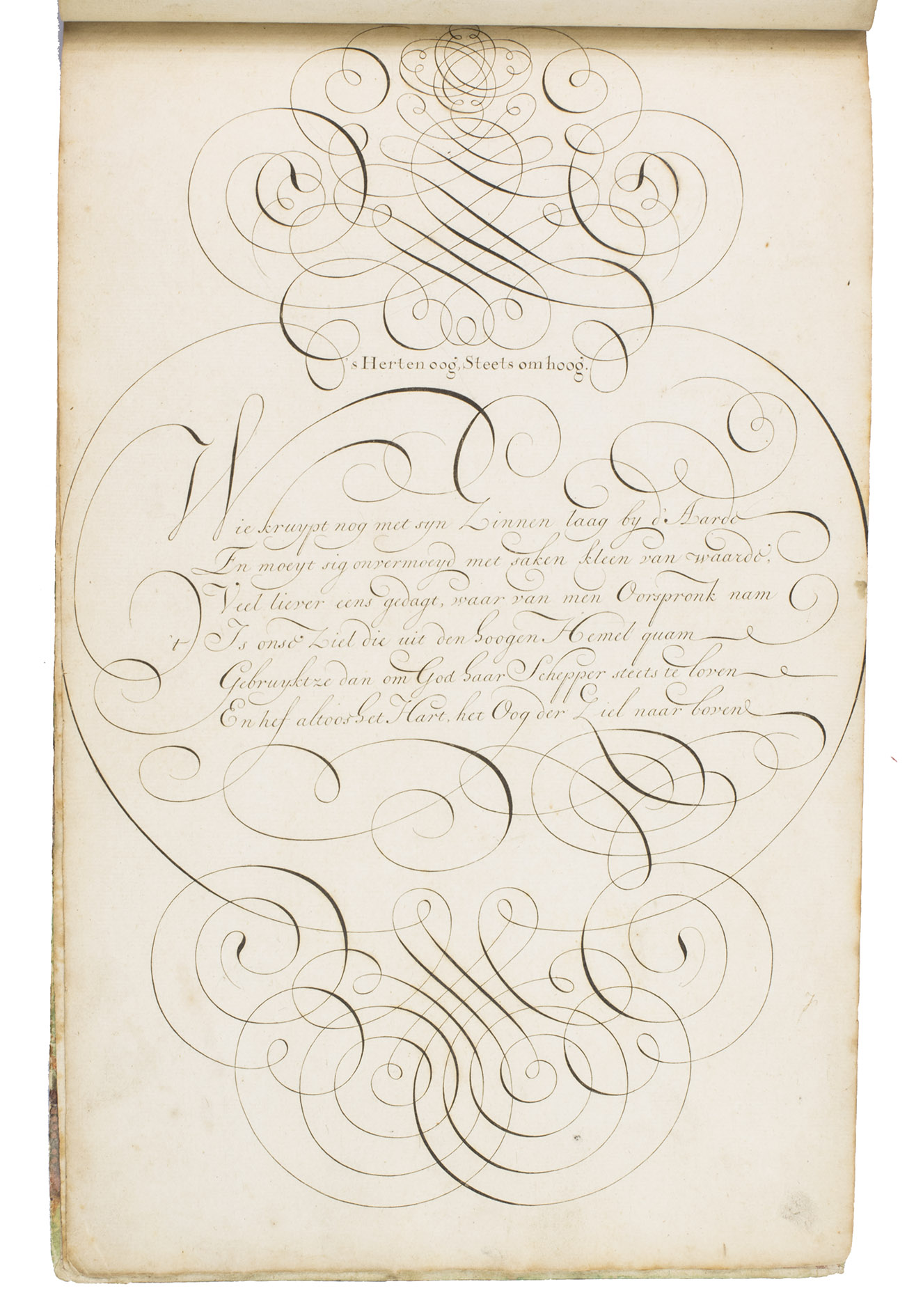
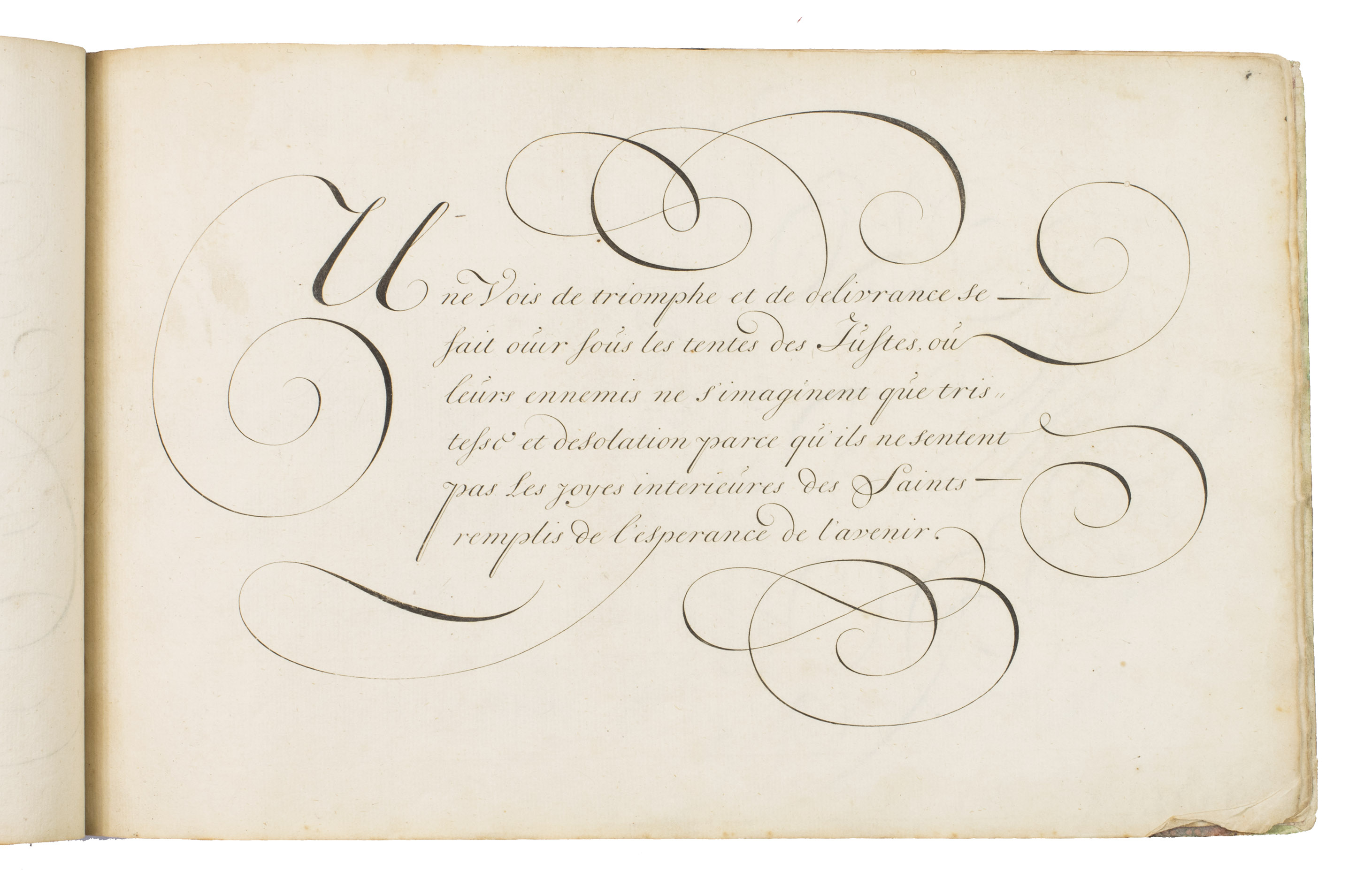
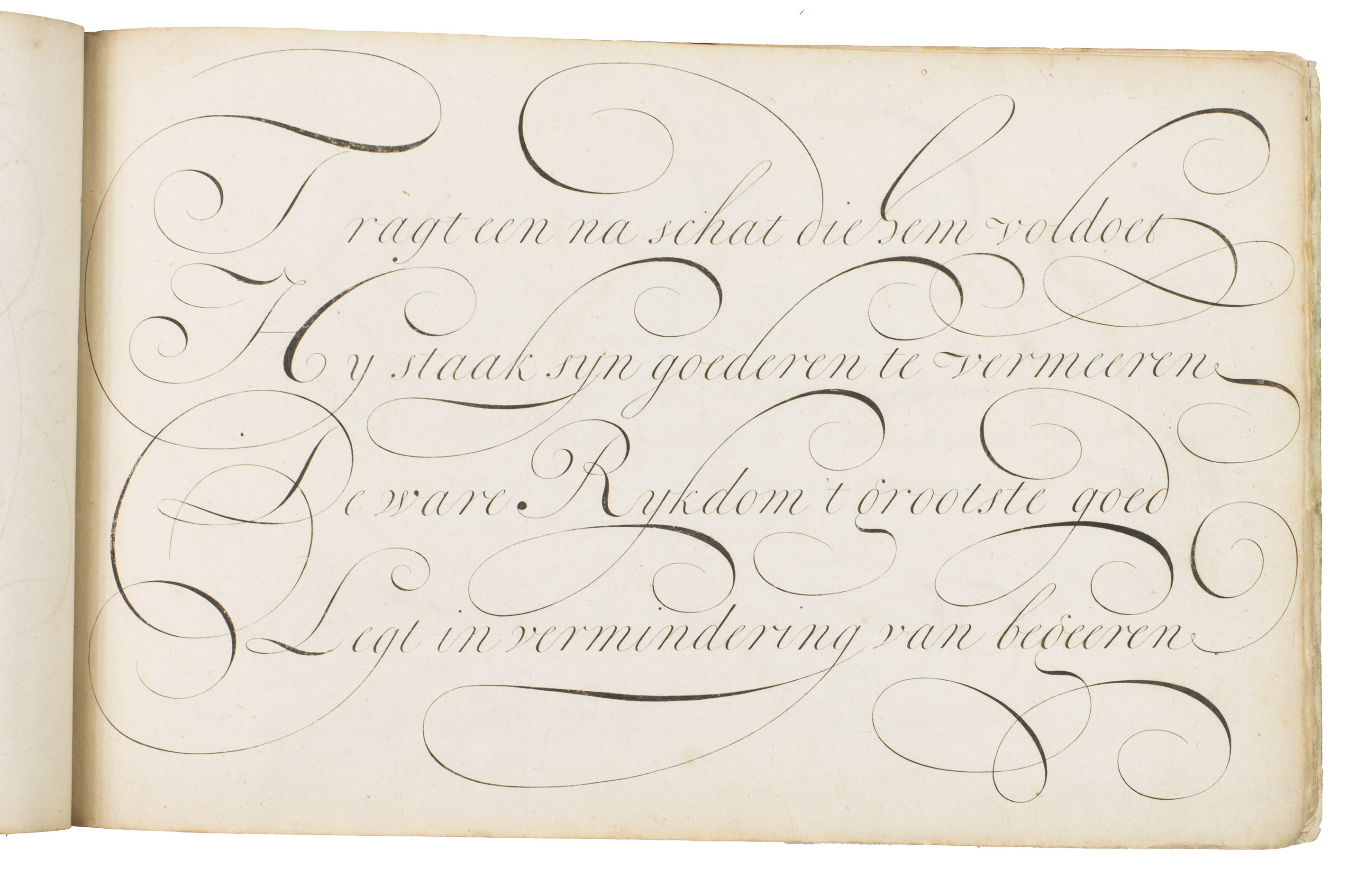
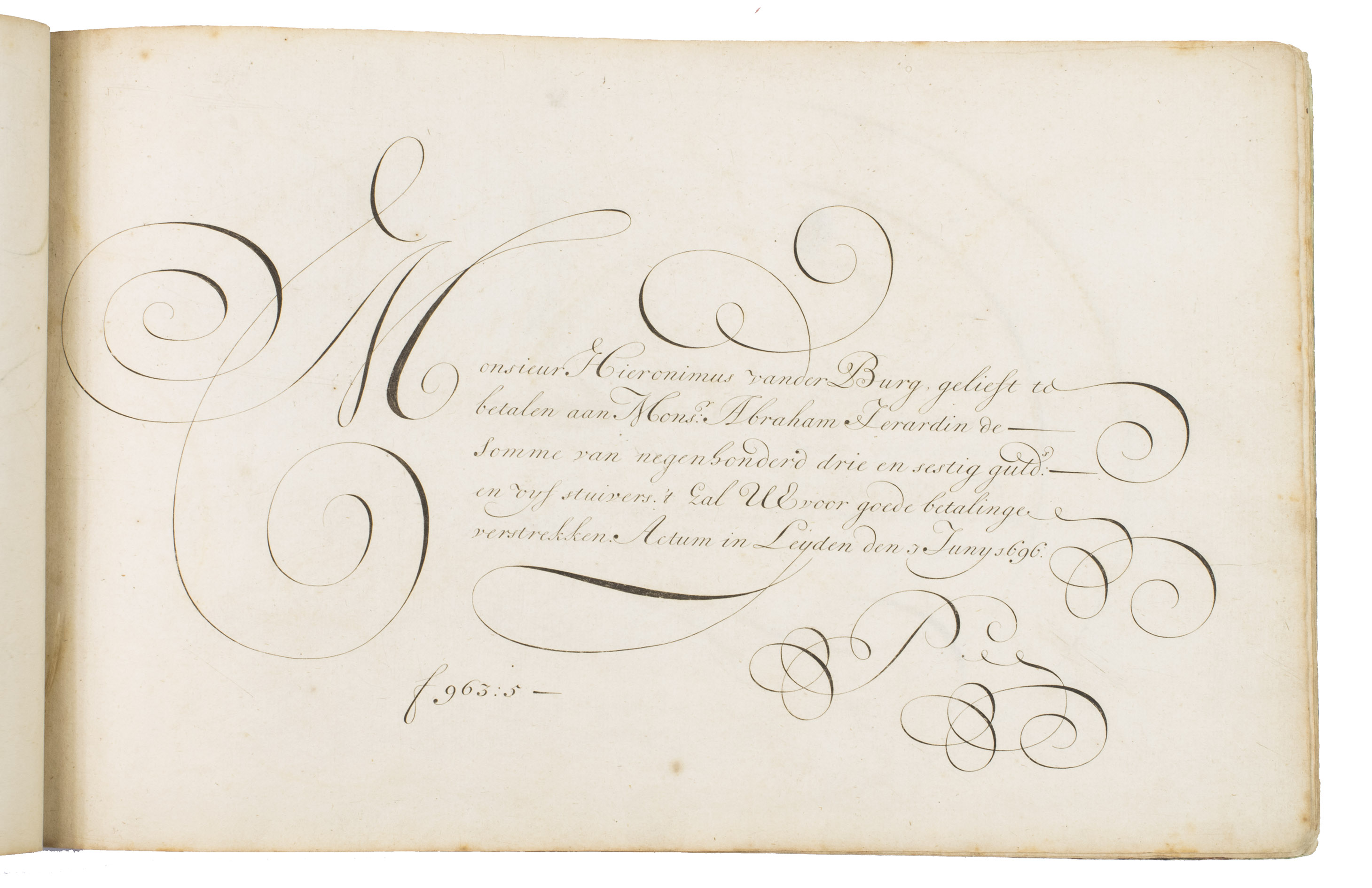
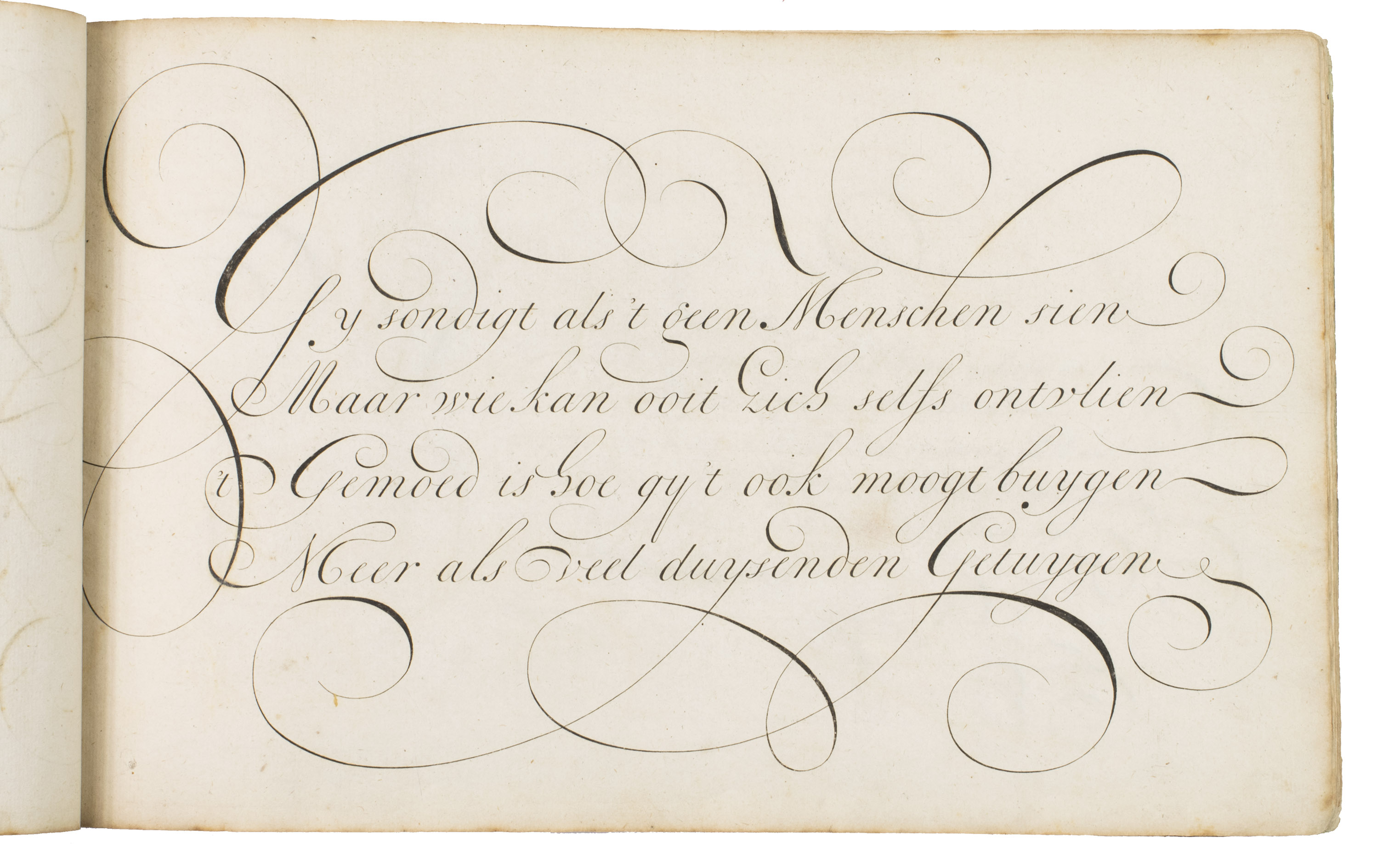
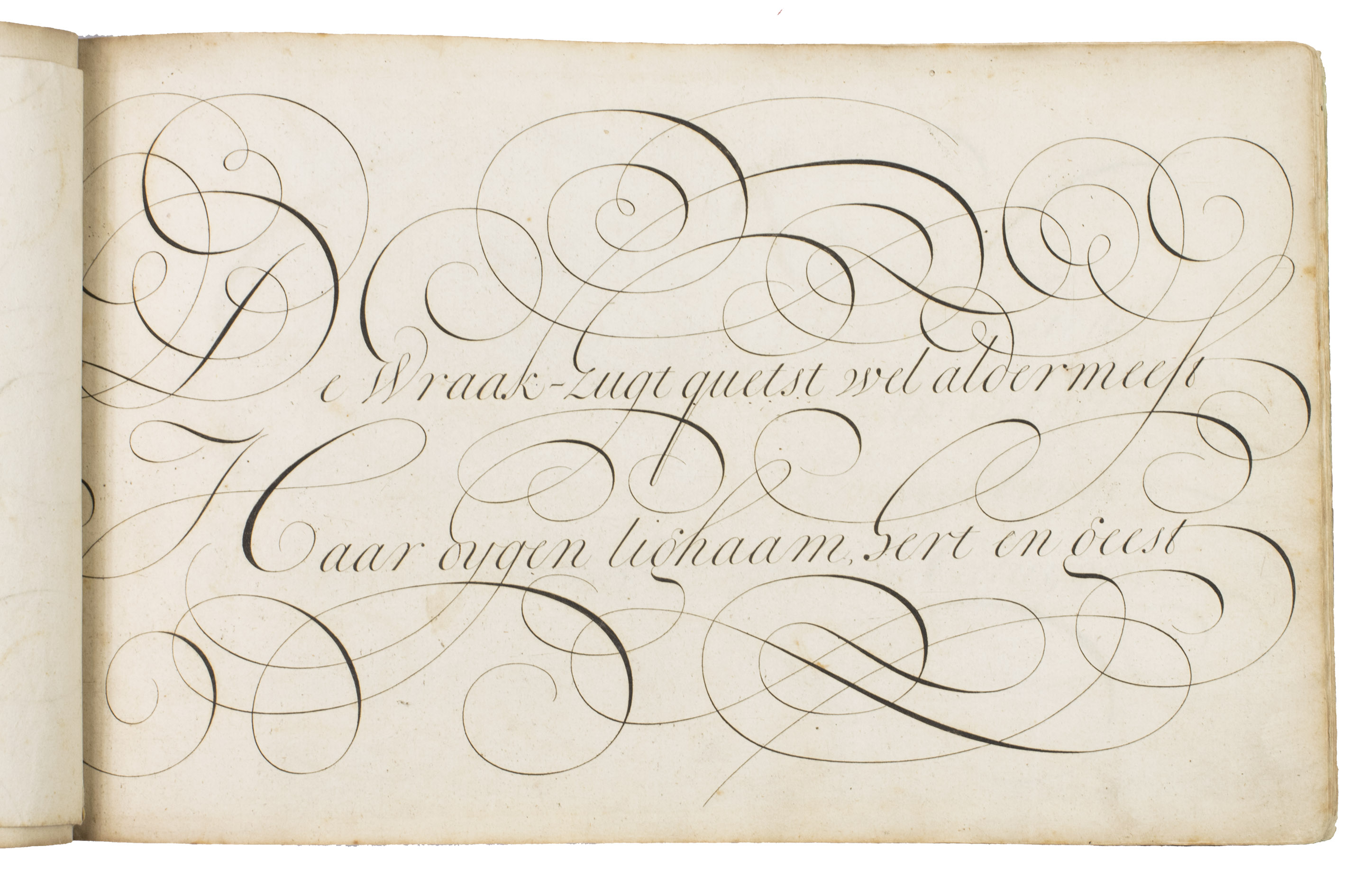
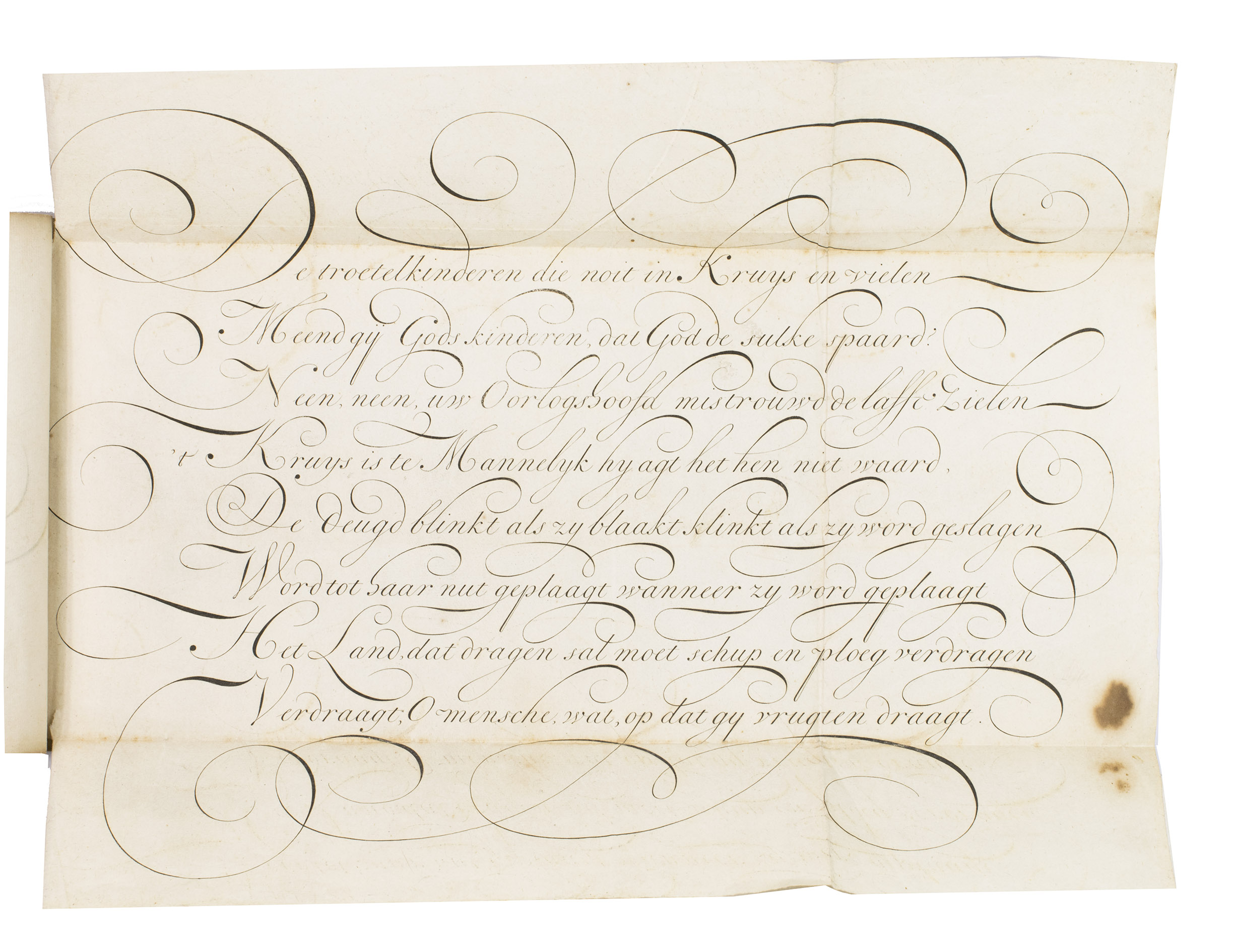
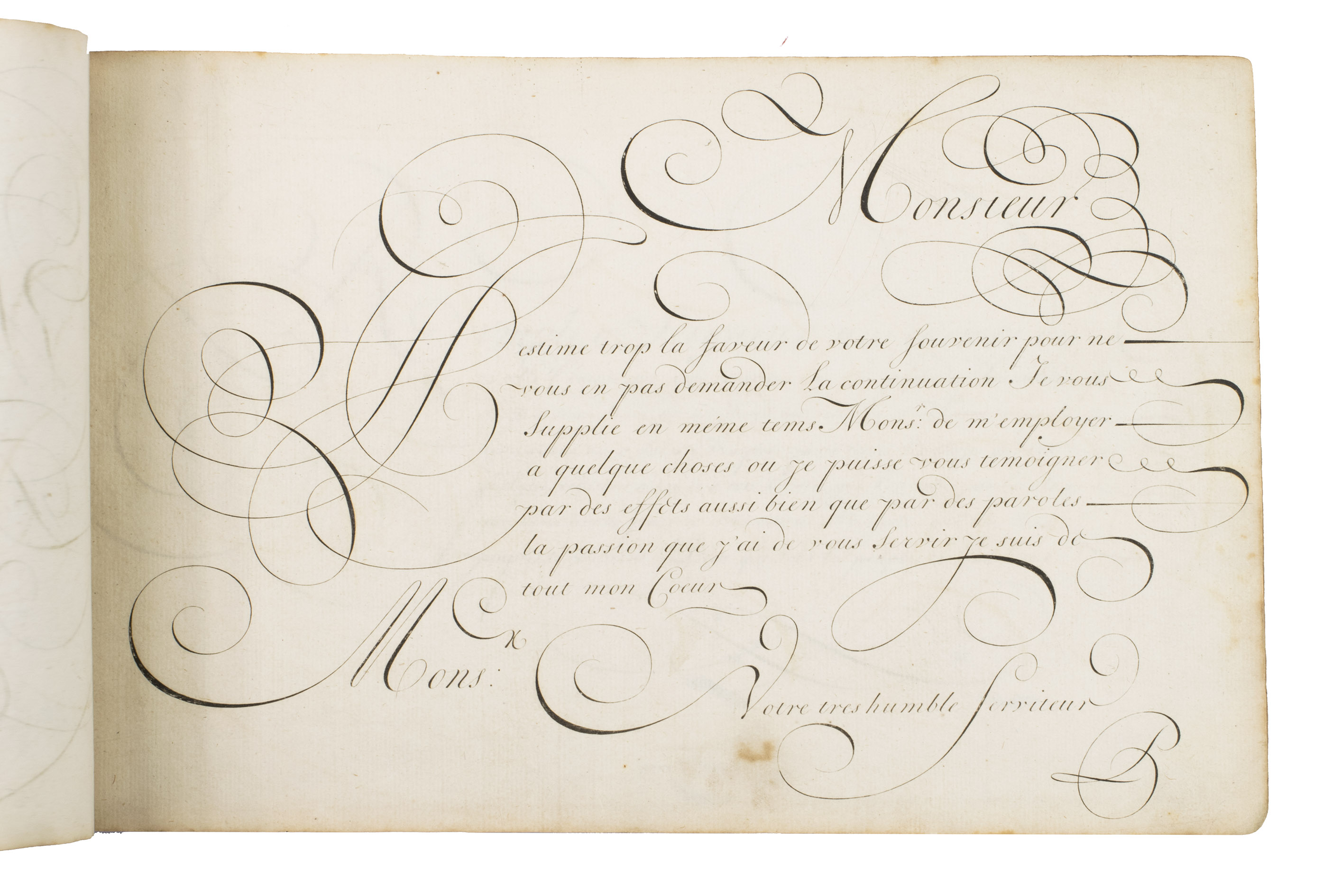
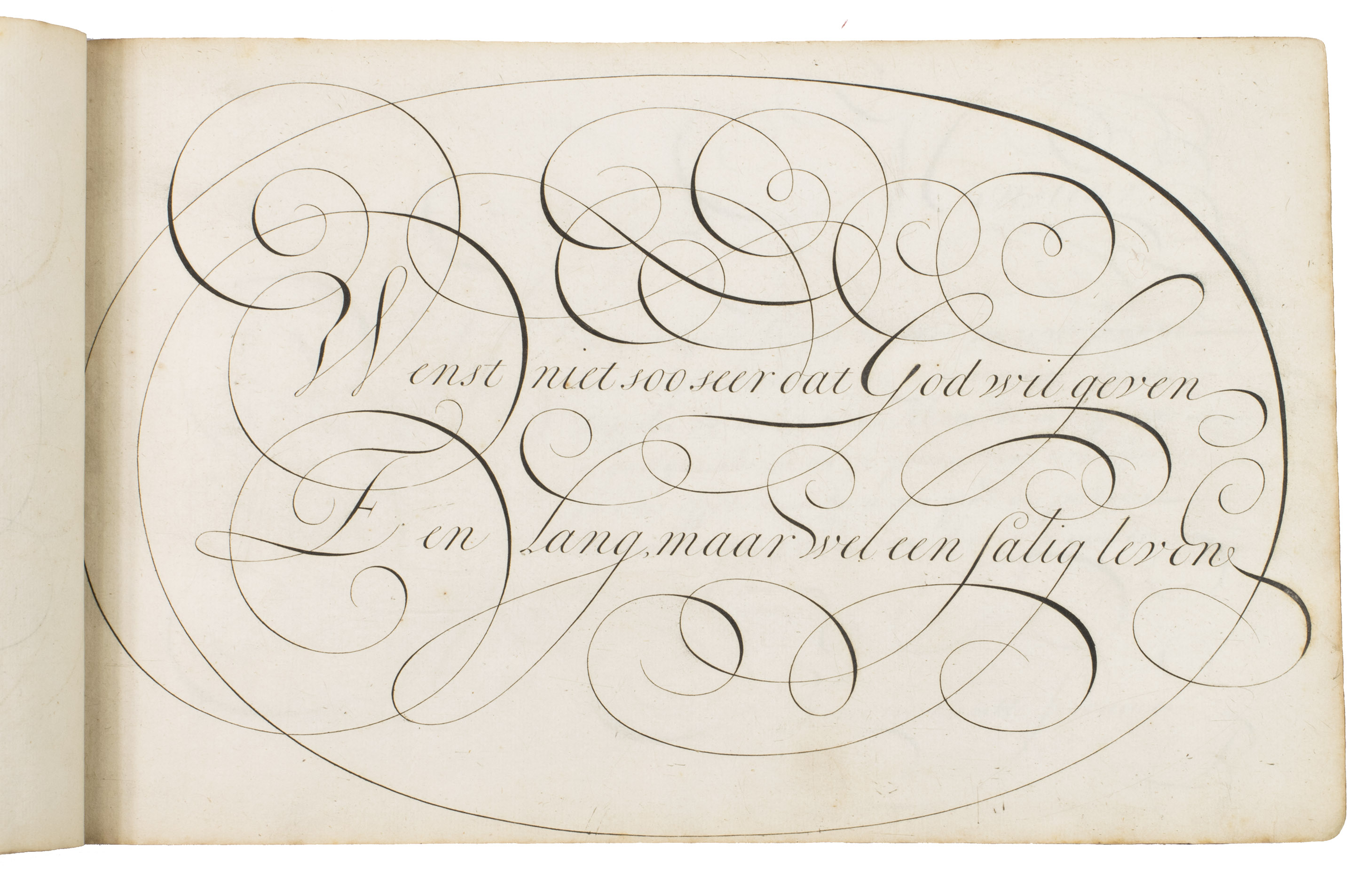
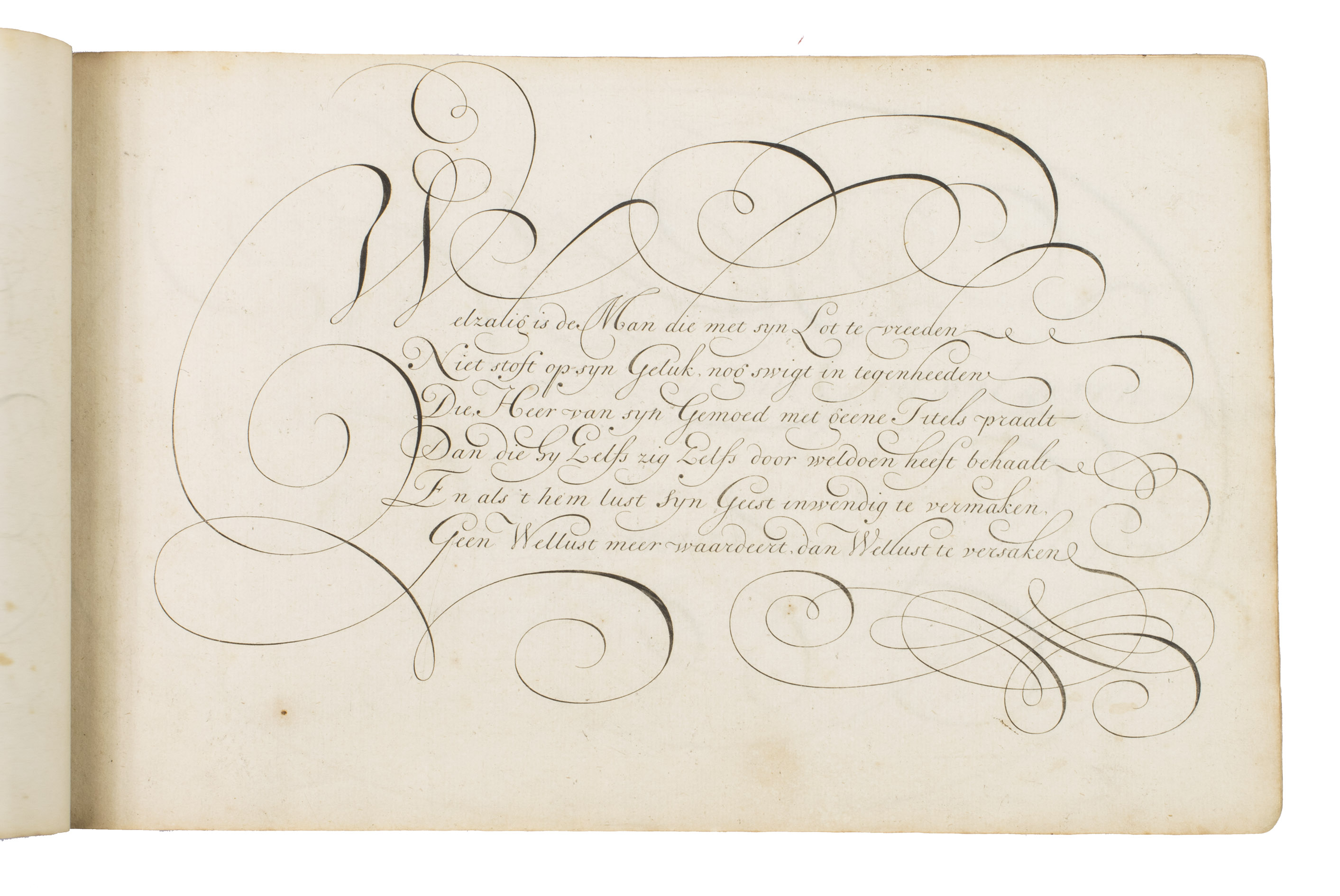
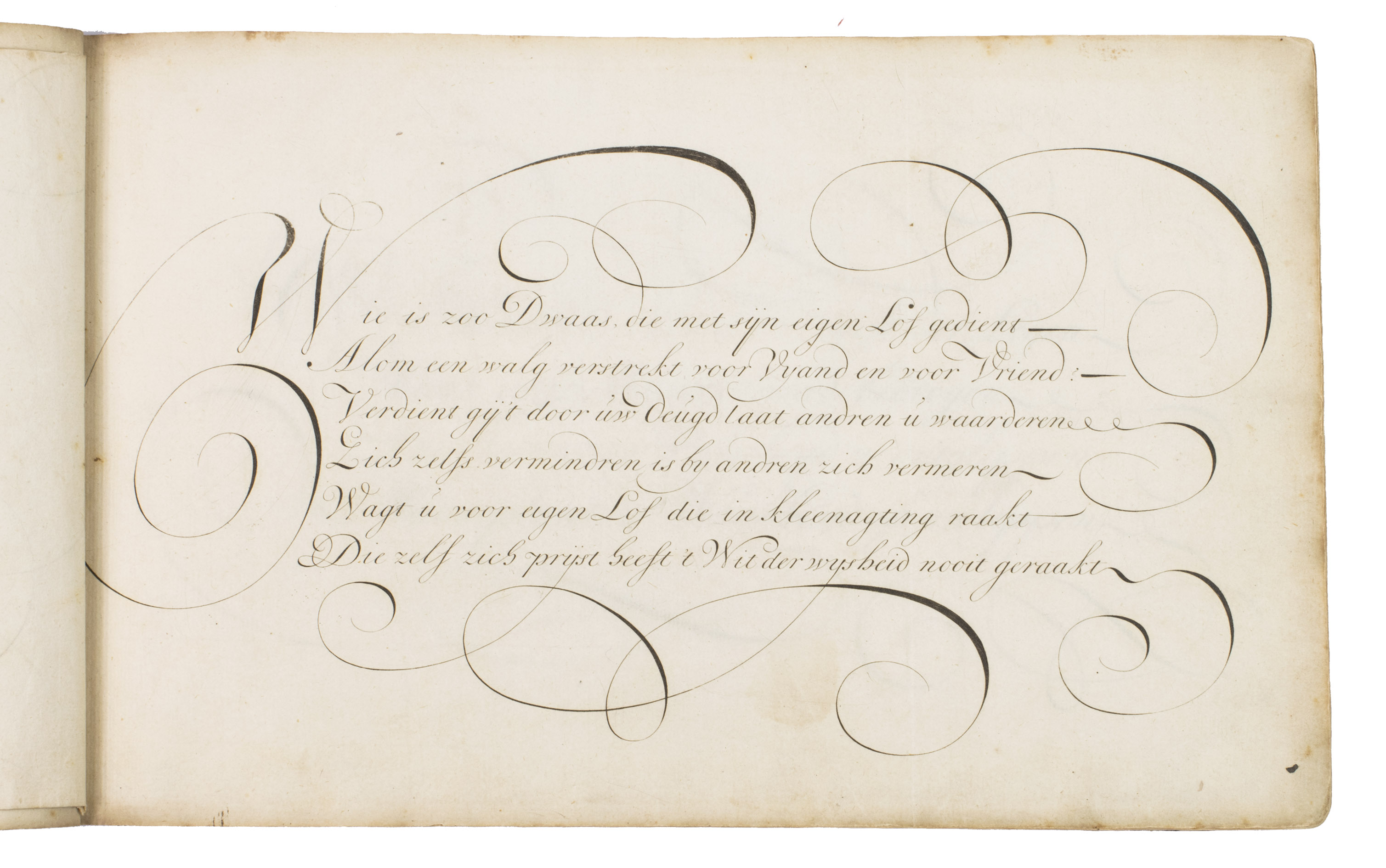
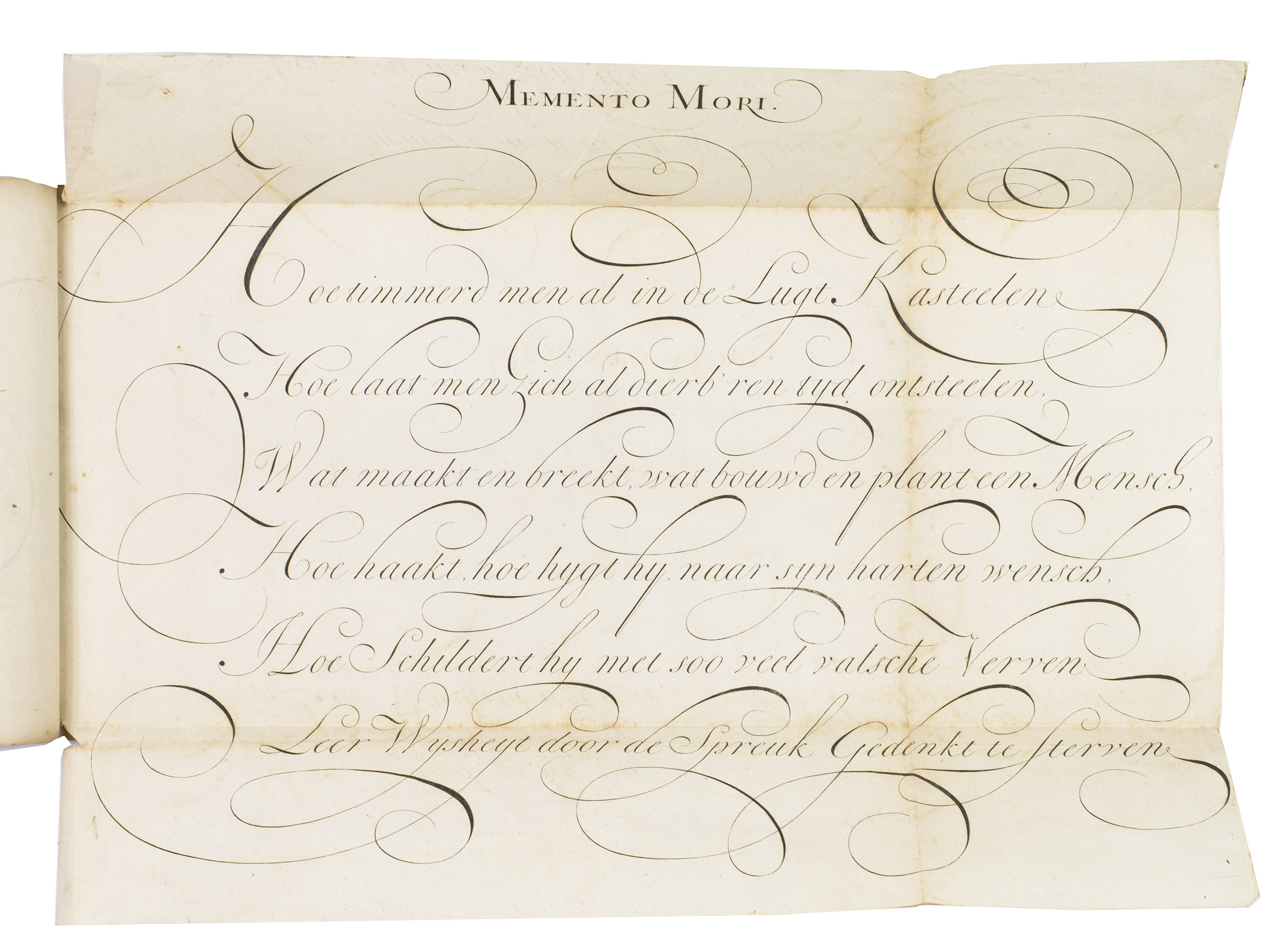
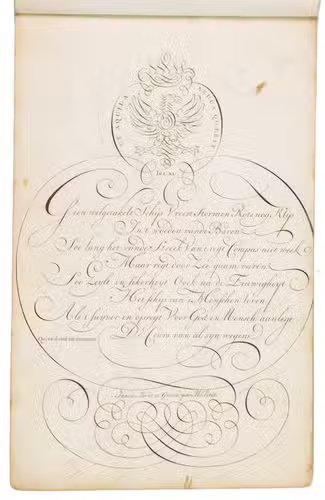
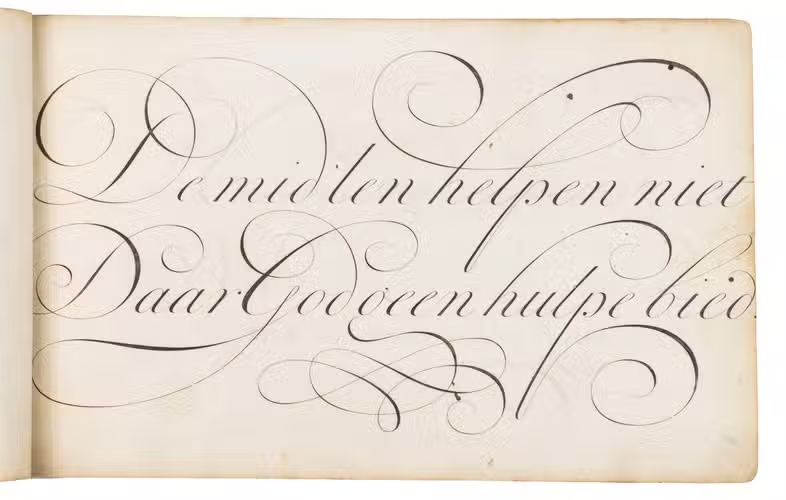
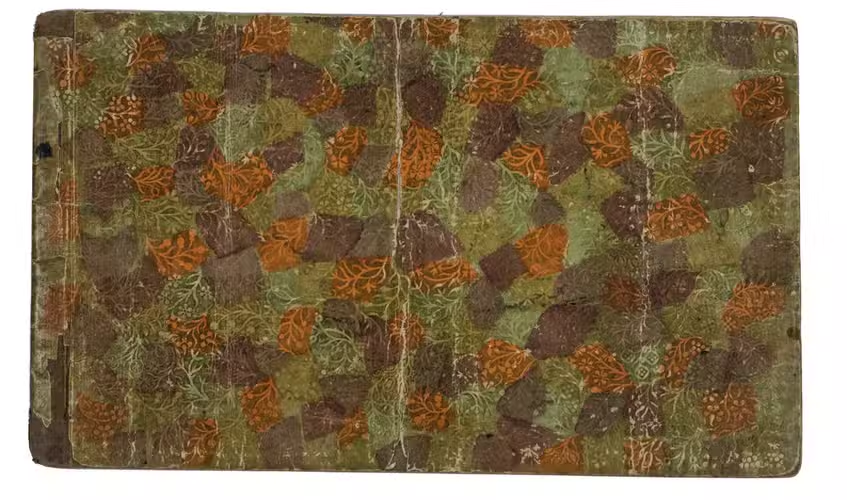
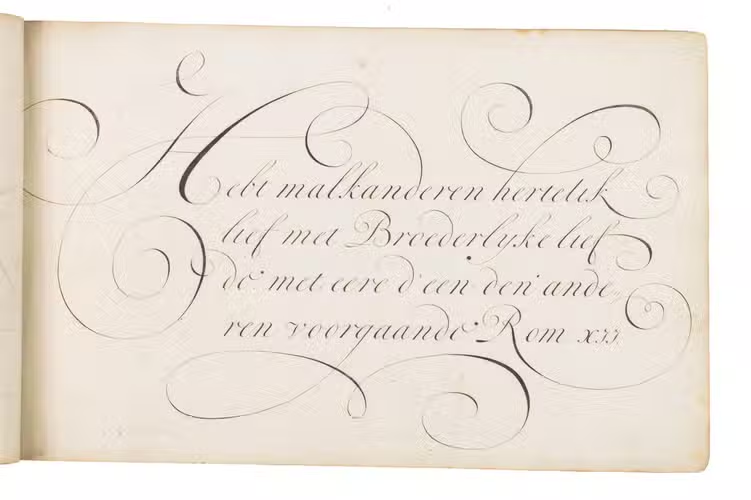
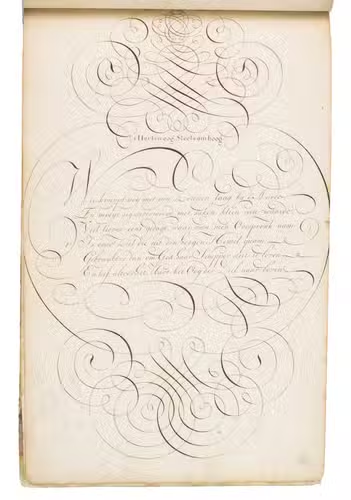
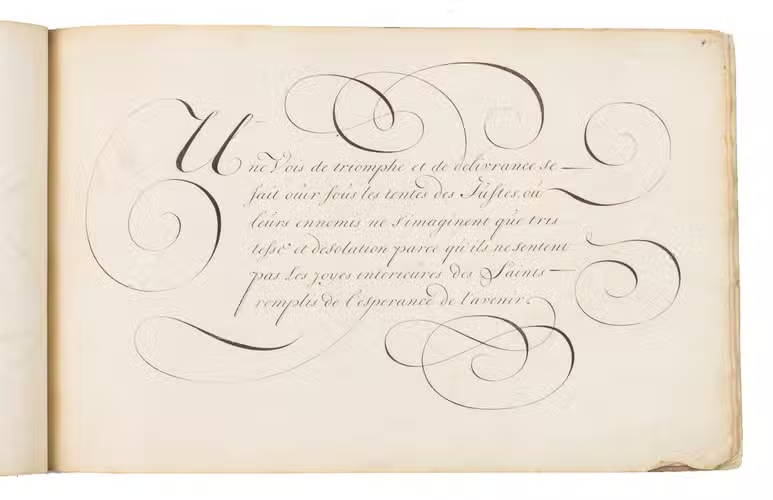
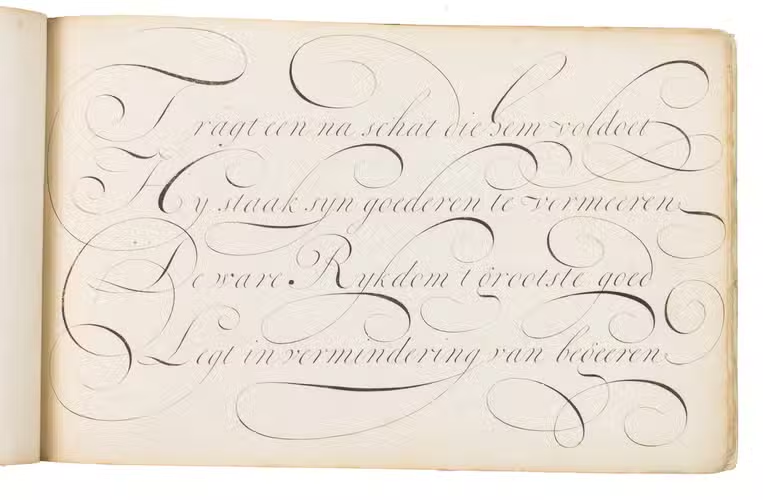
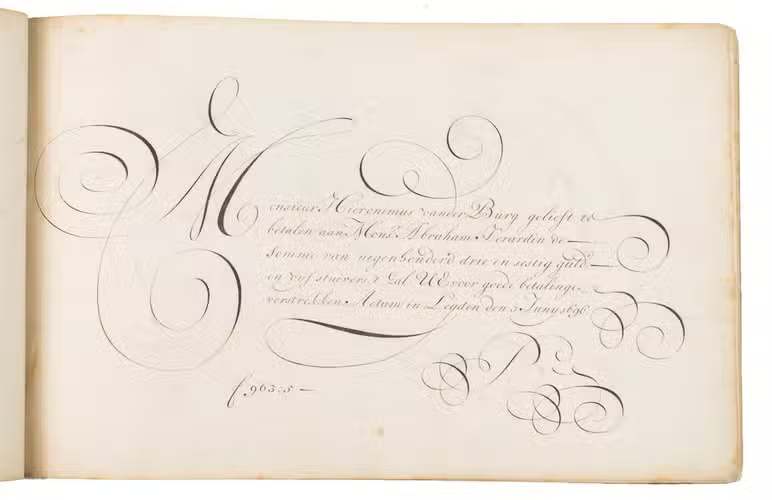
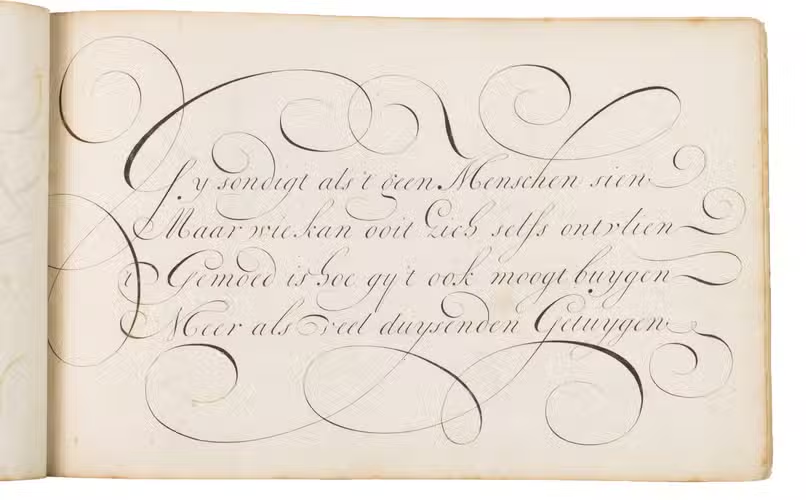
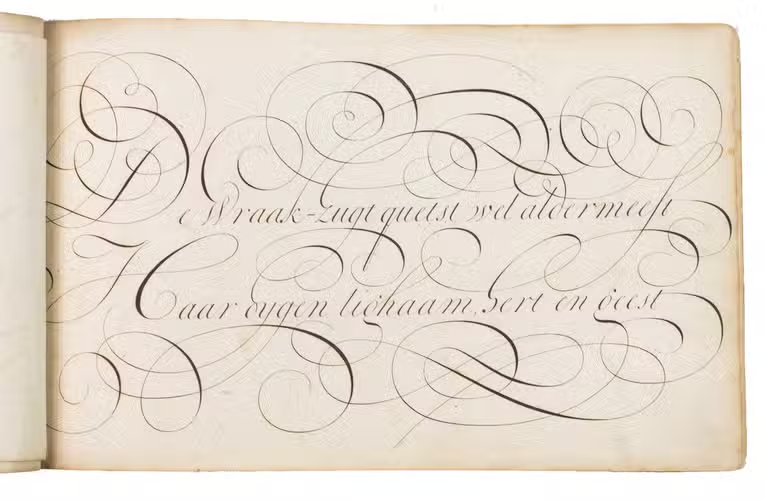
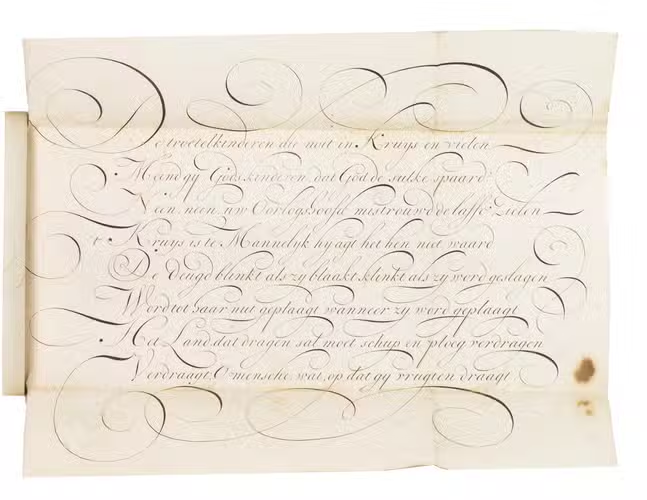
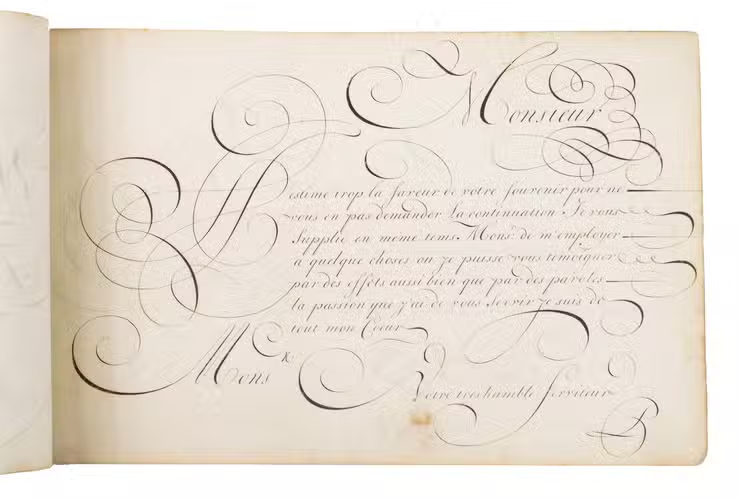
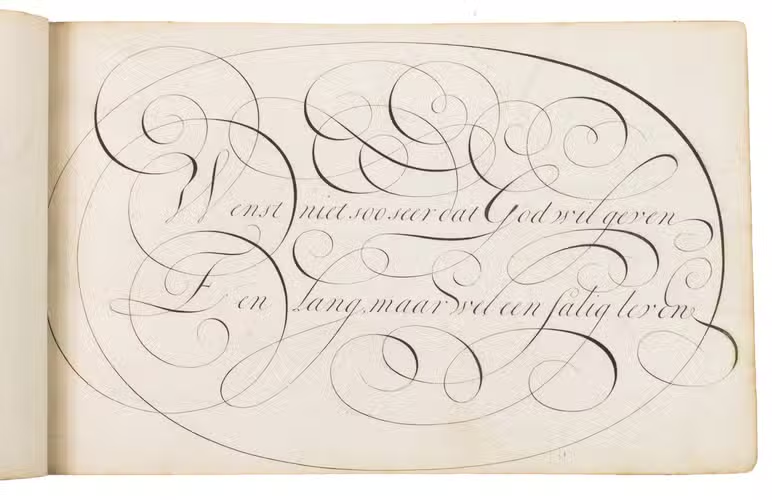
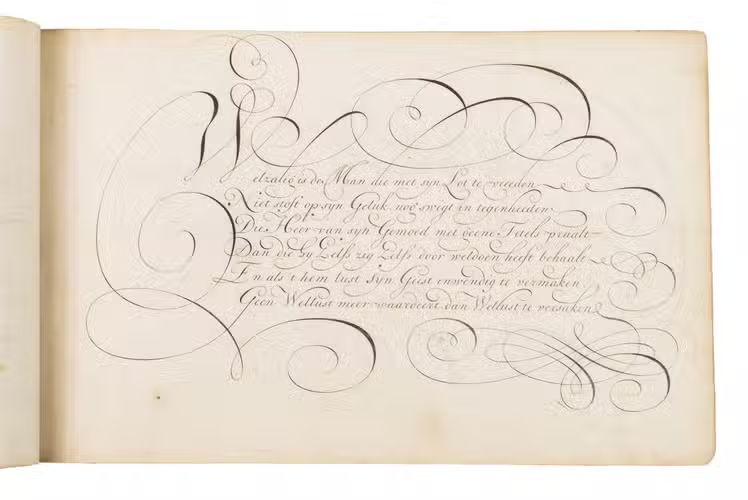
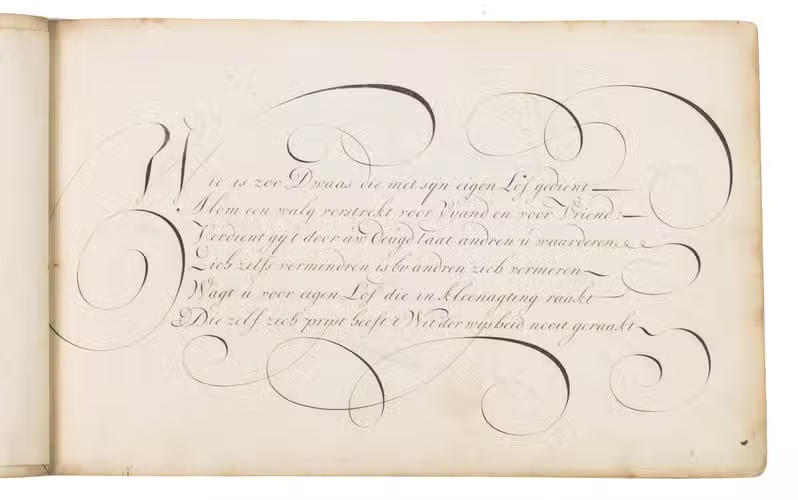
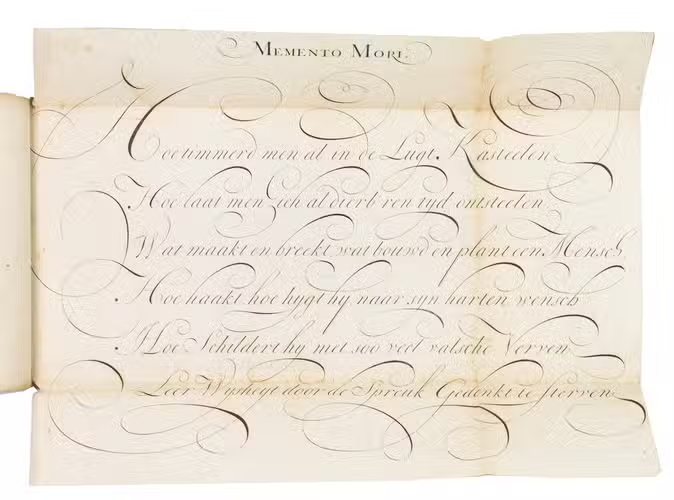
[Arnhem?, The Netherlands, early 18th century?]. Oblong small folio (32 x 19 cm). With 18 leaves showing engraved writing examples in Dutch and French. The texts vary in subject, so they could also serve as guides for how to write a letter or an invoice, but of course also contains simple poems and proverbs. The script shows is a very neat and legible cursive with plenty of curling decorations to add onto letters or to frame the text. Leaves [4] and [11] are bigger and folded at all edges, measuring ca. 40 x 32.5 cm). (Early) 18th-century multi-coloured brocade paper over brown paper wrappers, side stitched through 4 holes, with marbled endpapers. The brocade paper shows in relief a floral pattern and has been decorated with a "colour spotting pattern" (see KB Sierpapier & marmering 9.2, 10.14 and illustration 73). [1 blank], [18], [1 blank] ll.
€ 8,500
Very rare, beautiful 17th-century writing master's copybook in a contemporary brocade paper binding. The 18 writing examples can be ascribed to Dutch writing master, calligrapher, and glass engraver Mathieu Petit (1681-1721). Petit and others like father and son Boers (Bastiaan, 1650-1715 and Maarten, 1683-1751) produced and published several very neat works containing expertly produced copper engraved examples of "Italian" scripts (the cursive style we now call italics) around the turn of the 18th century (ca. 1700), which were more "scholastic" than those published during the previous century. (Croiset van Uchelen, Vive la plume p. 53).
The period between the late 16th century (ca. 1575) and the middle of the 17th century really was the heyday of Dutch calligraphy and the art of writing in general, writing masters and their copybooks remained a staple in Dutch education until at least the end of the 18th century. Petit's work here is a good example of the more simplified examples of the use of "Italian" scripts, which were used to lay the essential foundation of a student's writing skills. Thus, these works were indispensable in early modern education. Copybooks like the present one by Petit were meant to serve as examples and, most importantly, were to be used as practical guides - the proof can be found in the ink stains present in some leaves. A work like the present one would have been used extensively until they would probably fall apart and would have been thrown away, making surviving examples all the more significant for being so rare.
The paper is clearly watermarked, showing several different watermark designs. The printed leaves show the following watermarks: "vryheyt" similar to Heawood 3146 used in 1711, "IM" identical to Heawood 3027 used in/since 1643, and the coat-of-arms of Amsterdam similar to Heawood 361 used in 1700. This leads us to believe that the present work was produced in the early 18th-century, in the period that Petit lived and worked in Arnhem. He moved from Leiden in 1696, and continued teaching at his "French school" in Arnhem. (I. W. L. Moerman, Kalligrafie: echte nationale dilettantenkunst p. 24).
The present work was ascribed to Petit by A. R. A (Ton) Croiset van Uchelen (1936), who is a renowned former (special collections) librarian of the library of the University of Amsterdam We gratefully based part of the present description of this copybook on his detailed research.
The binding shows clear signs of wear: some of the brocade paper covering the wrappers is lost around the spine and edges of the wrappers, the whole work has previously been folded leaving clear creases in the wrappers, slightly browned throughout, and showing some occasional ink stains - probably from having been used by a student practicing their writing. A rare, early 18th-century Dutch writing master's copybook. Cf. Bonacini, Bibliografia delle arti scrittorie e della calligrafia, 1408 (French ed. Arnhem 1698); Cockx-Indestege etc., KB sierpapier & marmering (The Hague: KB, 1994); Croiset van Uchelen, Nederlandse schrijfmeesters uit de zeventiende eeuw (The Hague: Rijksmuseum Meermanno-Westreenianum, 1978); Croiset van Uchelen, Vive la plume. Schrijfmeesters en pennekunst in de Republiek (Amsterdam: Uitgeverij De Buitenkant/Universiteitsbibliotheek Amsterdam, 2005); Heawood, Monumenta chartae papyraceae historiam illustrantia I Watermarks mainly of the 17th and 18th centuries (Hilversum: The paper publications society, 1950); Moerman, Kalligrafie: echte nationale dilettantenkunst, in Nieuw Letterkundig Magazijn 16 (1998) pp. 23-25; Ritsema van Eck, Bastiaan Boers en Mathieu Petit, schrijfmeesters, schoonschrijvers en glasgraveurs, in Bulletin van het Rijksmuseum 30-2 (1982) pp. 51-62; other examples of Petit's copybooks: STCN 424226448 (1 copy, Dutch); STCN 424226510 (1 copy, French); WorldCat 67816218 (1 copy, Dutch, same as STCN 424226448); WorldCat 1048625570 (2 copies, French, 1 same as STCN 424226510).
Related Subjects: