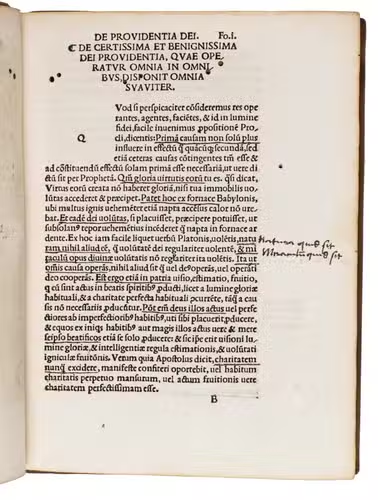
GANSFORT, Wessel.
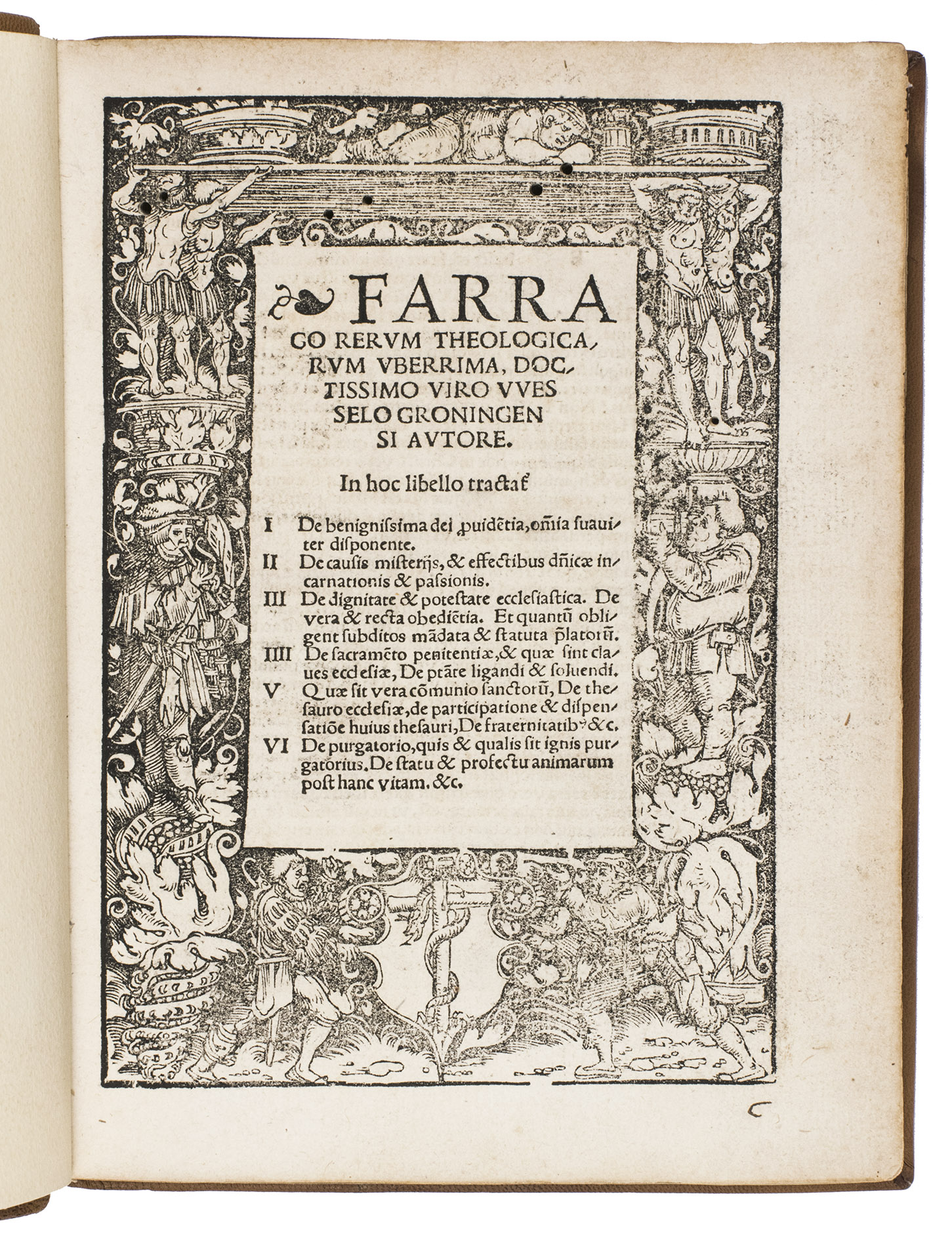
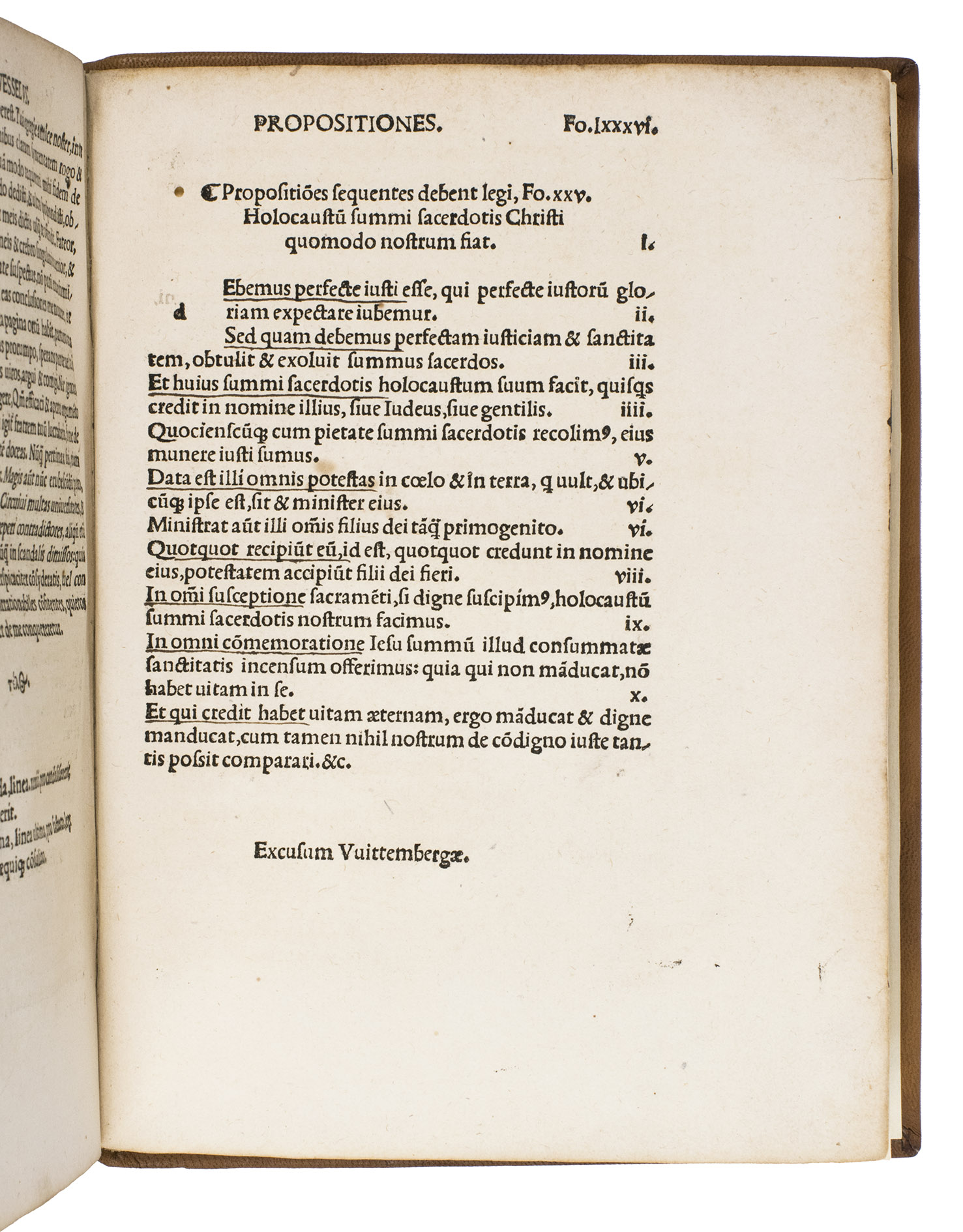
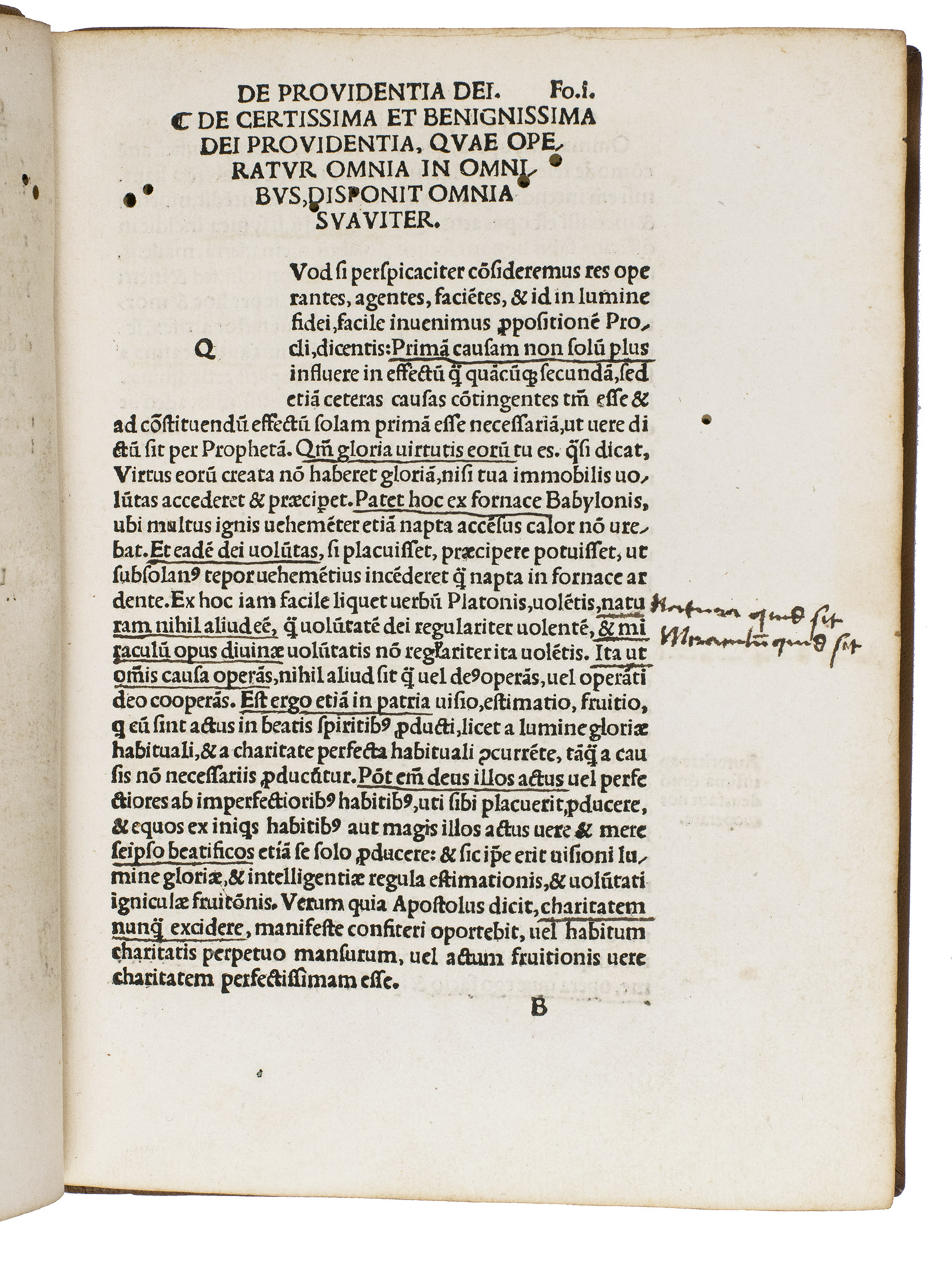
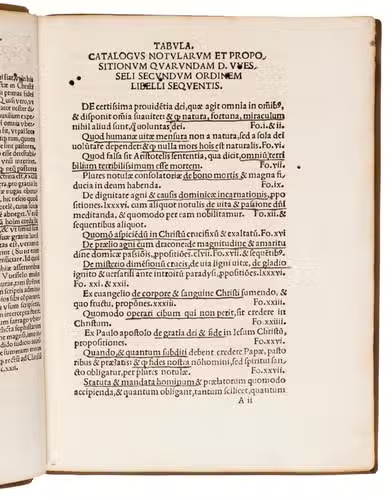
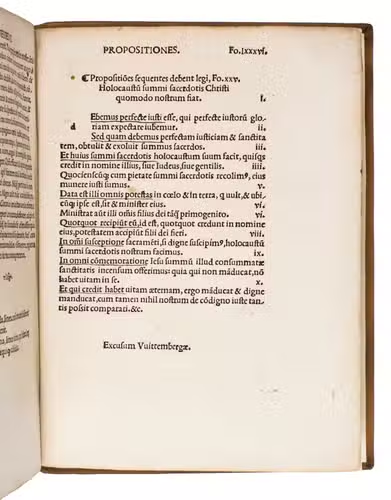
Farrago rerum theologicarum uberrima ... In hoc libello tractatus I. De benignissima dei providentia ... II. De causis misteriis, & effectibus dominicae incarnationis & passionis. III. De dignitate & potestaate ecclesiastica. De vera & recta obedientia. Et quantum obligent subditos mandata & statuta praelatorum. IIII. De sacramento, penitentiae, & quae sint claves ecclesiae, De potestate ligandi & solvendi. V. Quae sit vera communio sanctorum, De thesauro ecclesiae, de participatione & dispensatione huius thesauri, De fraternitatibus &c. VI. De purgatorio, quis & qualis sit ignis prugatorius. De statu & profectu animarum post hanc vitam &c.
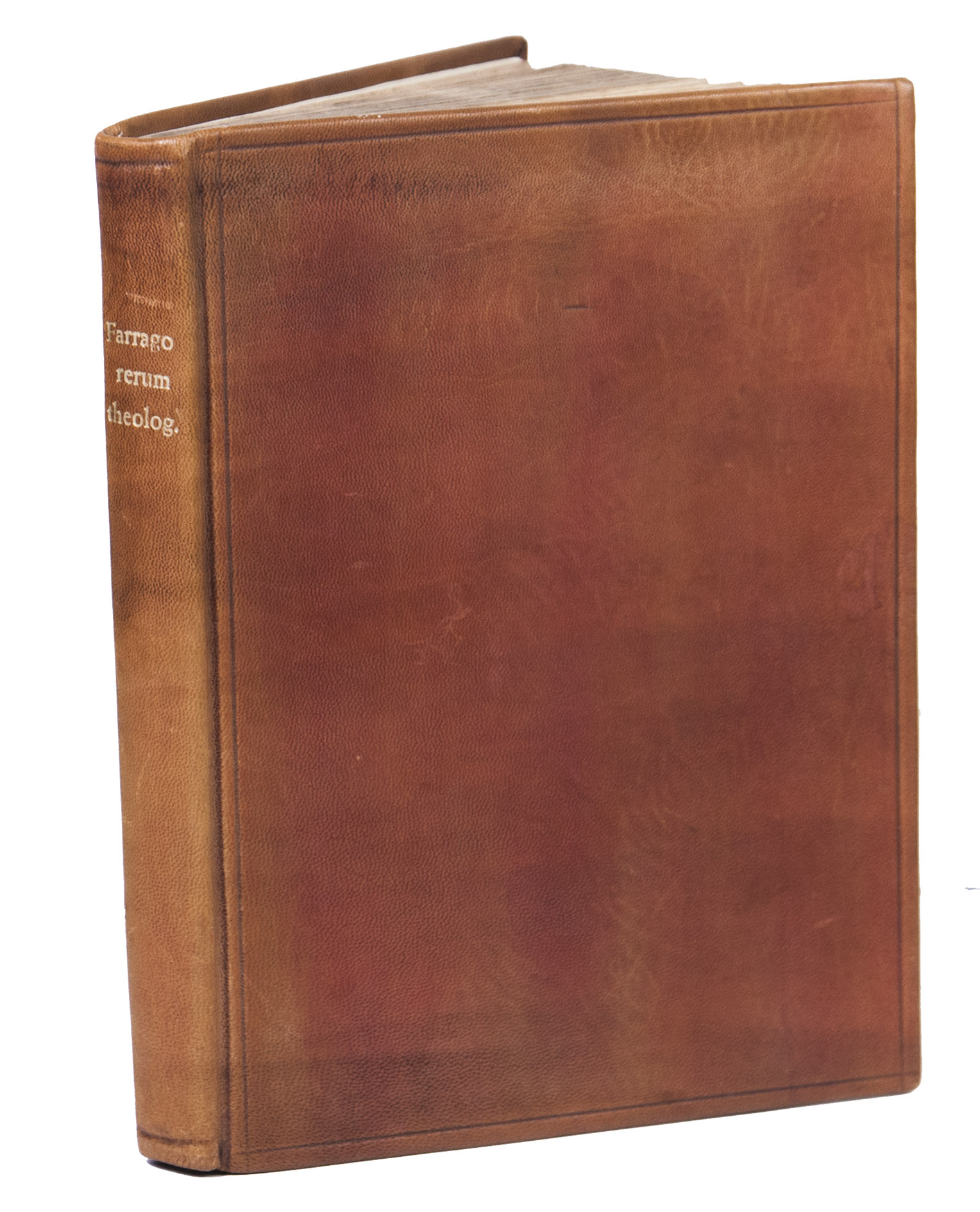
(Colophon:) Wittenberg, [Melchior Lotter the Younger, 1522]. 4to. With an elaborate woodcut title border by Lucas Cranach the Elder. Modern blind-tooled sheepskin. [4], LXXXVI ll.
€ 5,000
First German edition of the first collection of Wessel Gansfort's important and influential writings on theology, issued only a couple of months after the original edition (Zwolle, Simon Corver, beginning of 1522). The present edition bears no date on the title page or in the colophon, but the preliminary note by Andreas Palaeosphyra is dated [15]22, so the work is believed to have been published in that year. The volume was edited by Johann Arnold from Marktbergel in Mittelfranken, who was a corrector at the Lotter office, and who dedicated this edition to the well-known humanist and reformer Andreas Althamer. The beautiful woodcut border on the title page has been attributed to Lucas Cranach the Elder, and is not present in other editions.
Wessel Gansfort (1419-1489), also known as Johan Wessel, was born in Groningen in the northernmost part of the Netherlands. He was one of the earliest theologians of the Low Countries to begin to embrace humanism and to call for reform of the Church. In the wake of Martin Luther and the Reformation, Protestants published this first collection of his writings, presenting him as one of their forerunners. Although Gansfort never advocated separating from the Catholic Church, believed in free will, did not accept justification by faith alone, and did not reject the sacraments in principle, many of his views did anticipate those of the Protestants. He was deeply spiritual, lamented what he saw as the increasingly pagan style of the papacy and the superstitious presentation of sacraments as magic, and denied the infallibility of the Pope and other Church authorities.
Gansfort studied in Zwolle, where he had close ties to the Brethren of the Common Life, as well as the nearby monastery of Mount St. Agnes, where Thomas a Kempis then lived. He left the Low Countries in 1449, studying and teaching in Cologne, Paris, Rome, Venice, Basel, and Heidelberg. Reuchlin was one of his students. In the late 1470s he returned to the monasteries in Groningen and Zwolle, remaining there for the rest of his life. Now a renowned scholar, he helped determine the direction of these influential monasteries. The present volume contains six of his theological treatises: 1) De benignissima dei providentia; 2) De causis misteriis, & effectibus dominicae incarnationis & passionis; 3) De dignitate & potestate ecclesiastica; 4) De sacramento penitentiae; 5) Quae sit vera communio sanctorum; and 6) De purgatorio. After being published in Zwolle in 1522, the collection was also published in Basel by Adam Petri in 1523. Luther, who wrote a preliminary note for this edition of the Farrago, noted that if he himself had written nothing before reading Gansfort, people might have supposed he took all his ideas from him. In the sixteenth century Gansfort's writings were placed on the Index of prohibited books. He certainly stands as a leading figure who helped prepare the way for the Reformation.
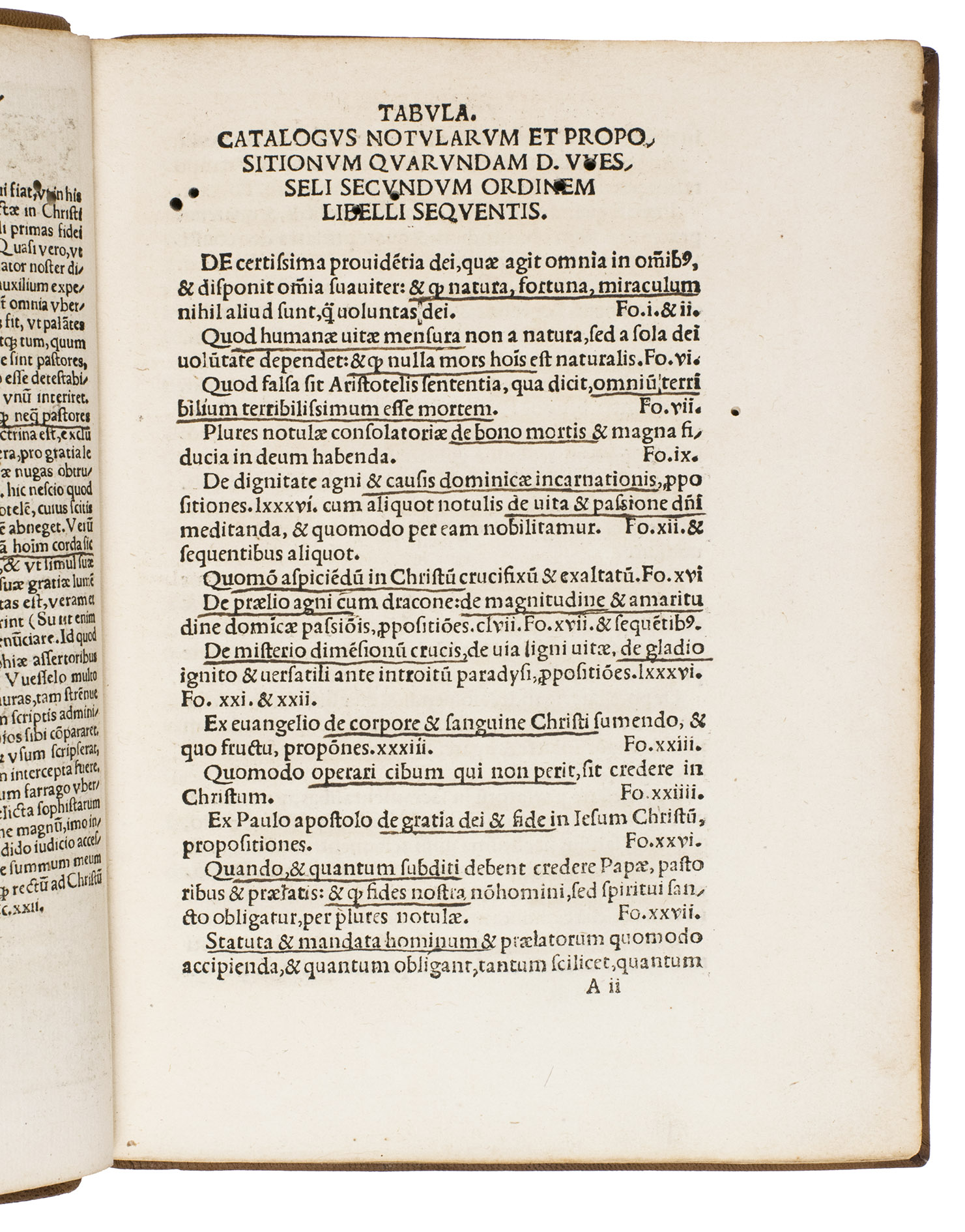
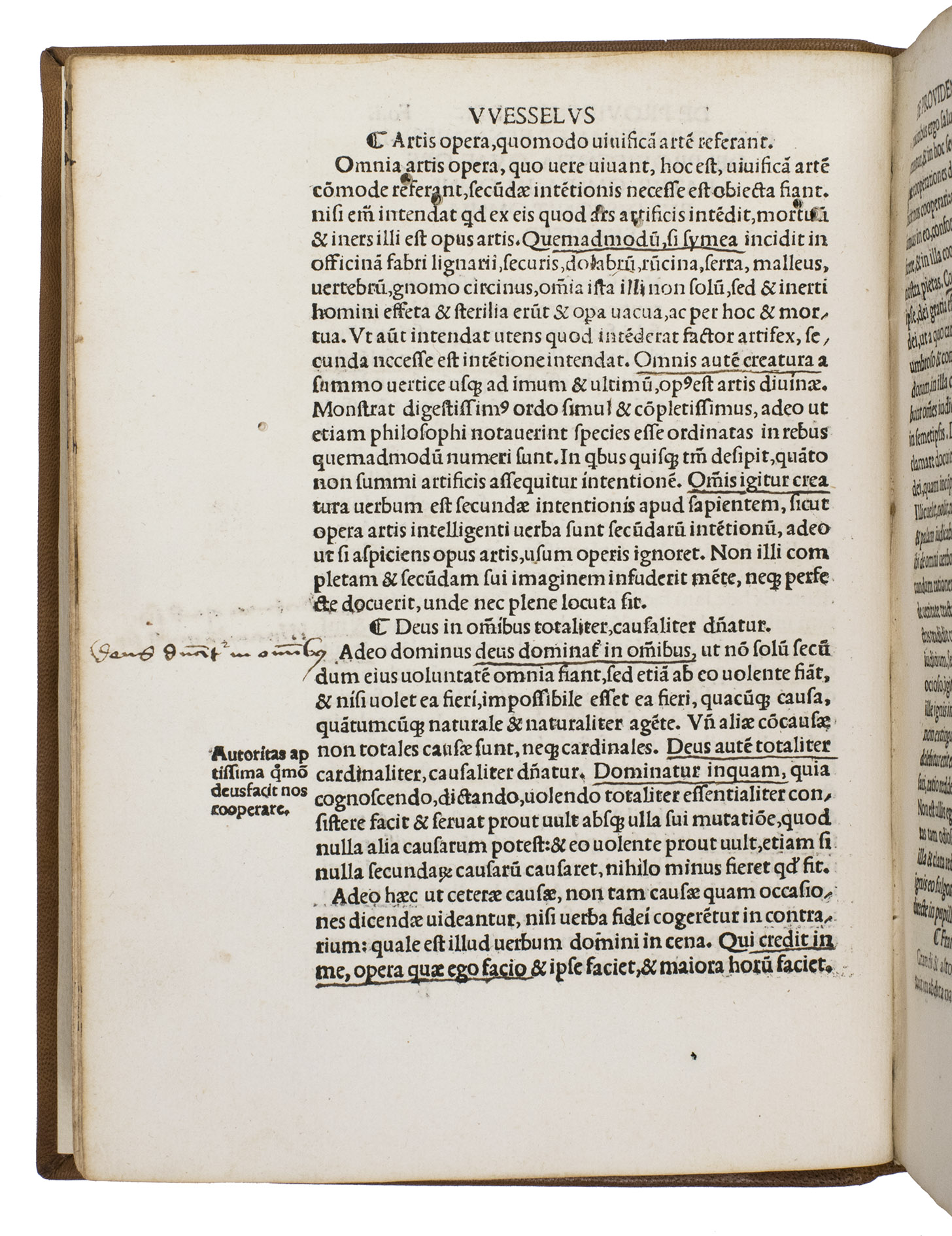
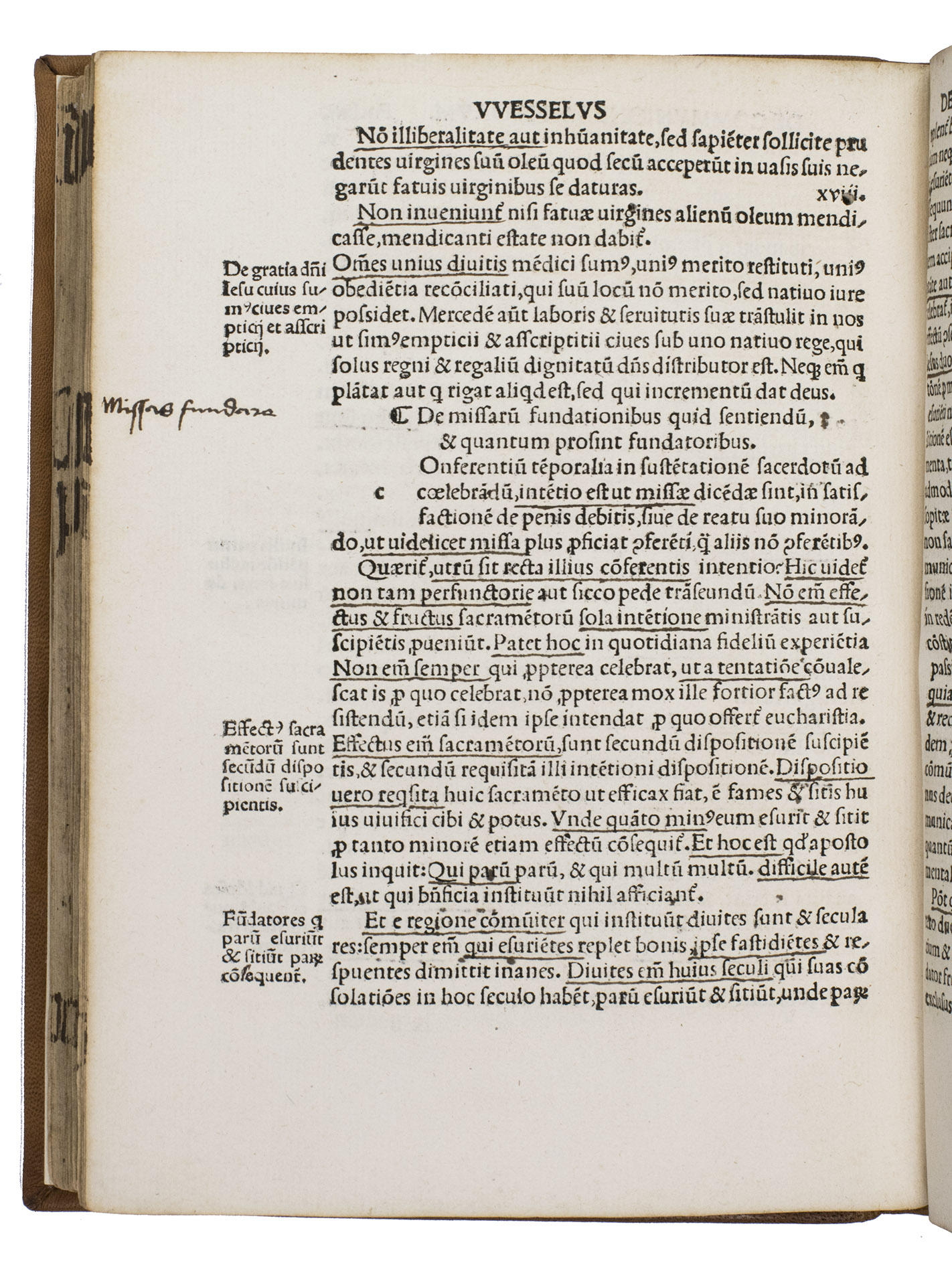
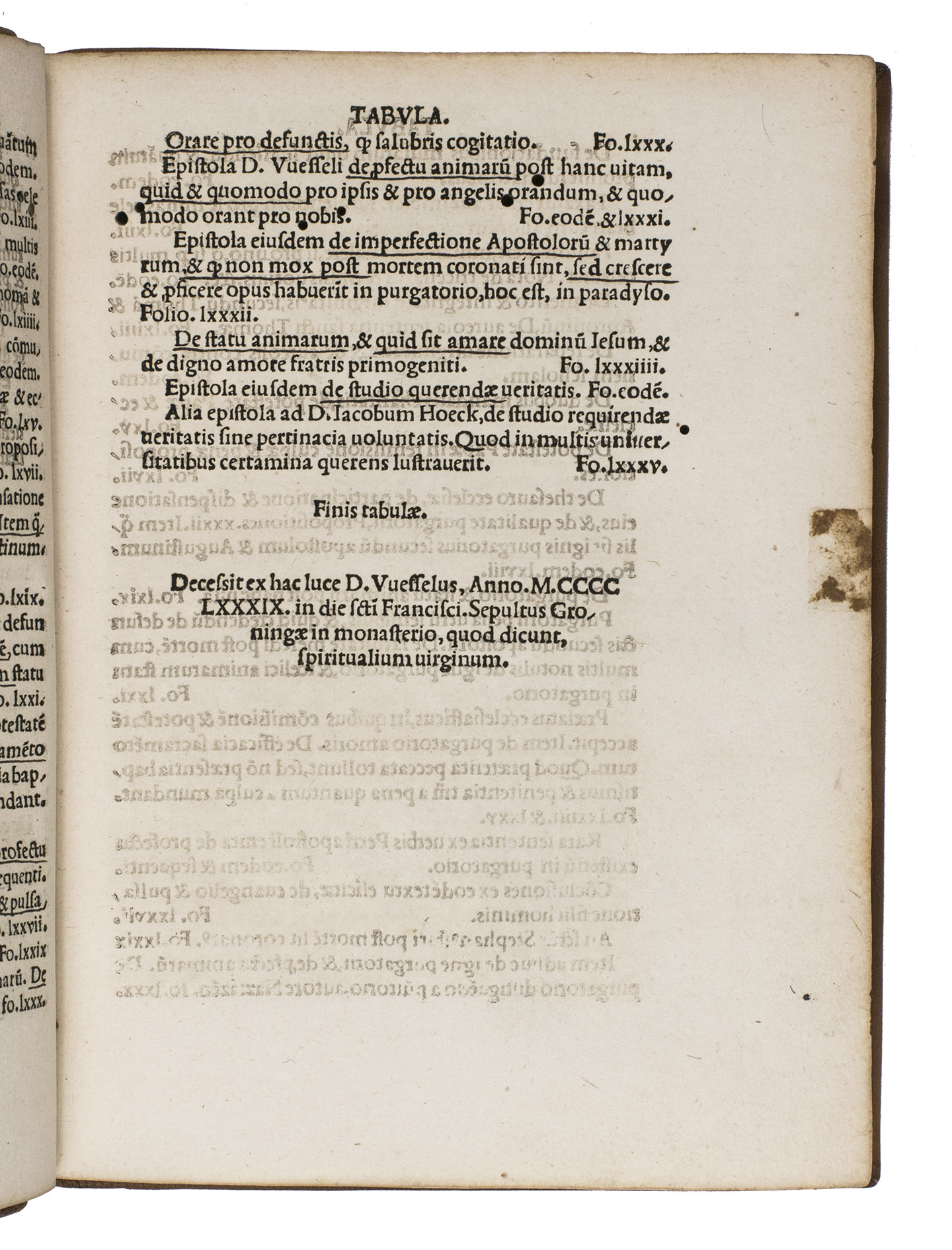
With contemporary glosses and underlinings on most leaves. Small wormholes in the first two-thirds of the work, affecting a few letters. Otherwise in good condition. Bietenholz II, p. 74; BMC German, p. 911; Pennink, Niet-Nederlandse drukken 952; USTC 657303; VD 16, J 600; not in Adams; cf. Hermans, Zwolse boeken, p. 244: ZD 260 (1st ed.); Nijhoff & Kronenburg 2202 (1st ed.); for the woodcut border: Stickelberger-Folger (1977).
Related Subjects: