WOLLASTON, Francis.
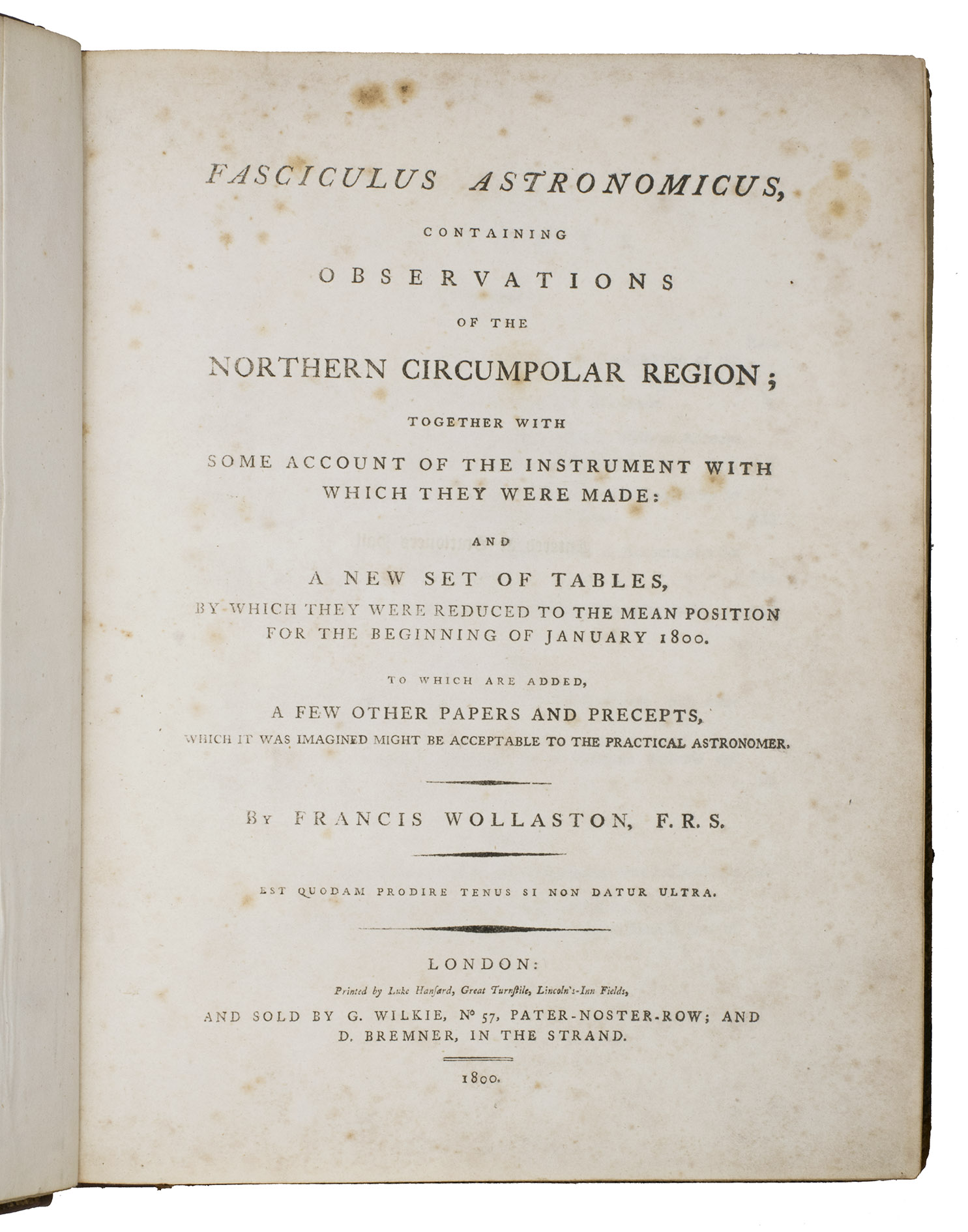
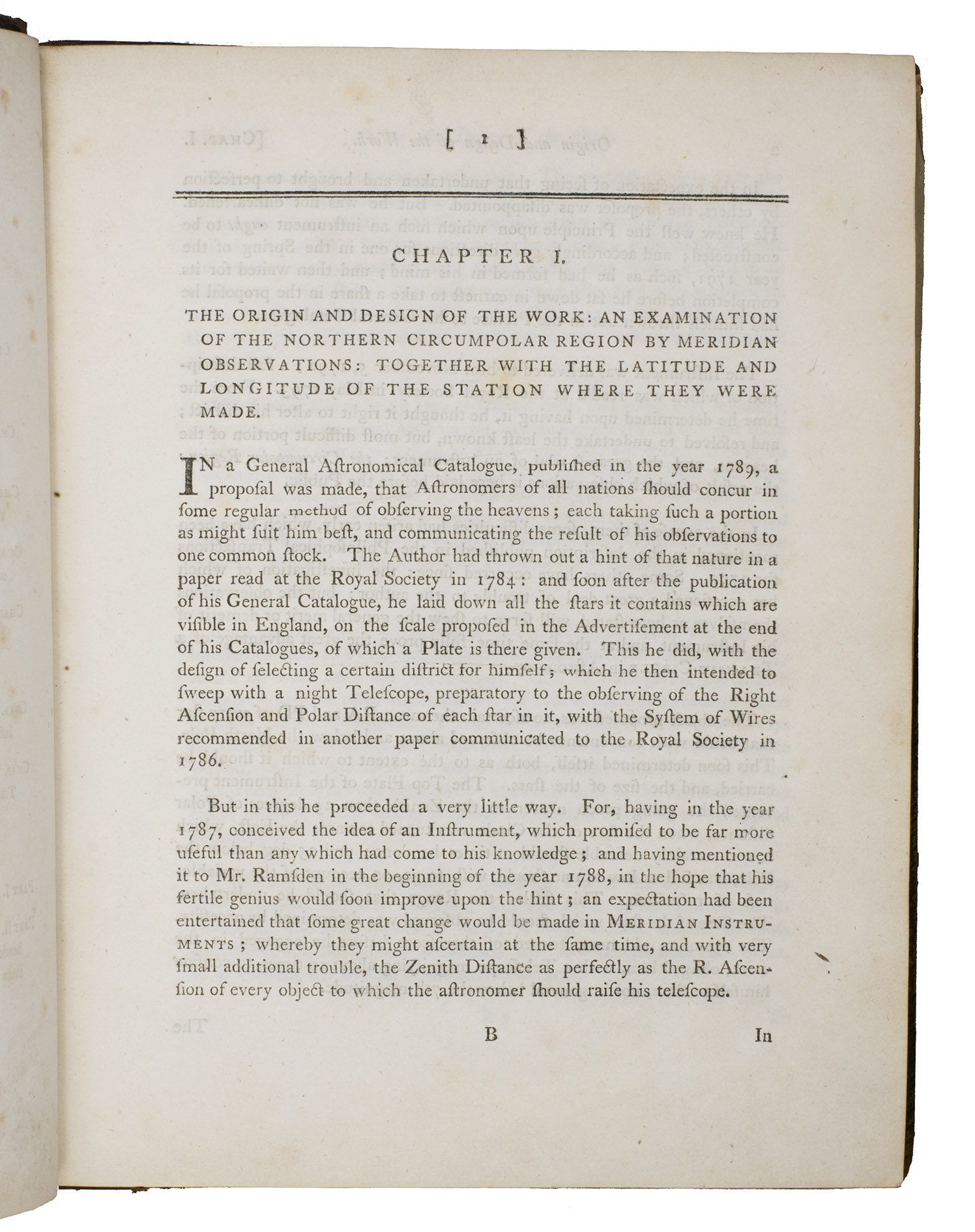
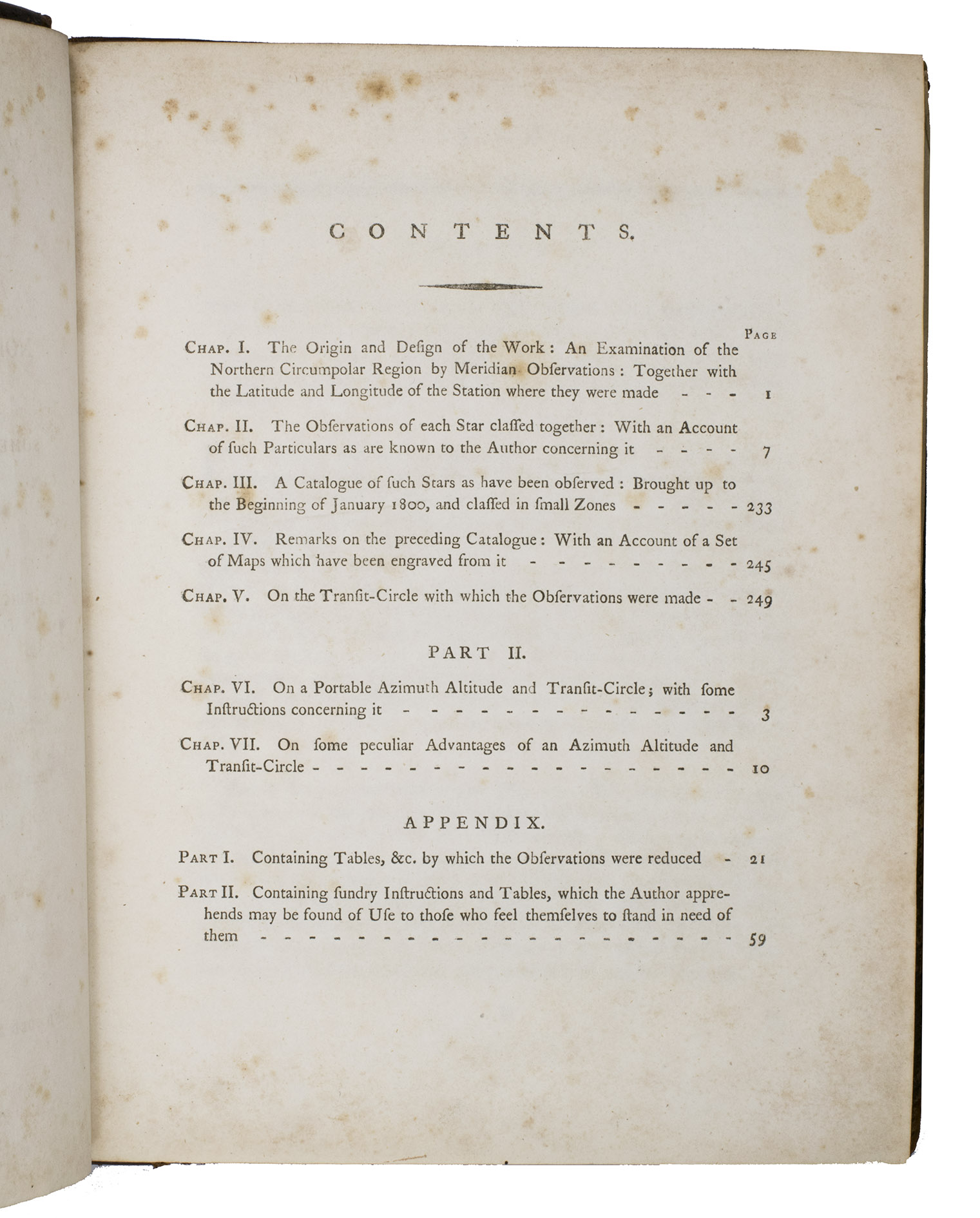
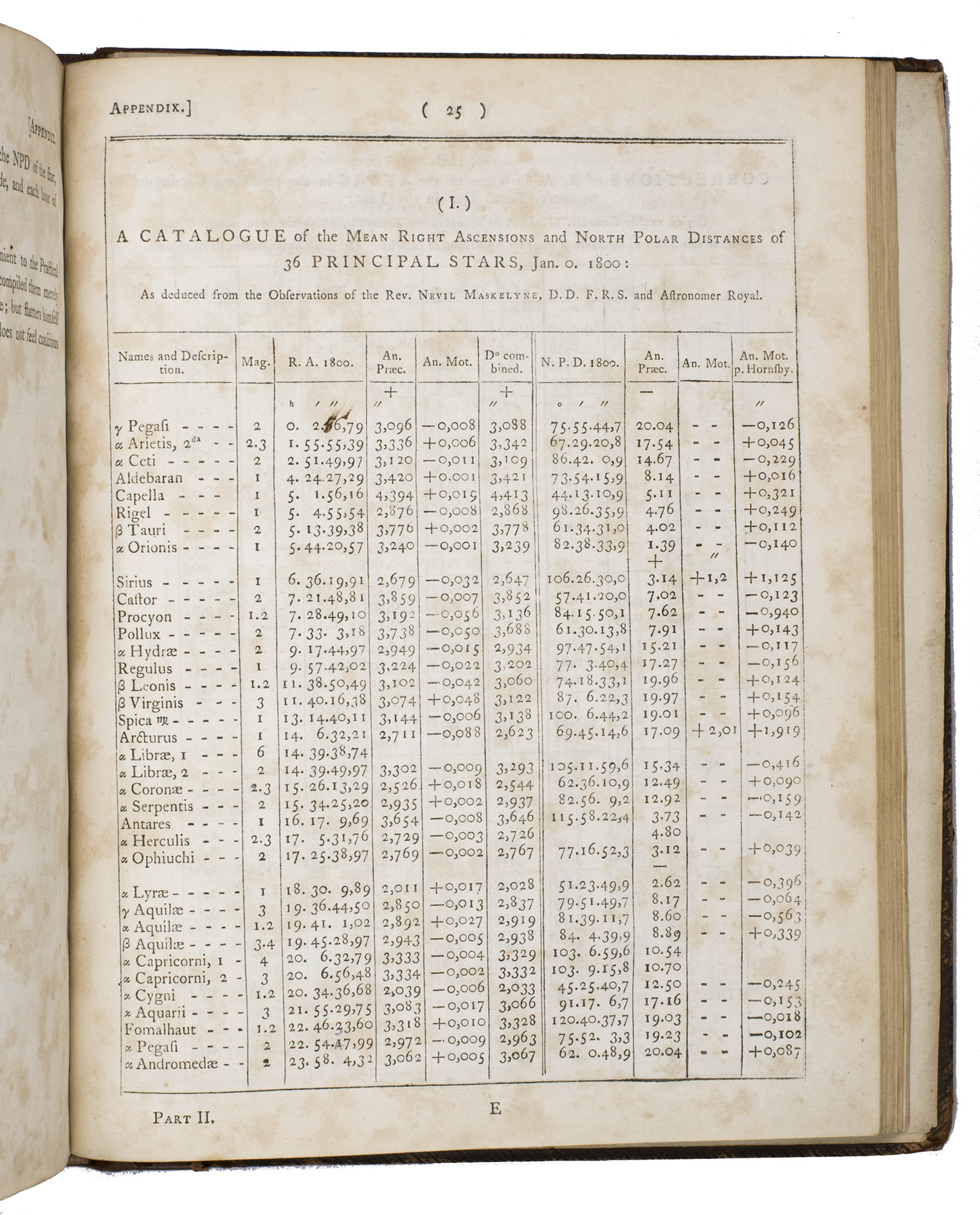
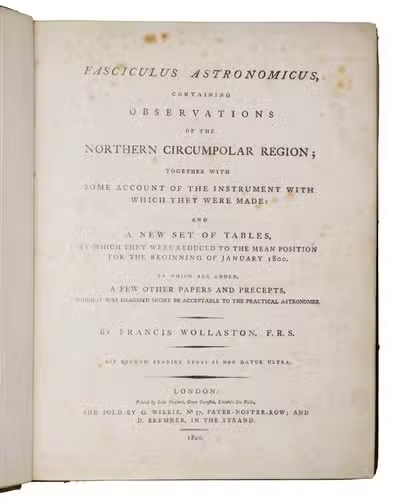
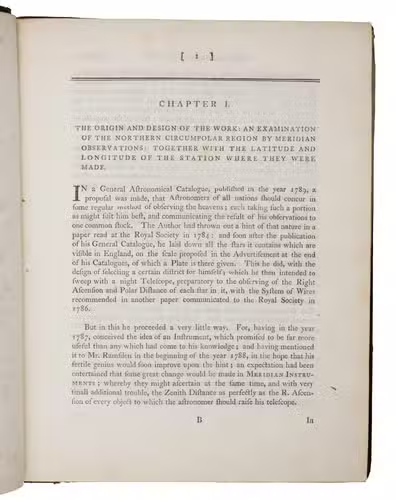
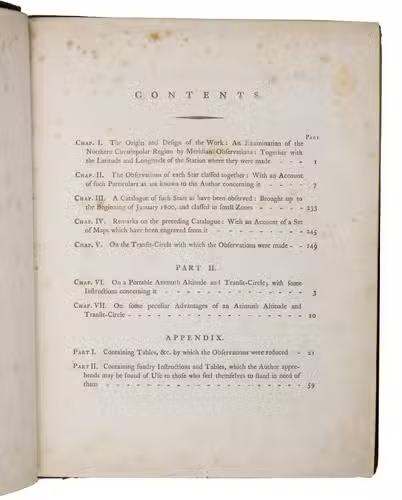
Fasciculus astronomicus, containing observations of the northern circumpolar region; together with some account of the instrument with which they were made: and a new set of tables, by which they were reduced to the mean position for the beginning of January 1800. To which are added a few other papers and precepts, which it was imagined might be acceptable to the practical astronomer.
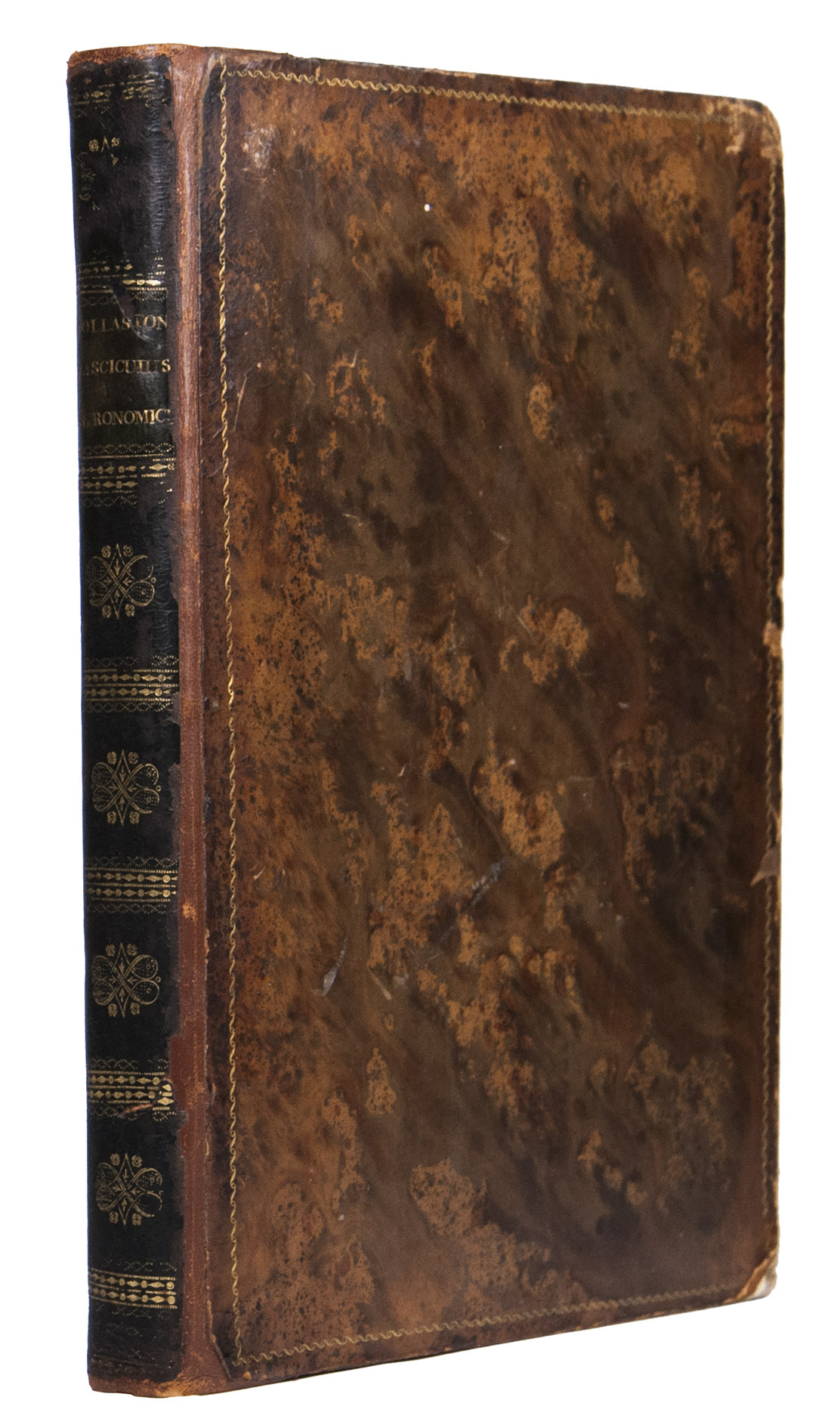
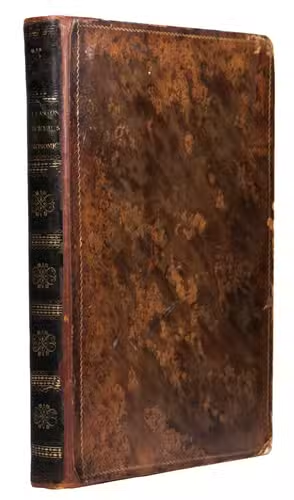
London, printed by Luke Hansard, sold by G. Wilkie and D. Bremner, 1800. 4to (27 x ca. 21 cm). With a divisional title page for part 2. Contemporary gold-tooled marbled calf, re-backed with the original backstrip laid down. [3], [1 blank], 256; 87, [1] pp.
€ 3,500
First edition of Francis Wollastons (1762-1823) Fasciculus astronomicus. Wollaston was an English natural philosopher, chemist, and clergyman, educated at Sidney Sussex College, Cambridge, where he graduated as Senior Wrangler and First Smiths Prizeman in 1783. Elected a Fellow of the Royal Society in 1786, and later appointed Jacksonian Professor of Natural and Experimental Philosophy at Cambridge. Wollaston stood at the intersection of mathematical astronomy, experimental science, and Anglican scholarship. His family background was equally distinguished: he was the son of the astronomer Francis Wollaston (1731-1815) and brother of the celebrated chemist and physicist William Hyde Wollaston (1766-1828).
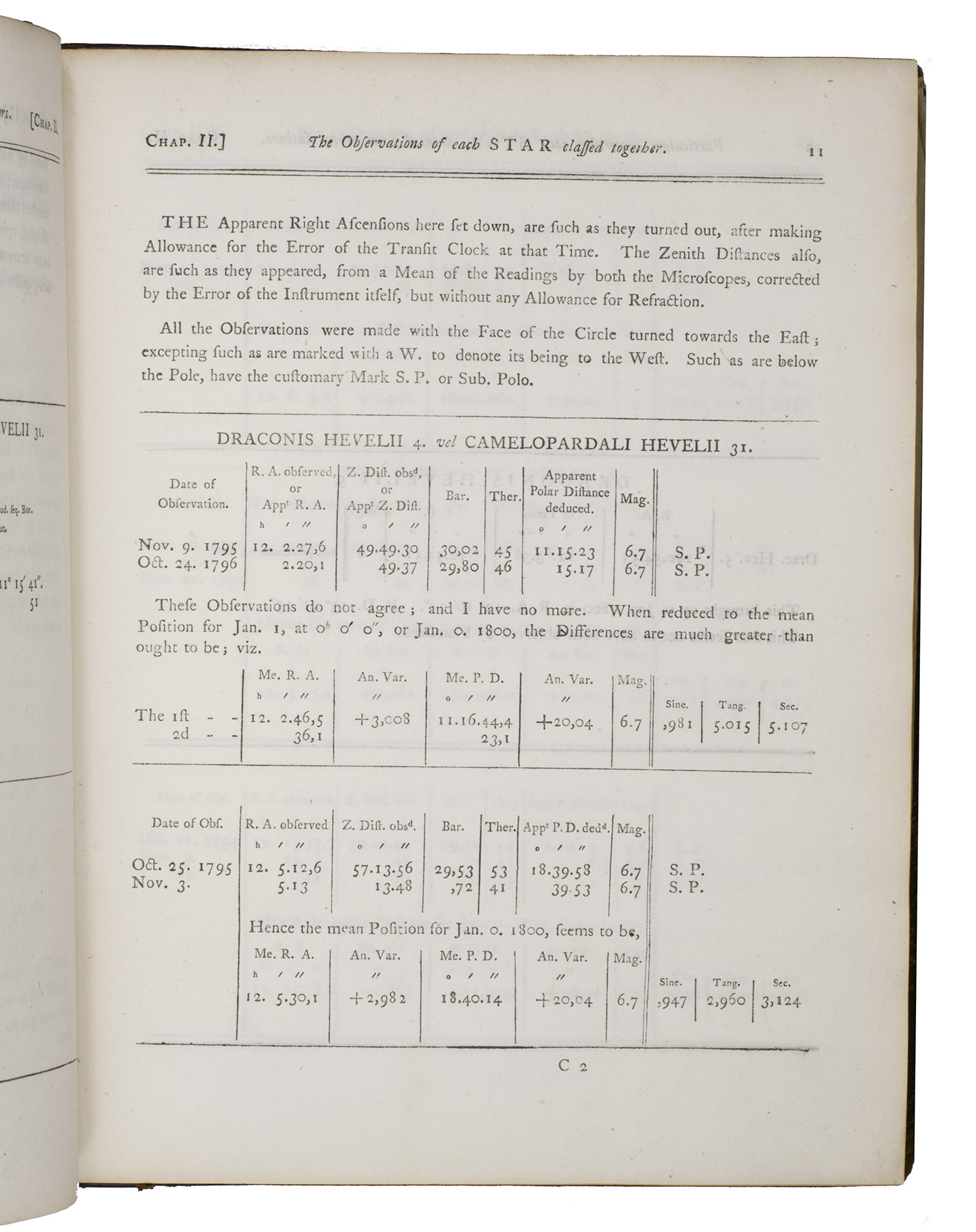
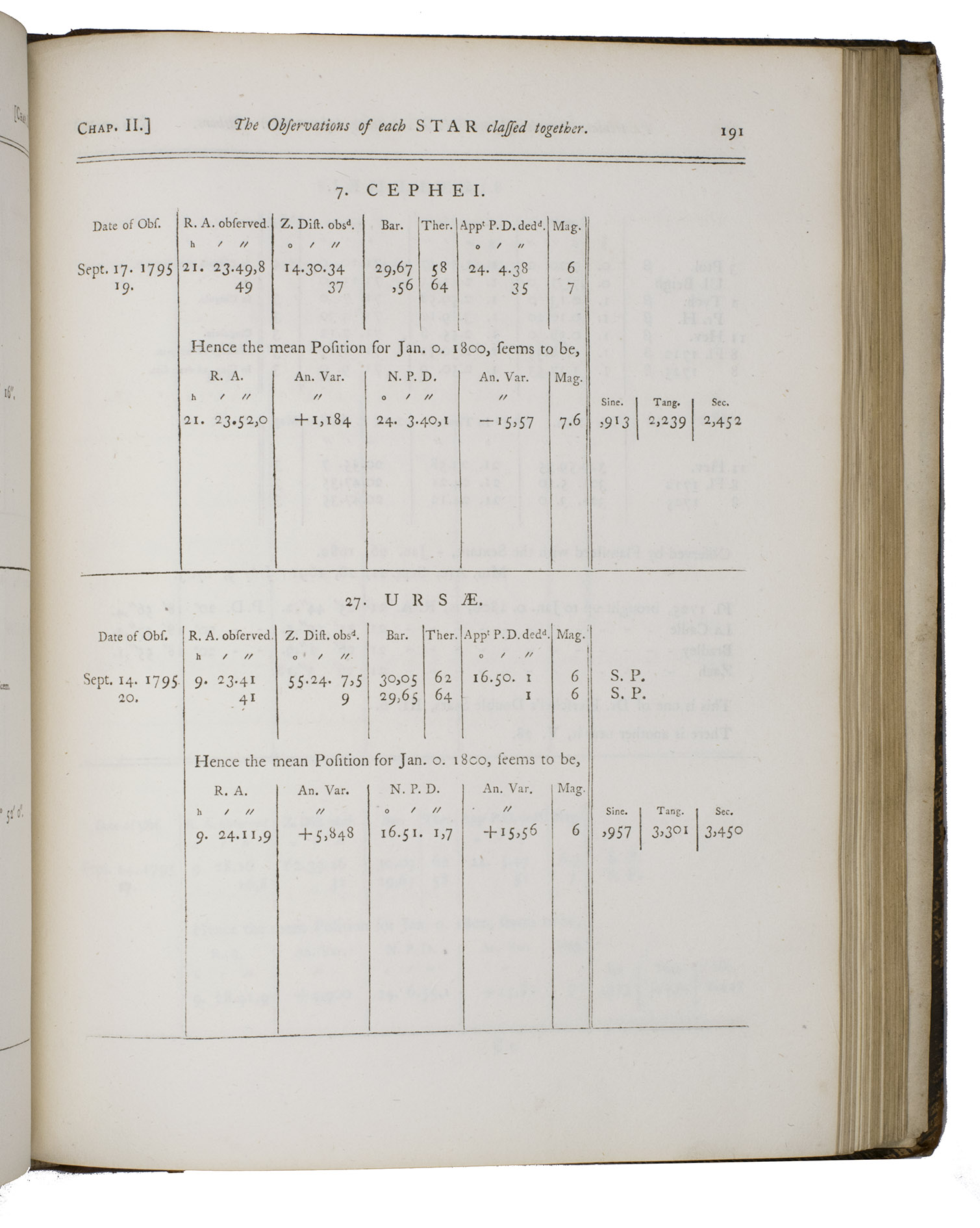
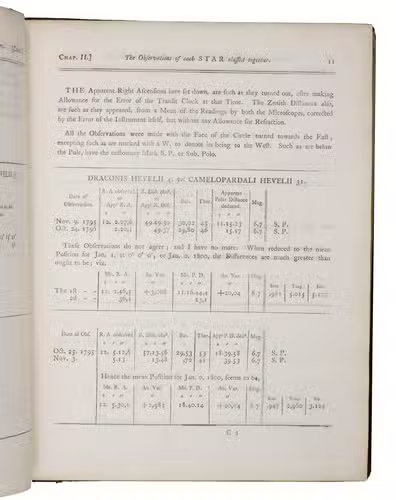
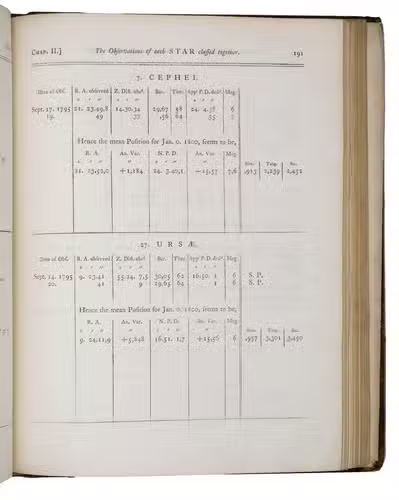
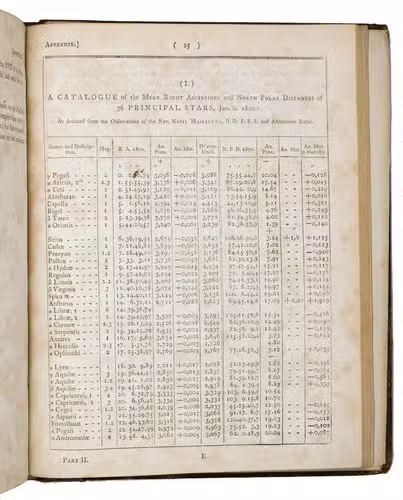
Fasciculus astronomicus reflects this lineage of observational precision. The work presents careful measurements of circumpolar stars, those perpetually visible above the northern horizon in Britain, reduced to a fixed epoch (1 January 1800), thereby contributing to the broader 18th-century project of astronomical standardisation. Wollastons attention to instrumentation and tabular reduction reveals the practical and pedagogical concerns that characterised his tenure as Jacksonian Professor, where he famously conducted hundreds of experimental demonstrations annually.
This present work bears the bookplate of the eminent 19th-century astronomer and pioneer of astronomical photography, Warren De La Rue (1815-1889). De La Rues later photographic work on the sun and lunar surface stands in intellectual continuity with Wollastons earlier emphasis on precision observation and instrumental refinement.
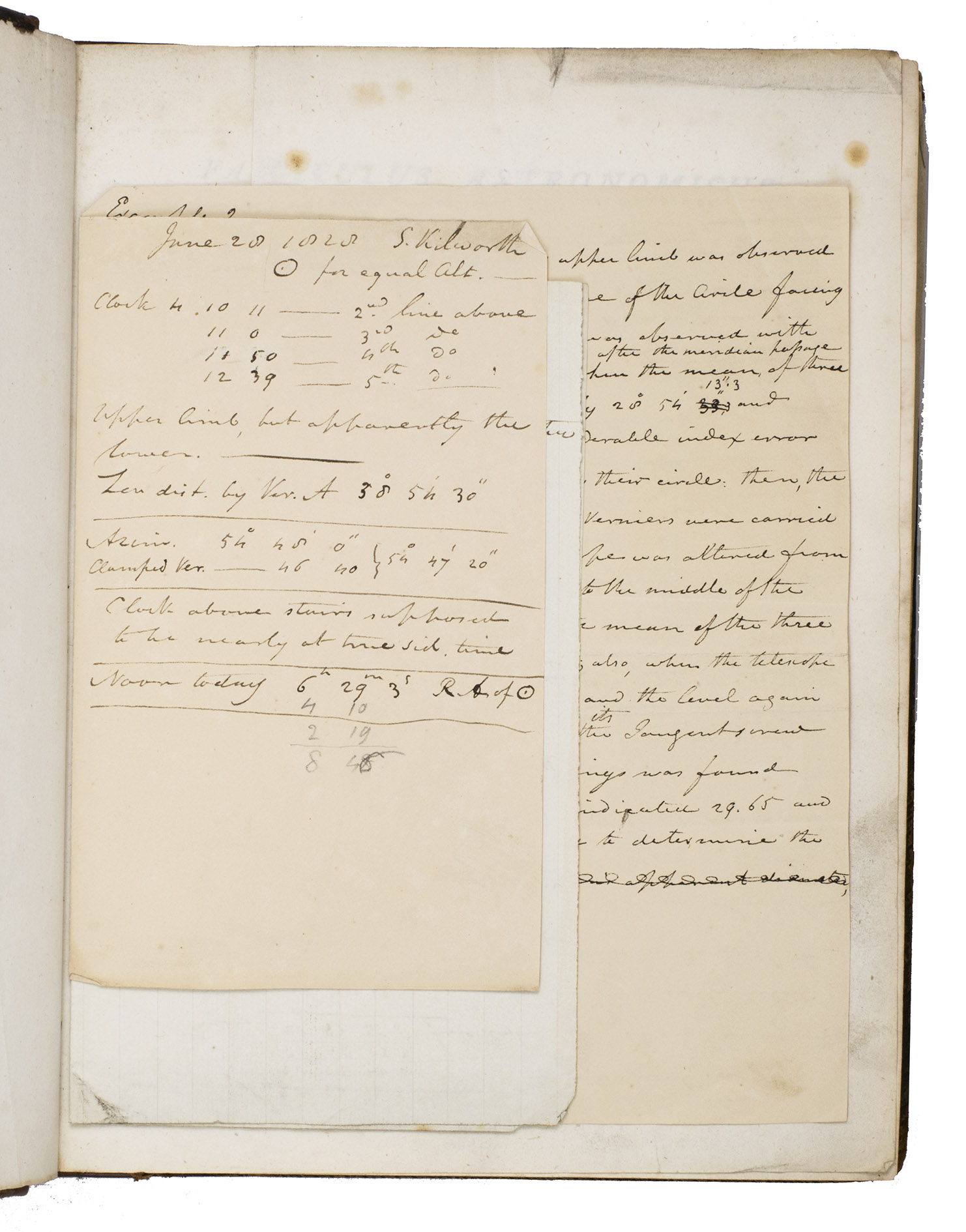
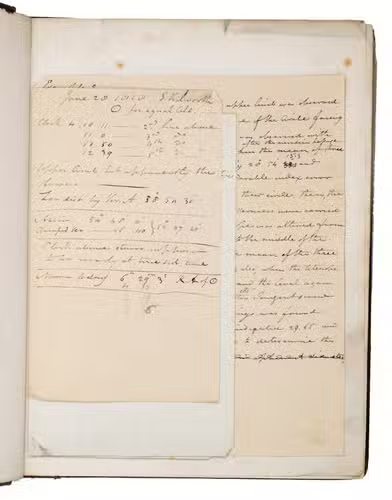
With the engraved bookplate of Warren de la Rue mounted on the front pastedown and some pencil and ink annotations in the margins. Loosely added in the binding are 4 leaves, some folded, with early-19th-century manuscript notes and calculations (2 leaves bearing the date June 28 1828). The binding has been re-backed with the original backstrip laid down, the corners of the boards are bumped with some loss of leather, the boards and its edges are slightly scuffed. The first few leaves are slightly foxed, part 2 including the flyleaves are foxed and browned, the final flyleaf is detached but still present. Otherwise in good condition. ESTC T90728.
Related Subjects: