LIPSIUS, Justus.
Epistolarum selectarum centuriae VIII. E quibus tres pridem ad Belgas, Germanos, Gallos, Italos, Hispanos, Quarta, singularis ad Germanos & Gallos. Quinta, miscellanea. Tres posteriores ad Belgas. Eiusdem Lipsii epistolica institutio. Acc. in gratiam studiosae inventutis, Rerum aliquot insignium, & elegantissimarum Similtitudinum, quae in nonnullis Epistolis explicantur, Index locupletissimus.
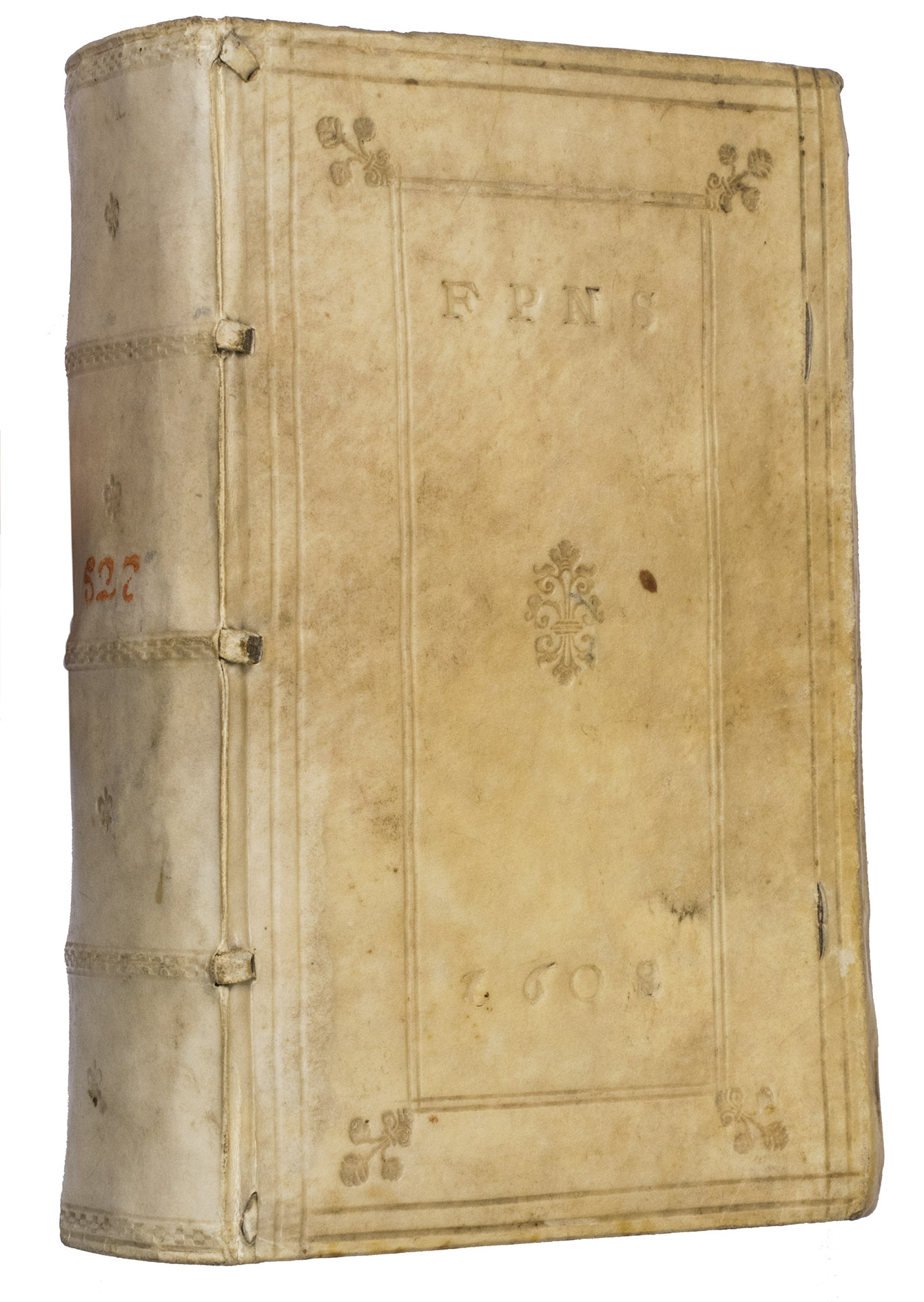
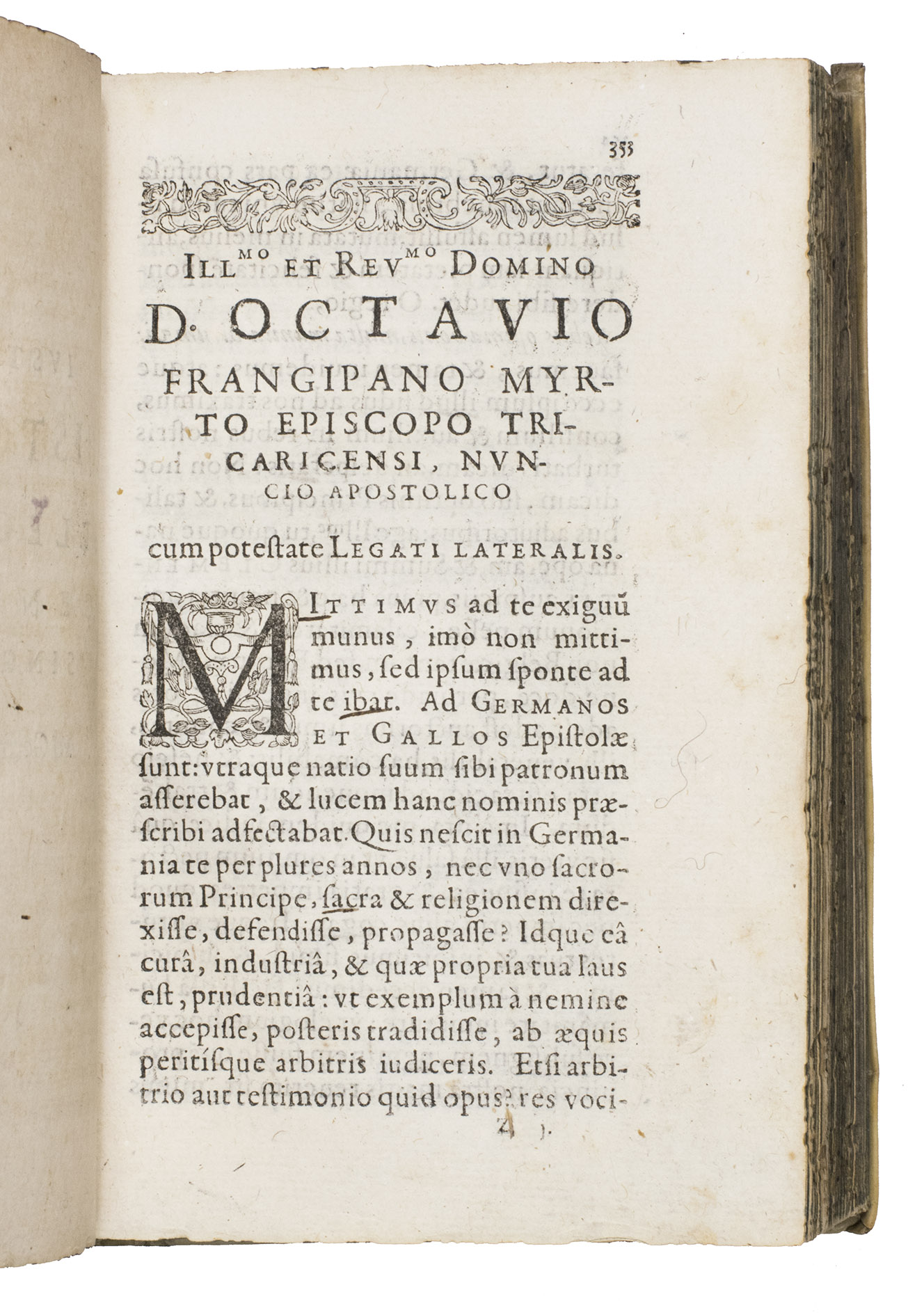
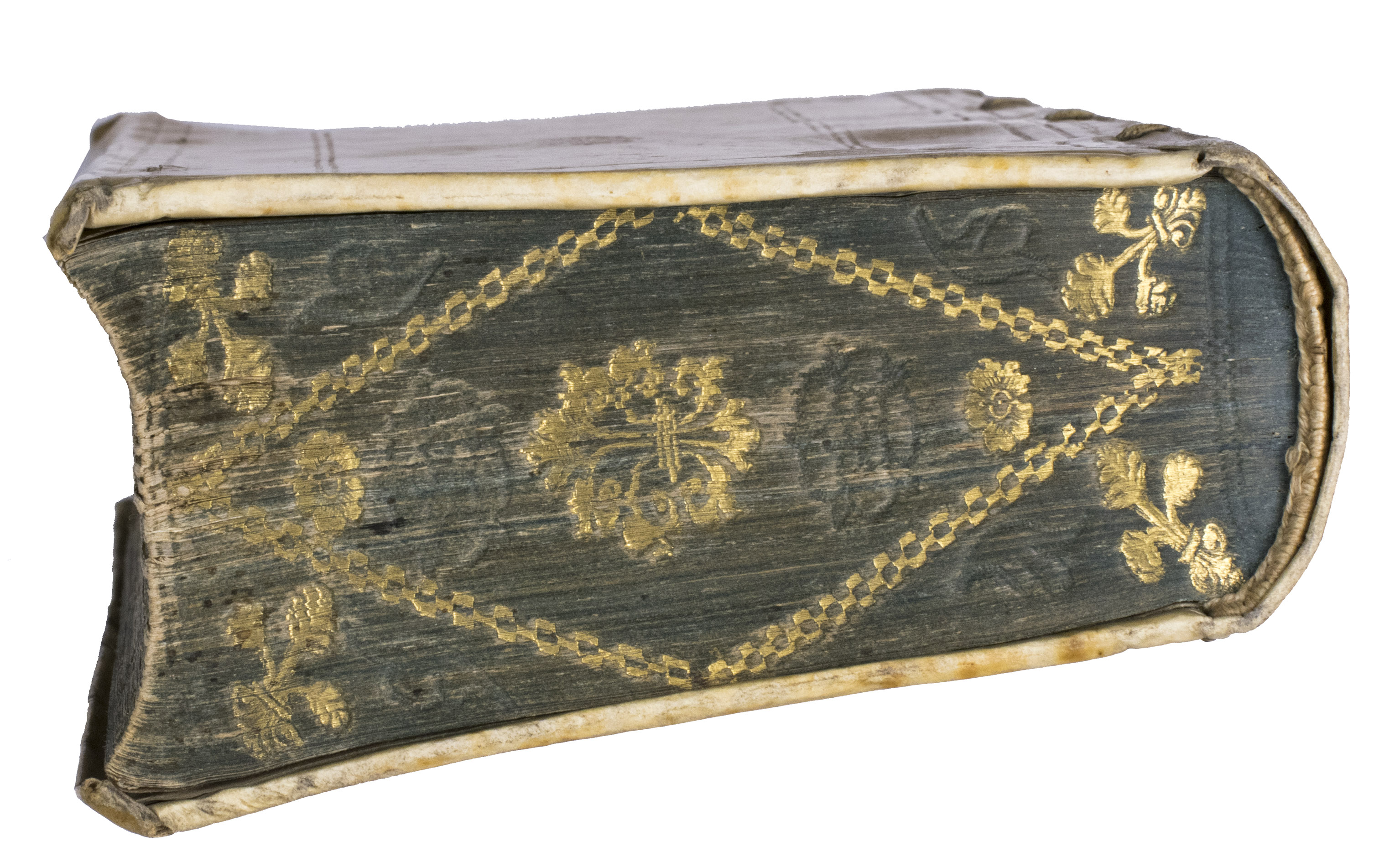
Avignon, 1603. 8 parts in 1 volume. Small 8vo. With a woodcut vignette on the title page, several decorated woodcut initials, of which the first is hand coloured, and several woodcut head- and tailpieces, also with the first hand coloured. Contemporary blind-tooled vellum in a panel design, sewn on 3 supports laced through the joints, both boards with a central ornament surrounded by three double fillet borders, and floral corner pieces in the central panel, the initials "FPNS" (for Franciscus Pförtner) and the year 1608 on the front board, traces of closing ties, gilt on blue gauffered edges in a rich design of lozenge panels with ornaments and flowers. [12], 446, [2 blank], 534, [13], [3 blank] pp.
€ 2,500
Rare Avignon imprint and first collected edition of the letters by Justus Lipsius (1547-1606), a famous Dutch humanist and universal scholar. The collection contains 800 of Lipsius' letters. Many were sent to fellow scholars of his students, but also to influential figures in politics or the Church. His letters could either be personal or academic, and are written in a light and elegant style, following Tacitus and Seneca. The present work has been divided in eight parts, of a hundred letters each, which are published here together for the first time. Some of the part had earlier been published separately at Leyden and Antwerp from 1586 to 1602.
Lipsius studied at Louvain, first philosophy and physics, and later also literature, antiquities and law. Later he devoted himself to Latin philology and travelled to Italy to decipher ancient inscriptions. He was received as a honoured guest at the Court of Maximilian at Vienna, but was disgusted about the Spanish Inquisition and moved to Jena, where he became professor and converted to Lutheranism. He came back to the Southern Netherlands in 1574, but again feeling uneasy about the religious troubles he went to Leyden, where he became one of the first professors at the Leyden University and converted to Calvinism. He was also teacher of Prince Maurice of Orange, but troubled here also by a dispute with Coornhert about the execution of heretics, he returned in 1592 to the Southern Netherlands and to Roman Catholicism. Still, Lipsius' fame remained undisputed, and he became one of the most respected scholars and humanists of his time.
With the armorial bookplate of C.W. Graf von Nostitz from Prussia mounted on the front pastedown, a manuscript dedication on the first free flyleaf, an ownership annotation by Franciscus Pförtner, for whom the work was bound, on the title page, contemporary annotations and underlinings in ink throughout, a red manuscript shelf mark number (527) on the spine. The vellum is somewhat browned, lacking the closing ties. The leaves are somewhat browned, with occasional small brown stains. Otherwise in good condition. Bibl. Belg. III, L 251; USTC 6807520 (3 copies).
Related Subjects: