SCHEDEL, Hartmann.
Liber Chronicarum.
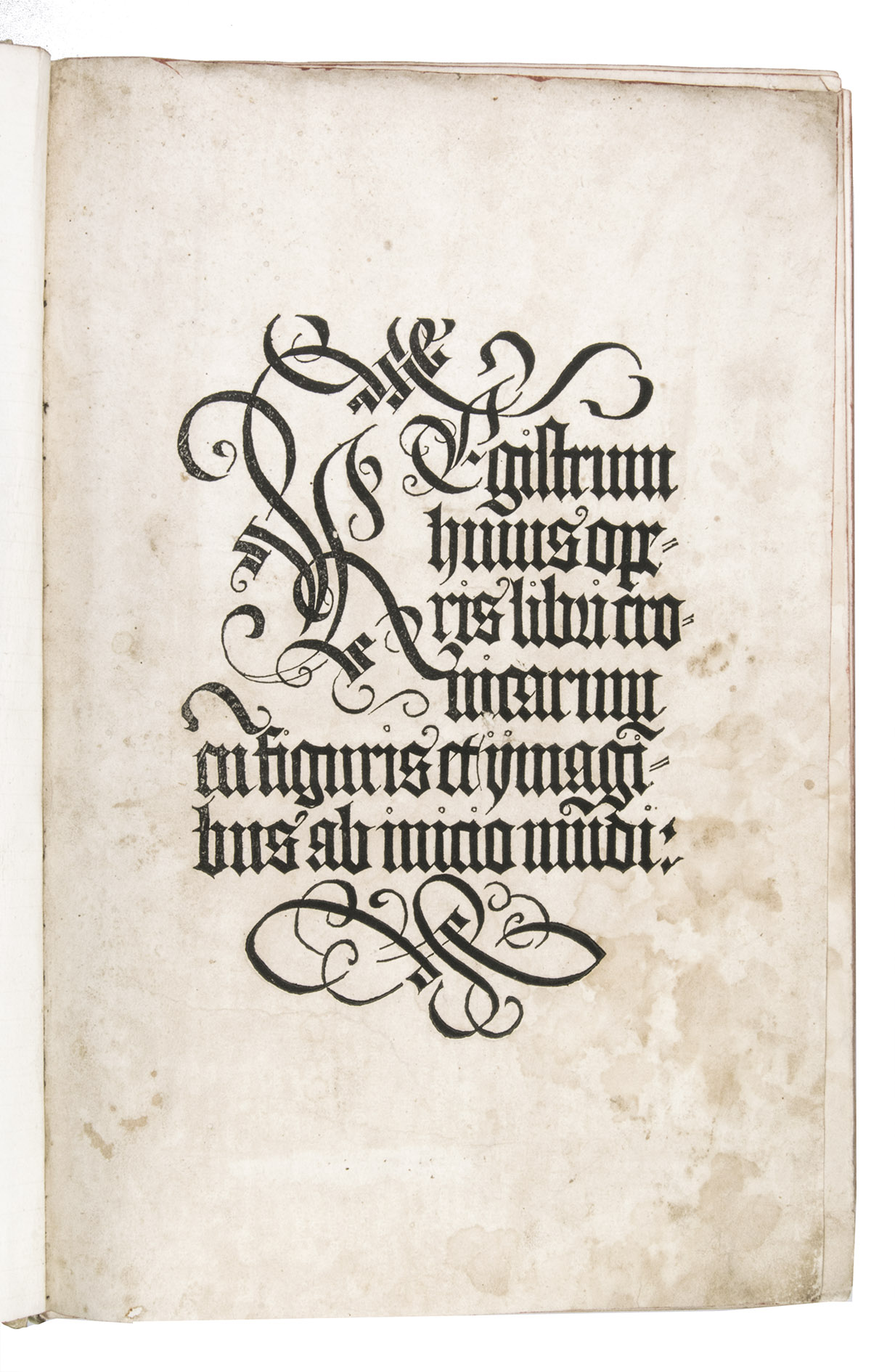
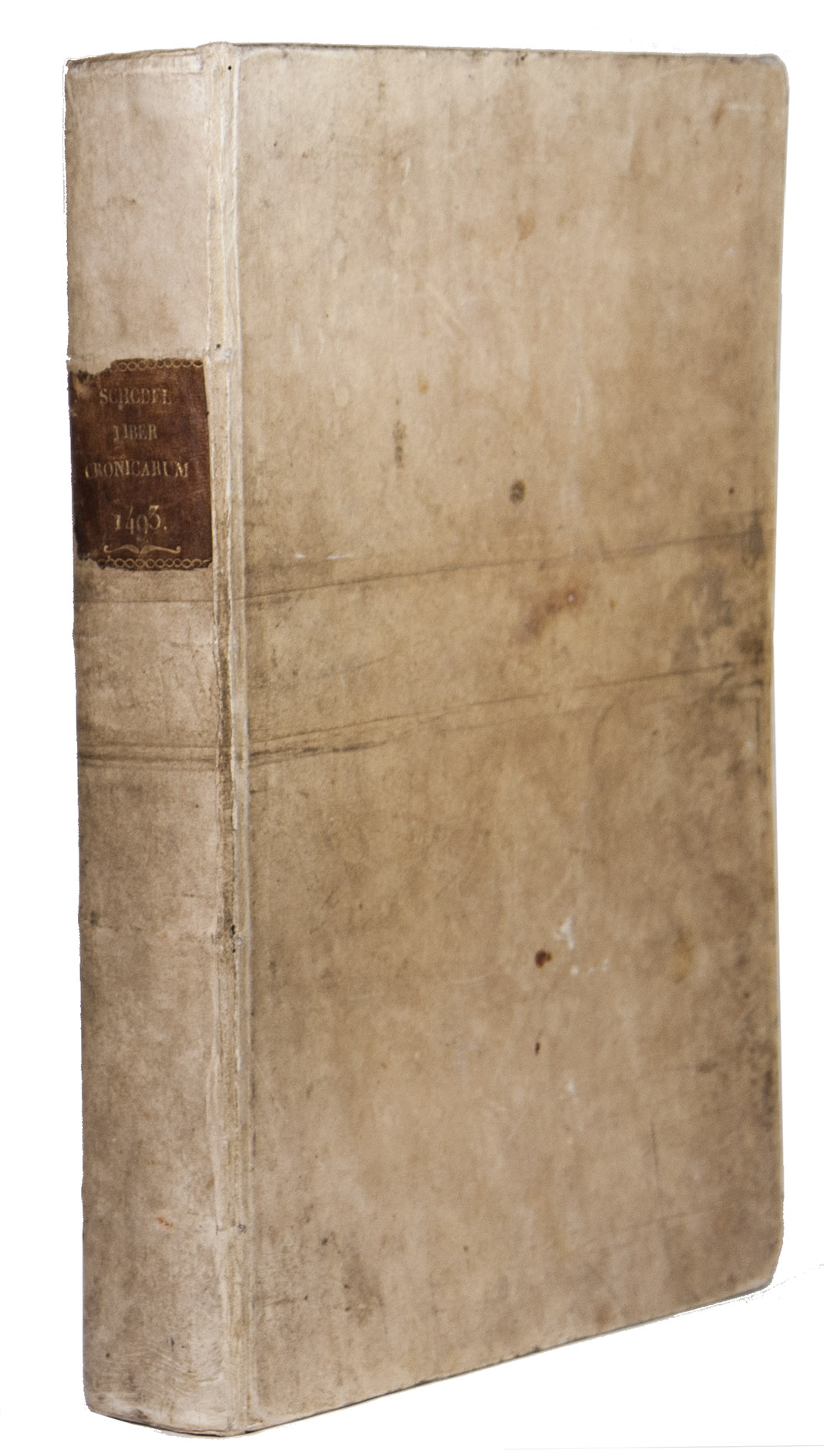
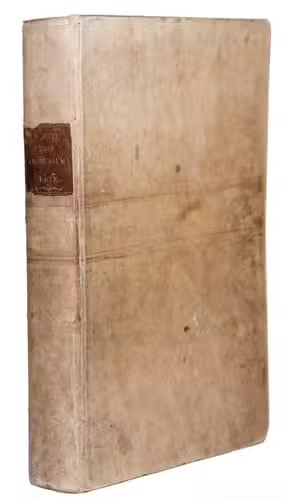
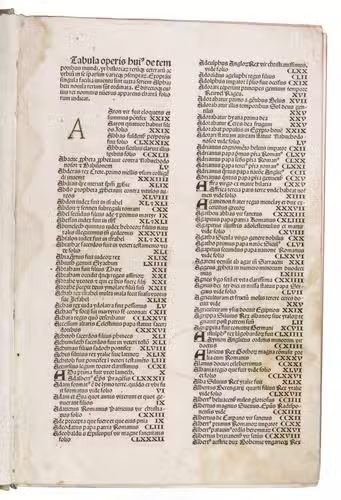
(Colophon: Nuremberg, Anton Koberger for Sebald Schreyer and Sebastian Kammermaister, 1493). Folio (42.5 x 28.5 cm). With 1809 woodcut illustrations, including 29 double-page views, a large coat of arms, a globe, and numerous portraits of saints, emperors, kings and biblical figures.18th-century vellum with a red morocco title label on the spine, lettered in gold, red edges. [20], CCXCIX, [6] ll.
€ 125,000
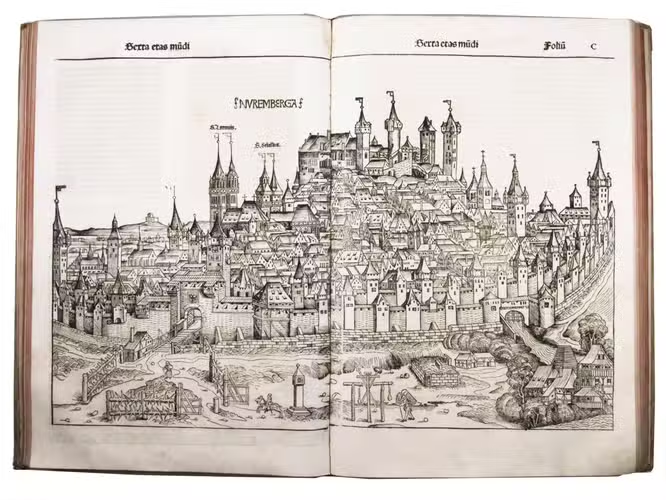
First edition of the famous Nuremberg Chronicle, the most extensively illustrated printed book of the fifteenth century, containing more than 1800 woodcut illustrations, including 29 double-page city views and two important maps. The present copy contains the portrait of Pope Joan, often defaced in other copies, as well as the three original blank leaves intended for annotations. Published on 12 July 1493 by Anton Koberger, one of the leading printers of his time, it is among the most important achievements of early book printing and illustration.
The work was compiled by Hartmann Schedel (1440-1514), a Nuremberg physician, humanist and bibliophile. Drawing on numerous earlier sources, particularly the Supplementum chronicarum of Jacopo Filippo Foresti and the writings of the humanist Aeneas Silvius Piccolomini (later Pope Pius II), he brought together a history of the world from the Creation to his own time. The work is divided into seven ages and combines biblical and classical history with accounts of rulers, saints, scholars, and the founding and development of cities. It also includes descriptions of distant countries, unusual peoples and legendary creatures, as well as recent events, including the invention of printing at Mainz and Portuguese exploration along the African coast.
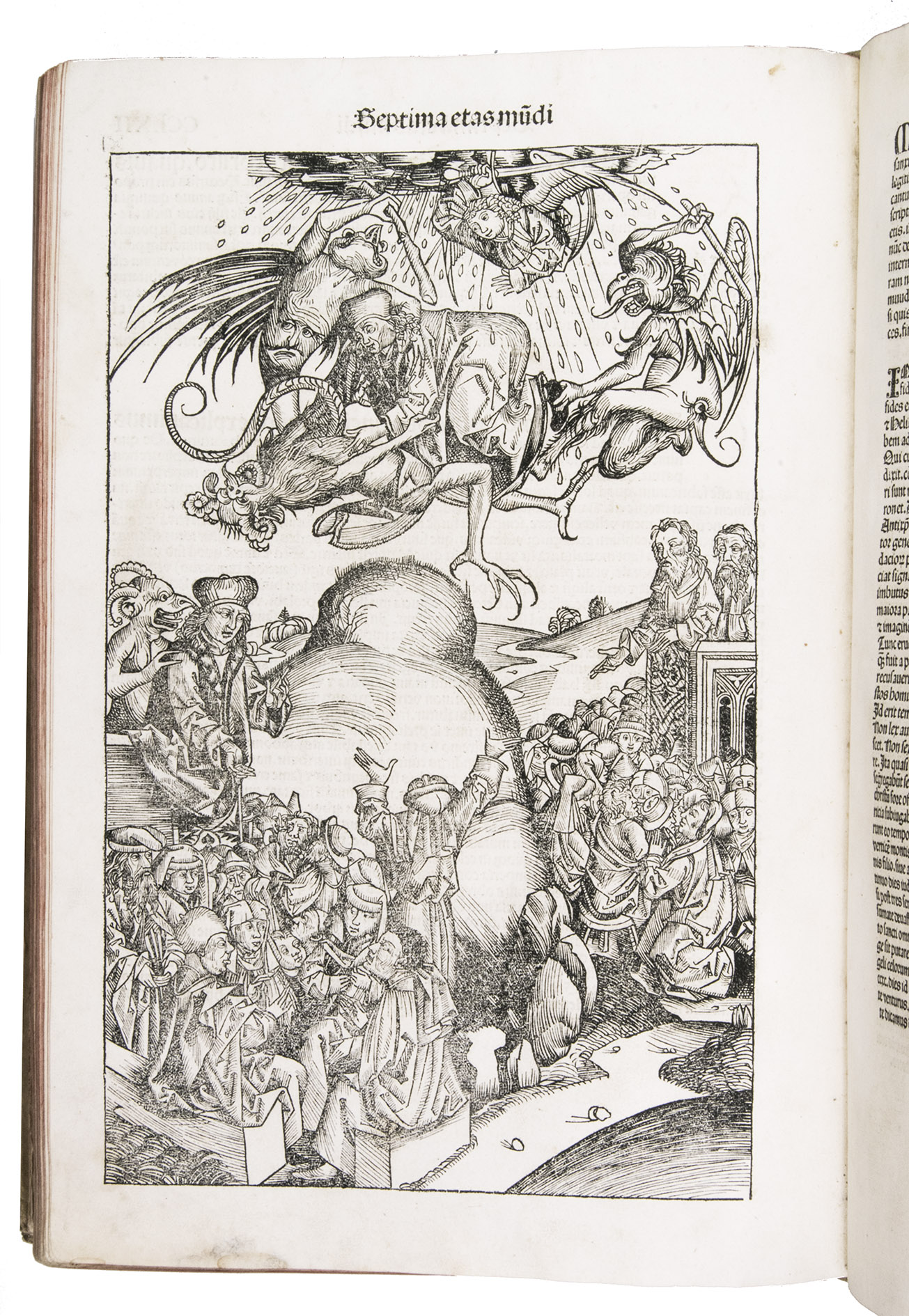
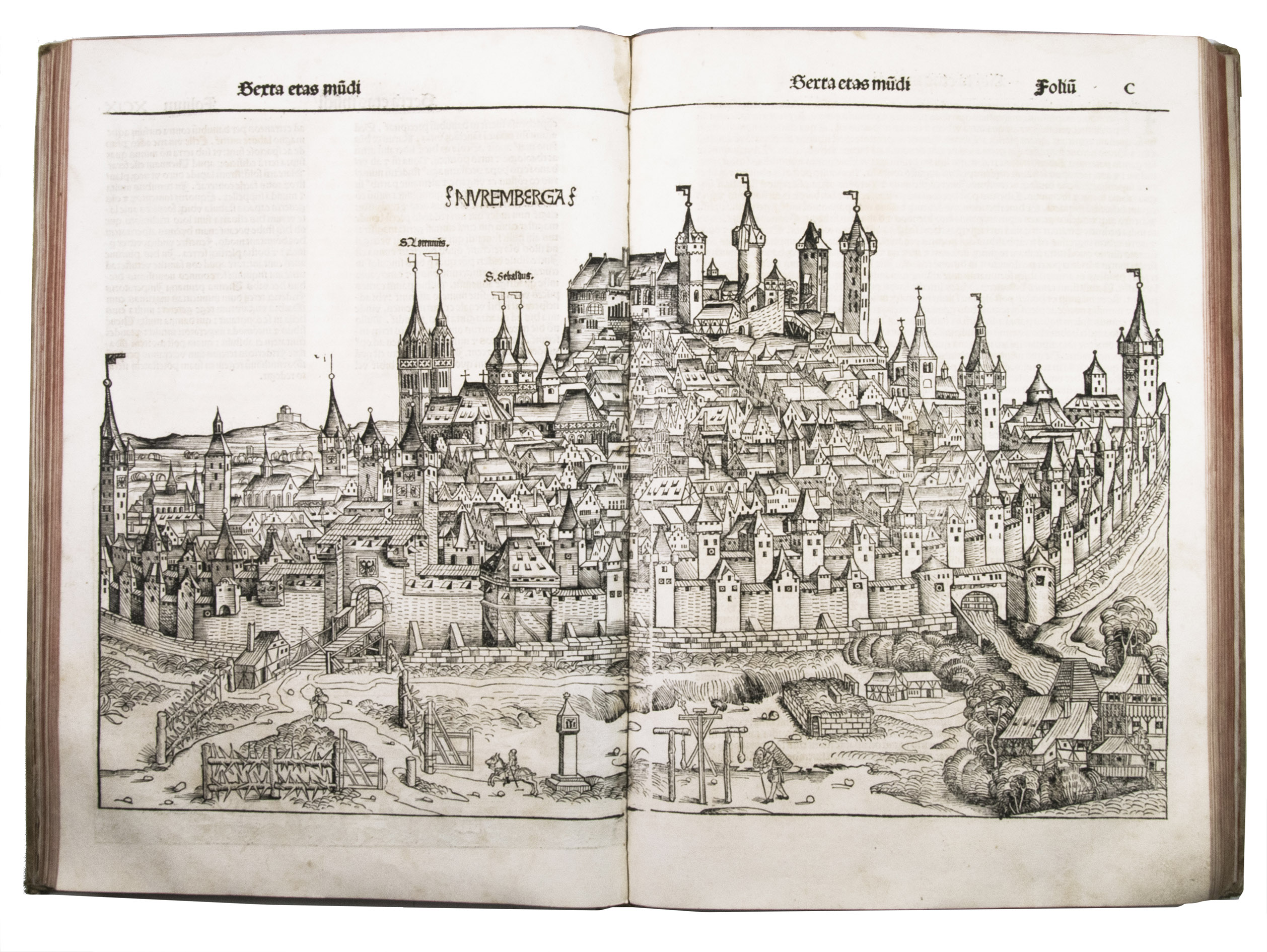
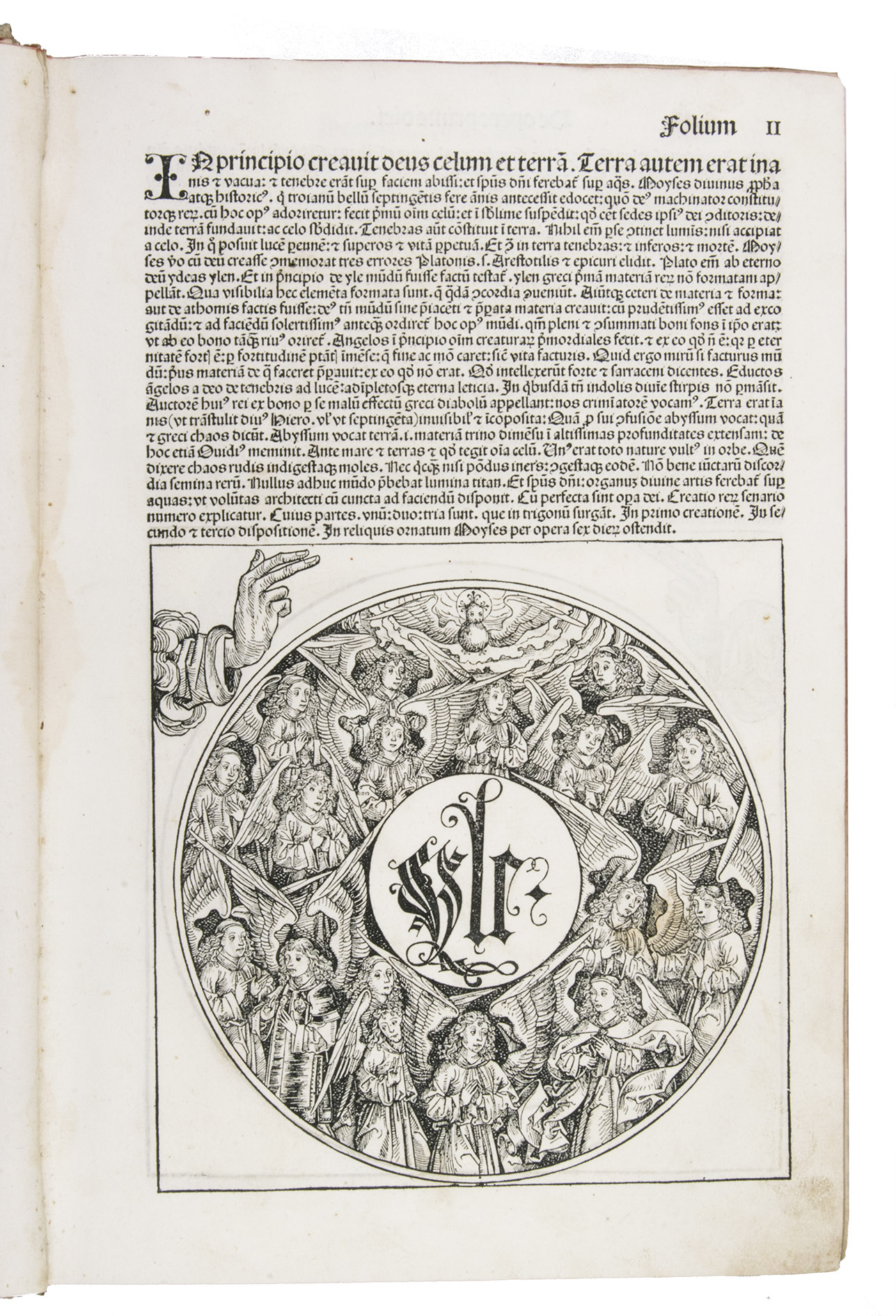
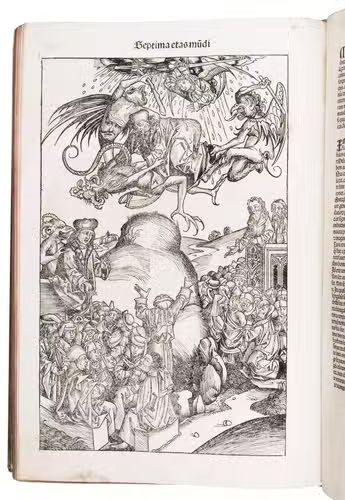
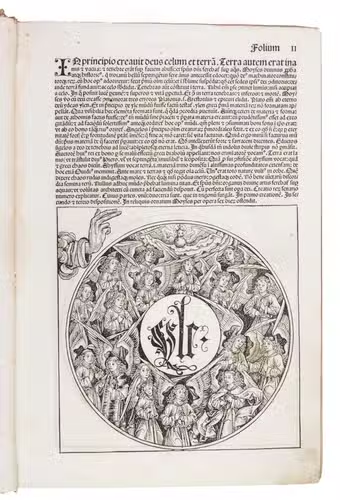
The illustrations were produced in the workshop of Michael Wolgemut (1434-1519) and Wilhelm Pleydenwurff (d. 1494), two of Nuremberg's leading artists. Albrecht Dürer (1471-1528), who was an apprentice of Wolgemut from 1486 to 1489, is believed to have contributed to some of the designs. The illustrations were printed from 645 woodblocks, many of which were used several times, sometimes with different captions. They include portraits of biblical and mythical figures, saints, popes, emperors and kings, genealogical tables, coats of arms, and scenes of the Creation, the Dance of Death, the Antichrist and the Last Judgement. Throughout the book, the woodcuts are closely integrated with the text, sometimes with branches of genealogical trees extending between the printed lines. Particularly notable are the large city views, including Nuremberg, Florence, Venice, Rome and Constantinople, several of which are among the earliest printed depictions of these cities.
The two double-page maps are of considerable importance. The world map (Shirley 19), based on a Ptolemaic map in the 1482 edition of Pomponius Mela's Cosmographia, is one of only three fifteenth-century maps to incorporate Portuguese geographical knowledge of the Gulf of Guinea, acquired during voyages along the West African coast. The second map, showing northern and central Europe, was produced by Hieronymus Münzer (1437-1508) and is the earliest printed map of Germany to appear in a book.
The Nuremberg Chronicle was financed by the Nuremberg merchants Sebald Schreyer (1446-1520) and Sebastian Kammermeister (1446-1503), who commissioned the work in 1491. It was an incredibly ambitious undertaking and publication required close cooperation between Schedel, the artists and Koberger's printing workshop. The Latin edition was printed first and a German translation, by Georg Alt, appeared later in 1493. The original contracts and manuscript layouts for both editions have survived, documenting the financial arrangements and the preparation of the text, illustrations and page layouts.
The woodcut on leaf CLXIX verso depicts Pope Joan (Joannes Septimus), who, according to medieval legend, was a woman who disguised herself as a man and became pope in the ninth century. Her identity was supposedly revealed when she gave birth during a procession. The account and portrait were considered scandalous and were crossed out, defaced or removed in many surviving copies, but are present here. The present copy also includes the three blank leaves (folios 259-261), which were provided so that readers could continue the chronicle themselves.
With occasional annotations in the margins, the blank spaces for initials have been filled in by hand. The work has been rebacked, with the original spine laid down, the vellum is somewhat soiled, two horizontal marks across the spine and both boards, possibly from a restoration. Occasional browning and (water) staining to the leaves and plates, mostly in the margins, a slight tear in the lower margin of folio LXX, a hole in the woodcut of Pavia on folio LXXIIII, a loss in the upper corner of folio LXXV, a reinforcement in the inner margin of folio XLXIX, a small hole in the text or illustration on folios CLXXV, CLXXXIII-CLXXXV, CXCVI and CCLXXI, restorations to the lower margins of leaf CCVI and reinforcements to the first and last few leaves, the map of Europe with traces of a water stain to its central part, lacking the final blank, later endpapers. Otherwise in very good condition. BMC II, 437; Bodleian Incunables: S-108; Brunet I, 1860; BSB-Ink. S-195; Campbell, The Earliest Printed Maps, 1472-1500 (1987); Goff S-307; GW M40784; Hain-Copinger *14508; ISTC is00307000; USTC 748763; cf. Bland, David, A History of Book Illustration; Shirley 19 (world map); Wilson, The Making of the Nuremberg Chronicle (1976).
Related Subjects: